
Today I made stew on a geothermal vent. Small geysers cooked my food.
People cook this way in various countries, including geothermally active areas in New Zealand, Thailand, Azores, and Spain. In 2021, Gordon Ramsay made a short video when he cooked bread using a hot spring in Iceland. Baudy and bold, he stood at the shore of a body of water that was hot and bubbling. He then dug a hole in a berm to reach boiling water at the same level as the water in the background, put his pot in the hole, covered it with earth, and cooked bread. I’m torn as to whether the act of digging made for better, consistent heat, or better video content. As you can see, there is only so much mileage you can get of filming a pot boiling in water.
A few years ago, geothermal cooking made international news when some men cooked “whole raw chickens” in Yellowstone. The men were found to be in “violation of a geothermal vent.” In that situation, the men didn’t just use the hot water to cook their chickens, they encroached on a fragile ecosystem by walking on “micro-organisms called thermophiles.”
In Fiji, the Nakama hot springs are set up for cooking. The park looks like any city waterpark with picnic tables. But, instead of a play structure, the park has a creek of small geysers and boiling water running through it.
Earlier this week, a local woman told me “It’s very popular on Sundays. People cook their food in a sack. They leave the sack in the hot spring while they go to church. It’s very nice. No one steals your food.”
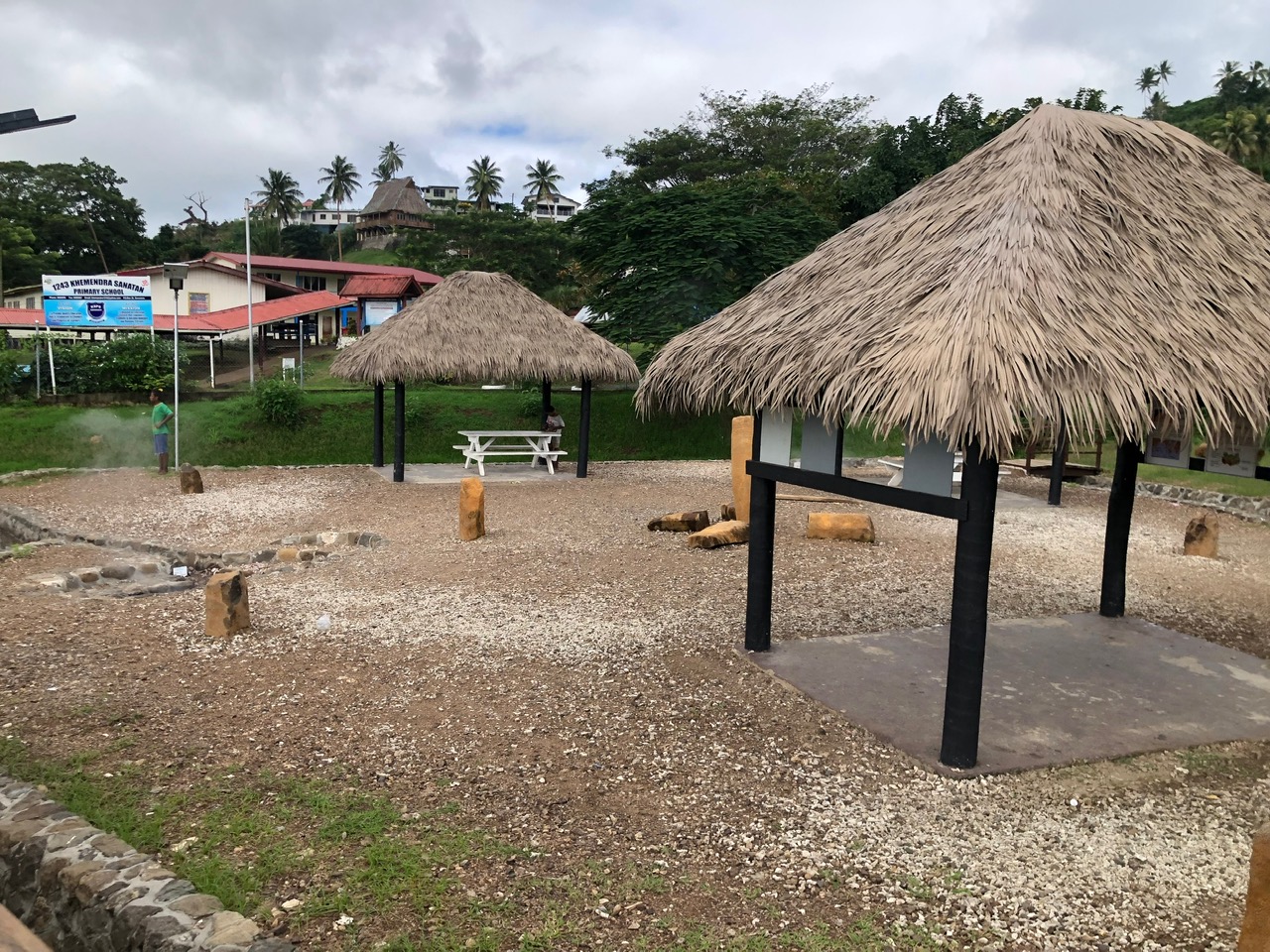

We found several people using the hot springs this morning, including one of our customs officials. He tells me he “cooks Cassava here every Sunday.” Cassava is a starchy root vegetable. When cooked, it is similar to a potato. When I ask him why he uses the hot springs to cook, he tells me it saves him on propane. He pulls his bag of boiled cassava from one of the springs and helps me better position my foil packages.
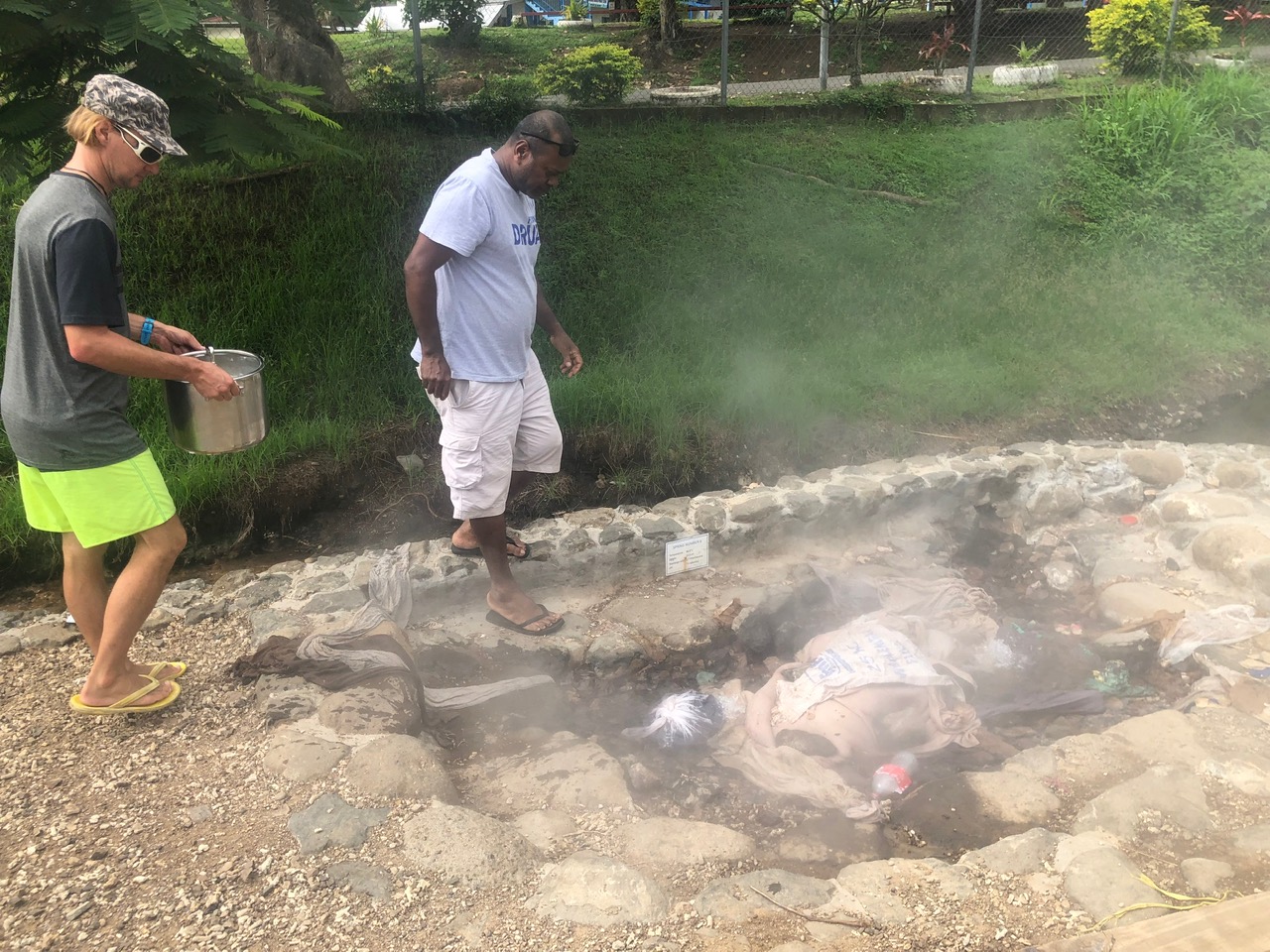
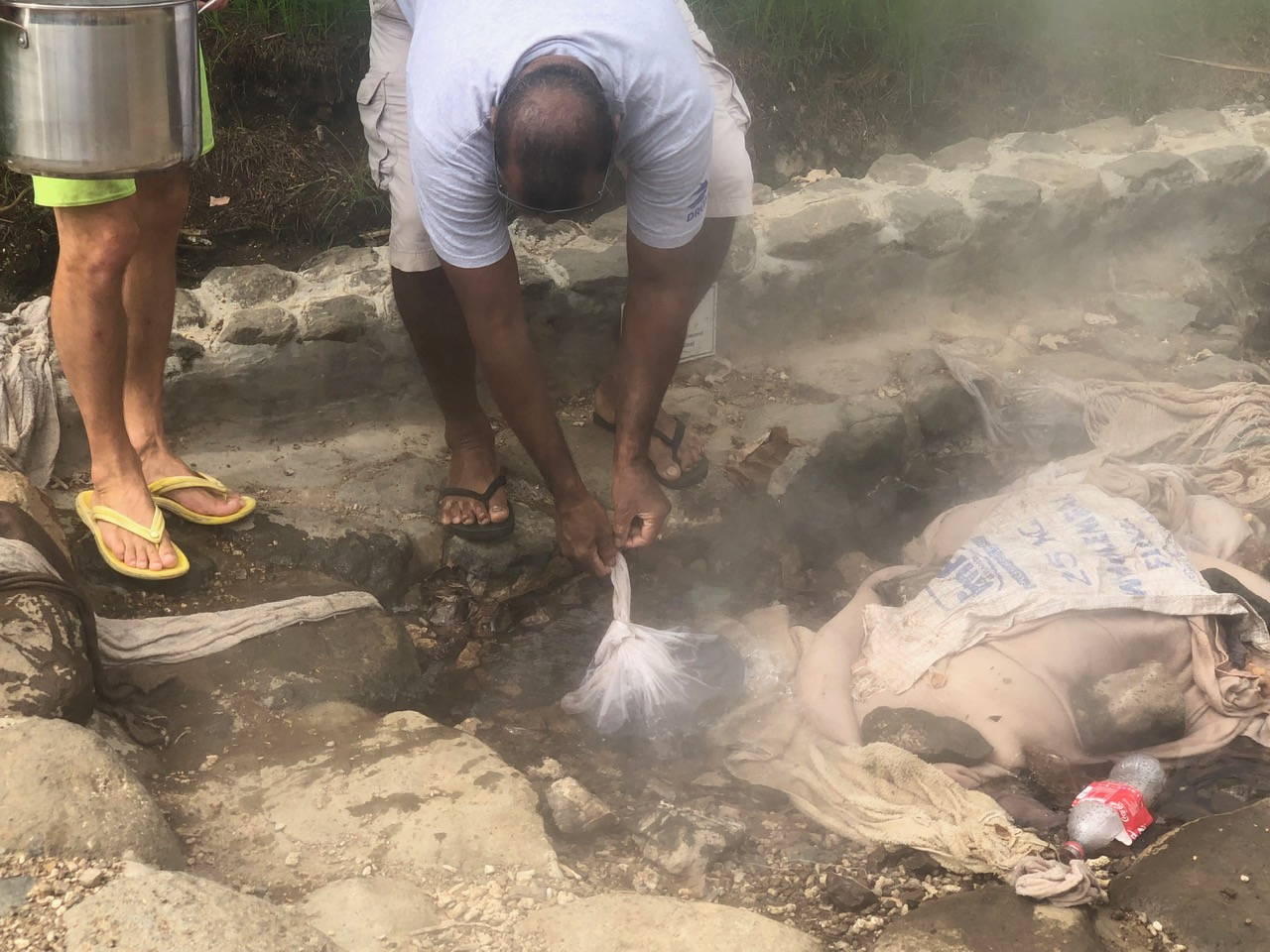
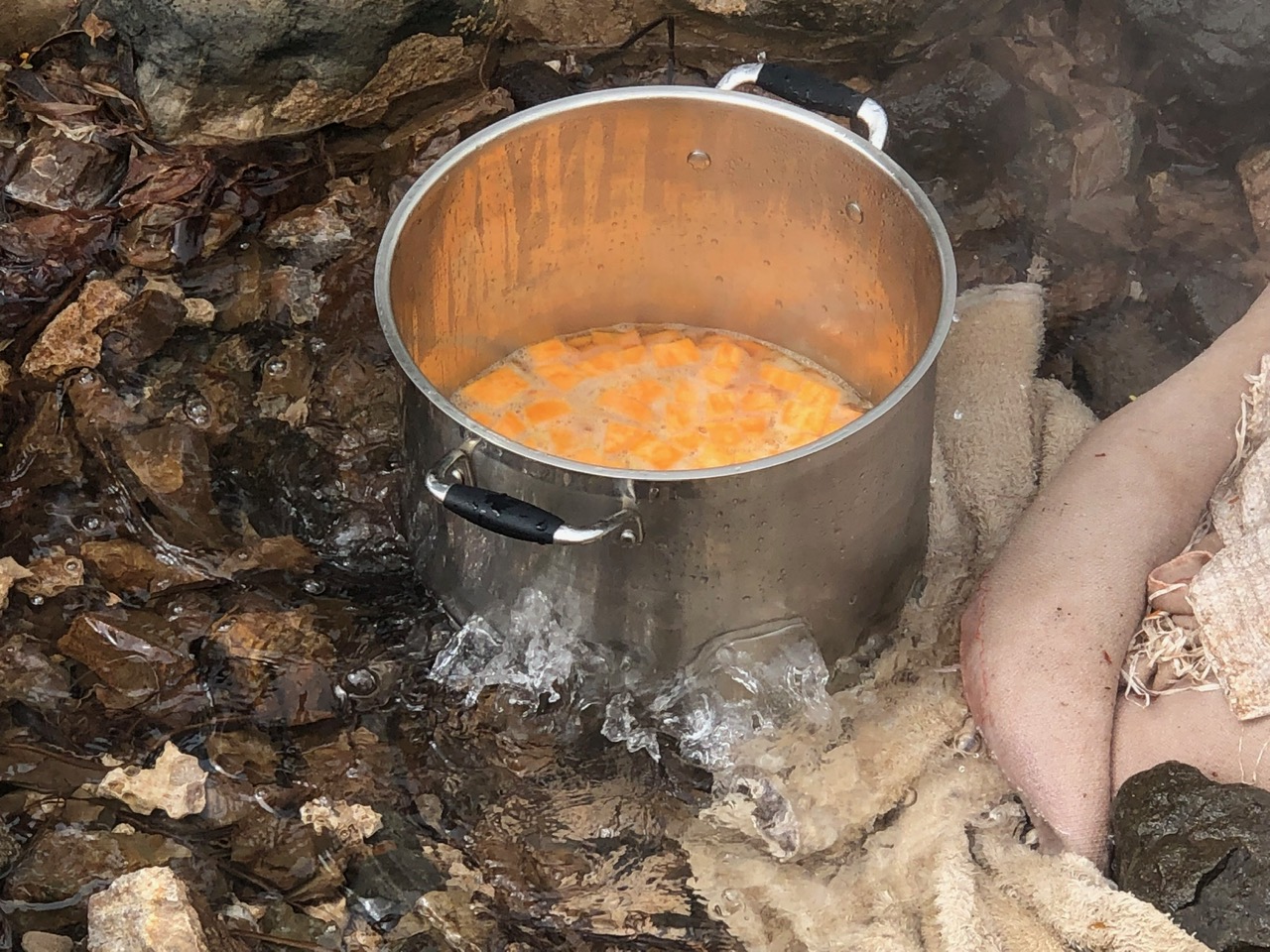
I am cooking lentil stew and potatoes. Our German friends, Goetz and Julia, from SV Tribalance are cooking eggs and a sweet potato soup. Their cooking pot begins to bubble within minutes.
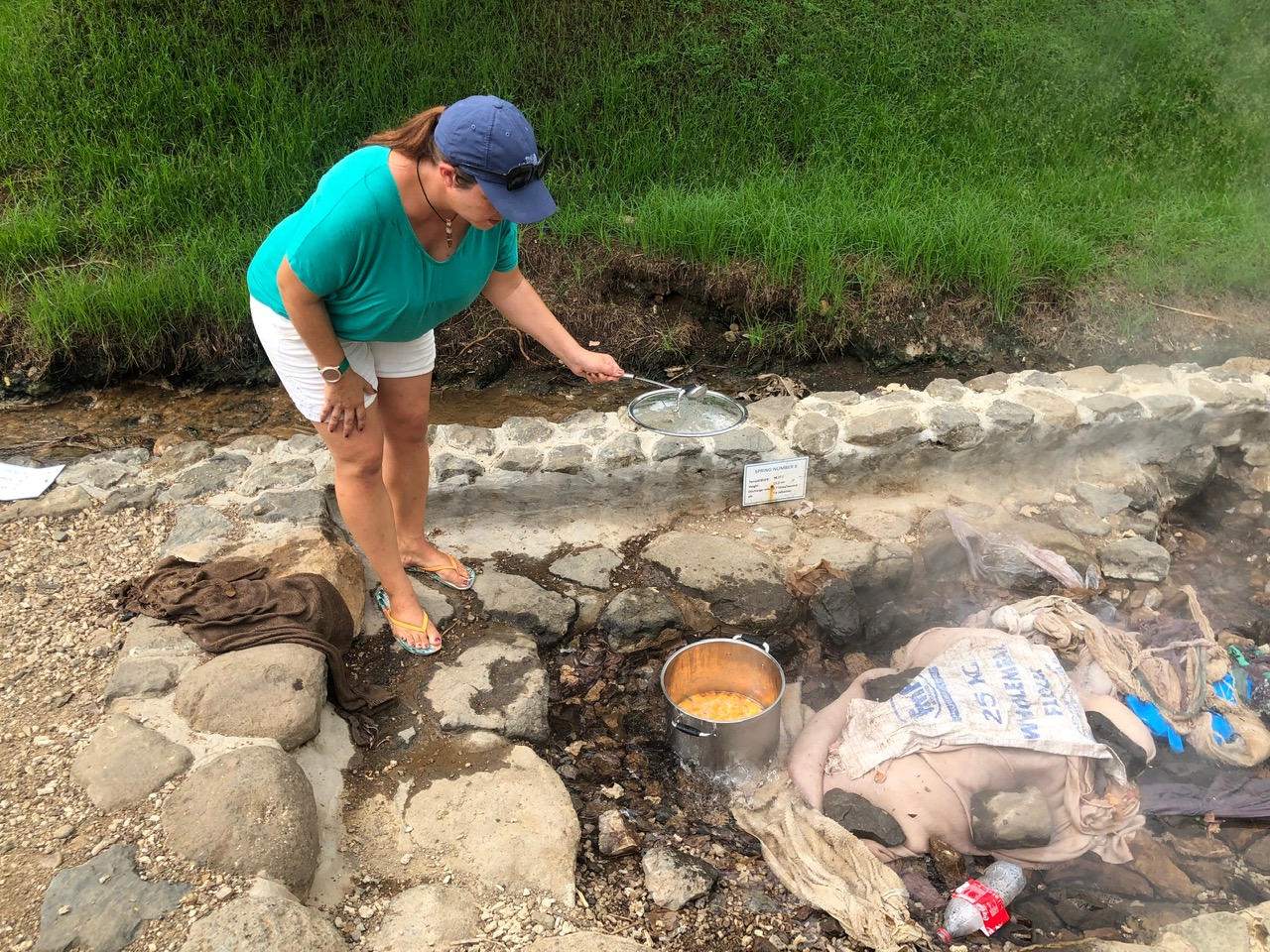
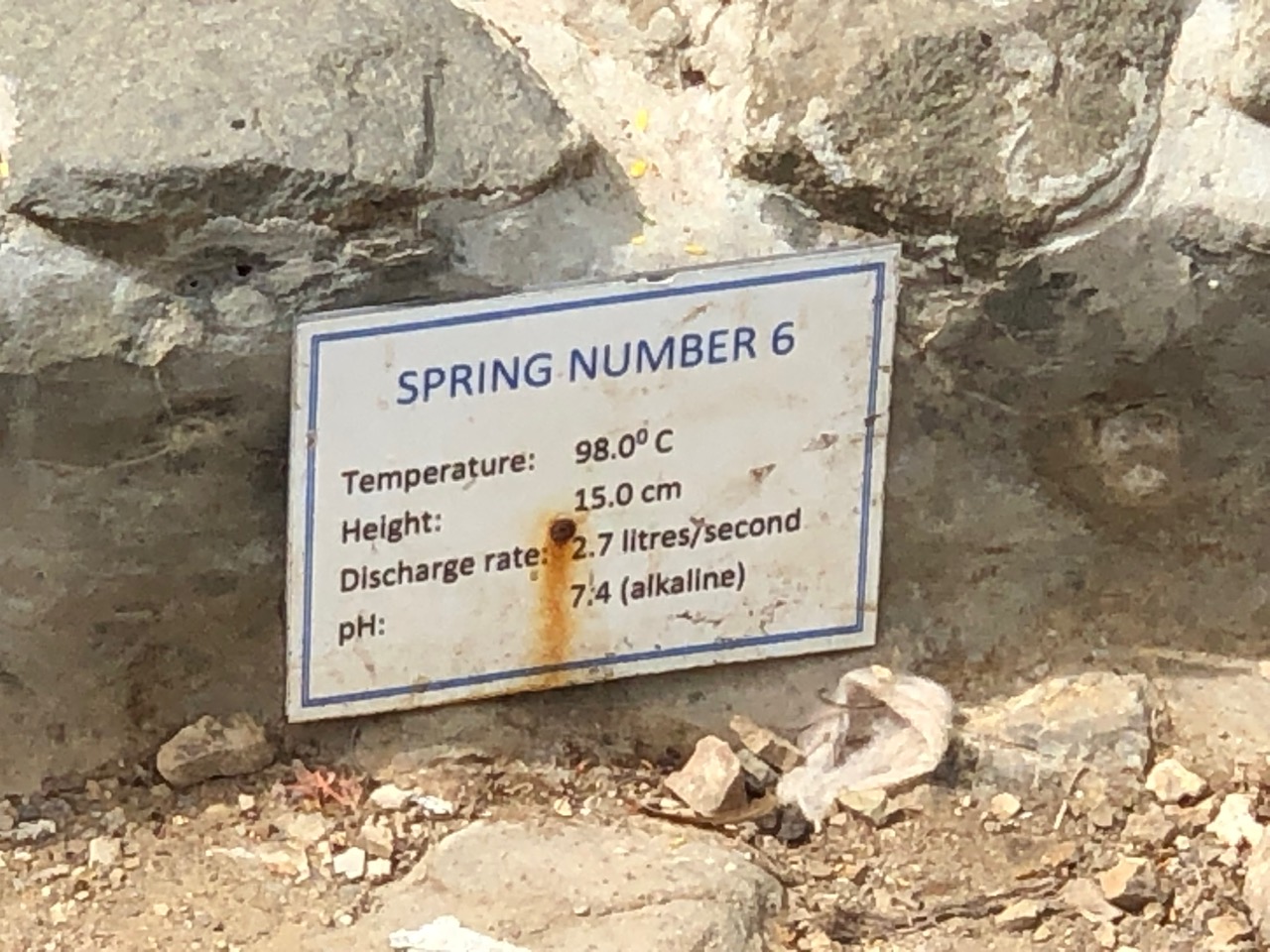
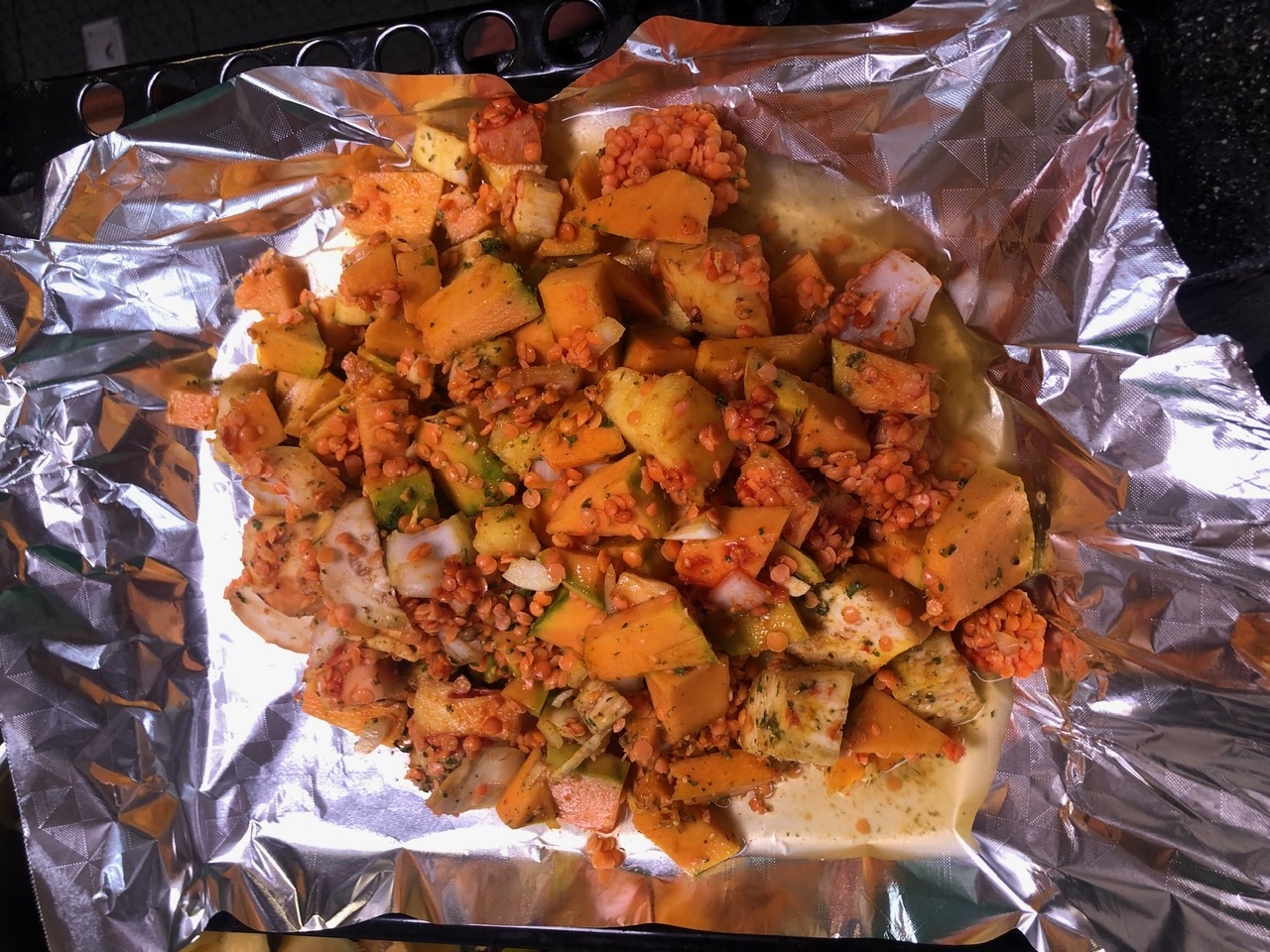
My method of cooking is different from Goetz and Julia. I am not using a pot. I wrap my food in many layers of foil to limit water intrusion. I place the foil parcels in shopping bags. One of my shopping bags is attached by a rope, which I will use to retrieve the boiling bag at the end of the cooking process.


Today, the hot springs were dotted with random plastic wrappers and bits of garbage. I think the debris in the water must have arrived as part of the run off from the rain we’ve been having. I struggle with the idea that my food is being weighted down with some rags of various sizes. Goetz is quite sure that bacteria cannot survive these temperatures.

Goetz and Julia are both surgeons. They will sell their boat and return to their jobs in December. As we sit waiting for our food to cook they talk about burns, all the while keeping a close watch on their four-year old son. Goetz says that an intensive-care burn unit is not available at every hospital in Germany, and would certainly not be available here in Savusavu. Here, fluid loss and infection would be of significant concern.
Other people come by to pick up their food. They lay colorful cloths on the ground and wrap their cooked packages within. Some families stop by to take group pictures.
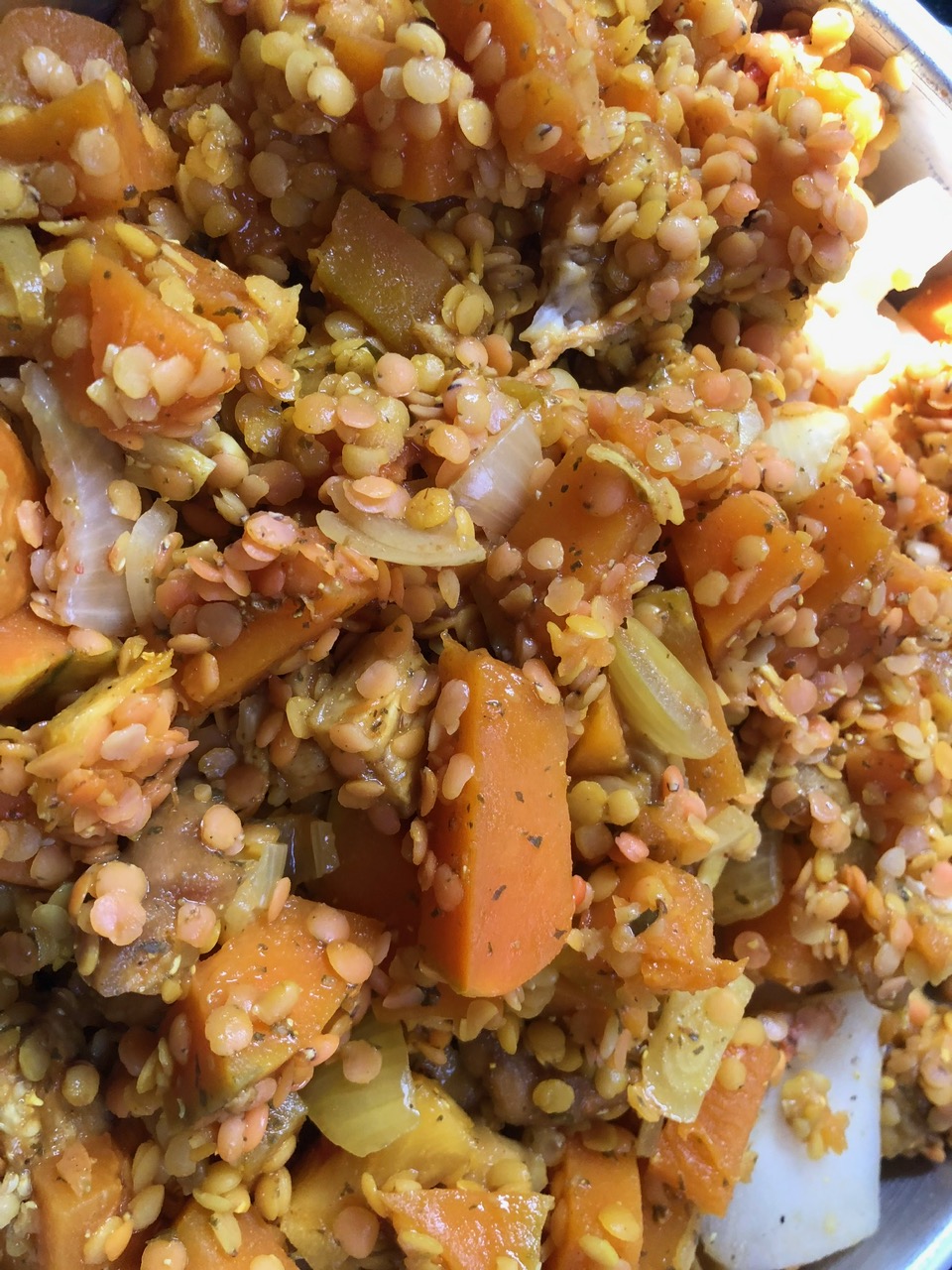
I let my food to cook for almost two hours before removing it from the water with my rope and a stick. I assumed that two hours would be sufficient to boil my vegetables and lentils. The vegetables were thoroughly cooked. The lentils were firm but edible. I suspect the spices had, more or less, washed out as part of the cooking process.
My family was delighted to eat a meal “cooked by volcano”.
In the afternoon, we went snorkeling. As we swam, the water temperature varied from pleasantly warm to ridiculously hot. In some places, the water was as hot as you might fill a bathtub. I remember seeing some unusual bubbles. It didn’t occur to me, at the time, that I may have been seeing bubbles coming from the seafloor, which is a sign of geothermal activity.
Sources:
Using geothermal energy for cooking – examples from around the world
Gordon Ramsay: https://youtu.be/ZGpNtcXOBsg
More about the Nakama hot springs: https://www.pressreader.com/fiji/the-fiji-times/20220829/281908776954989
 Becoming a Sailor
What an interesting read. I so enjoy your writing. The business of keeping a family fed on your travels makes for great stories. I never did hear what happened to that beet. And I’m constantly reminded of what a sailing community there is in the world. So very different from my own life and in some ways so much the same (what’s for supper?)
I don’t know if you announce your itinerary but I’m curious to know what your plan looks like. I believe it was a five year plan to start?? Anyway I will happily read whatever you publish
LikeLike
I made a pickled beet but it’s still in the fridge. I’m keeping it out of pity.
LikeLike
Thank you for writing about your cooking adventures, Lorraine. Your stew looks delicious.
We are going to Iceland in a couple of weeks. I can’t wait to stir up my Viking genes and cook bread in the Hotsprings.
LikeLike
Amazing Lorraine! Love reading about your day to day life and the adventures within.
LikeLike
Thanks Sandra!
LikeLike