
What happens to sailors in the Pacific
I had always wondered what happened to sailors in the Pacific. Everyone I spoke to had swum with a shark and no one blinked an eye discussing it. I heard comments like “Yes, we could see the hammerhead sharks, but they were 50 feet below us.” Or, “The sharks won’t hurt you. They are a bit like dogs.”
And now, I am one of those people. In the Pacific, my entire family swam with a school of black tip sharks.
Our family was on an organized tour group. It is the only sanctioned way to see the sights in the Galapagos.
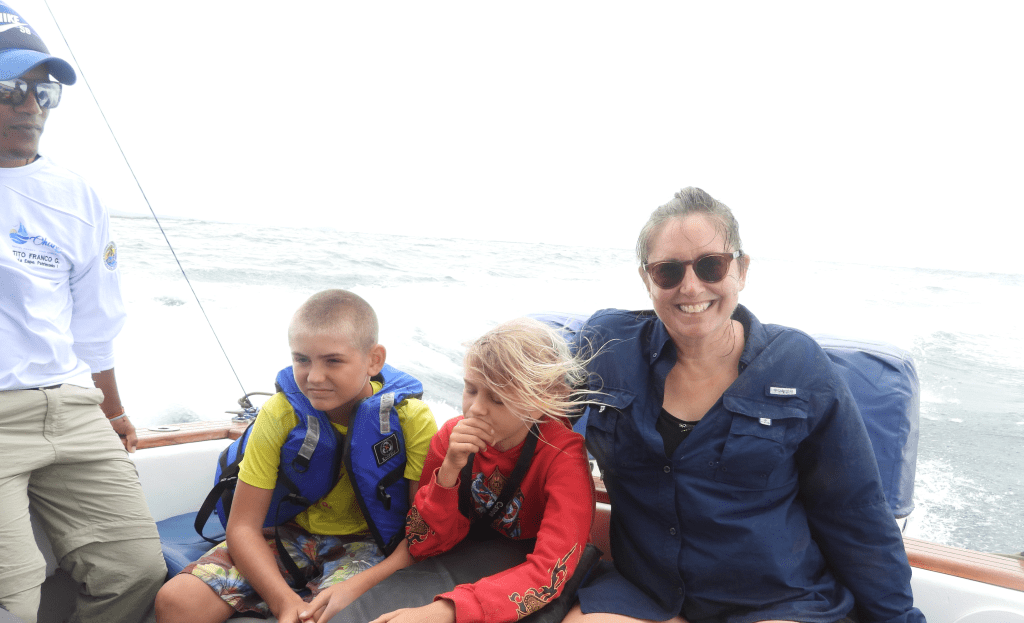
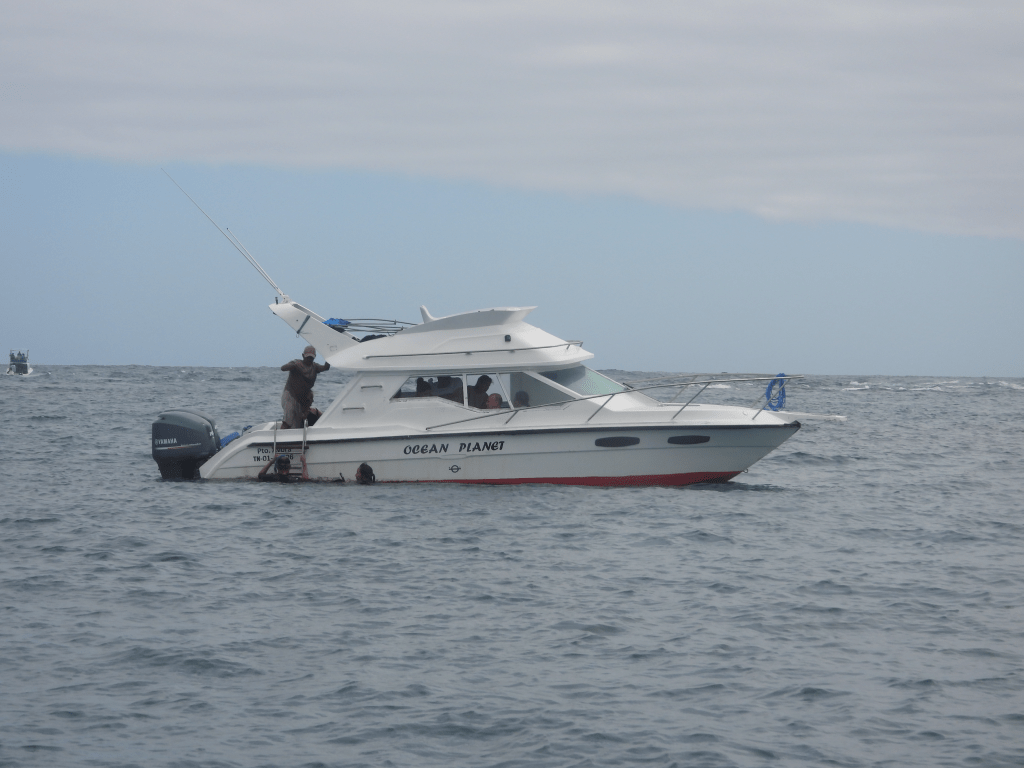

Passengers that sailed that day
On our boat was a doctor named Julia, and three men who, like us, had sailed from Panama on a US-flagged boat called Sweet Reach.
The owner of Sweet Reach was an emergency room doctor who later tended to me when I cut my finger on a fishing knife in French Polynesia.
Also aboard were his childhood friends: a firefighter and avid surfer, and a dive guide who once worked on Catalina Island for marine research.
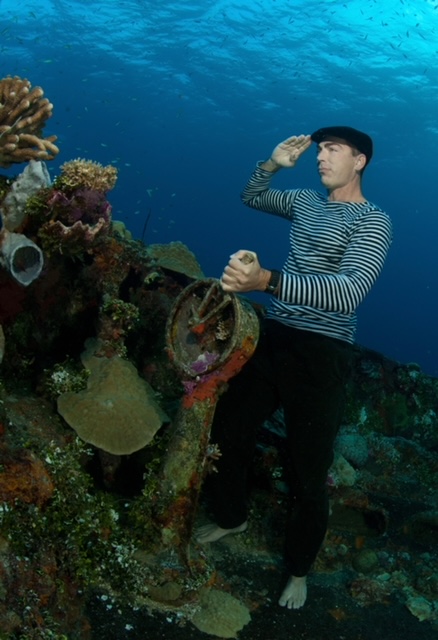
We later dubbed him “Blowfish Todd” (pictured). We got to know Todd and the crew of Sweet Reach as we kept meeting them in French Polynesia.
It’s amazing what paying $100 per person buys you in terms of safety, real or imagined.
Jumping in
We jetted to the snorkeling spots in a power boat. The conversation was lively. We learned that Julia had been traveling solo for three years. Todd was very tempted to jump off the boat to see a Manta Ray that we could see swimming beneath the waves. But, he refrained.
To see his level of excitement, I kind of wish that he had seized the opportunity — although, understandably, it would have annoyed our tour operator for the sheer recklessness. I would have been happy to live that moment vicariously.
We stopped the boat in an area protected from wind and waves, and jumped in.
Sea turtle
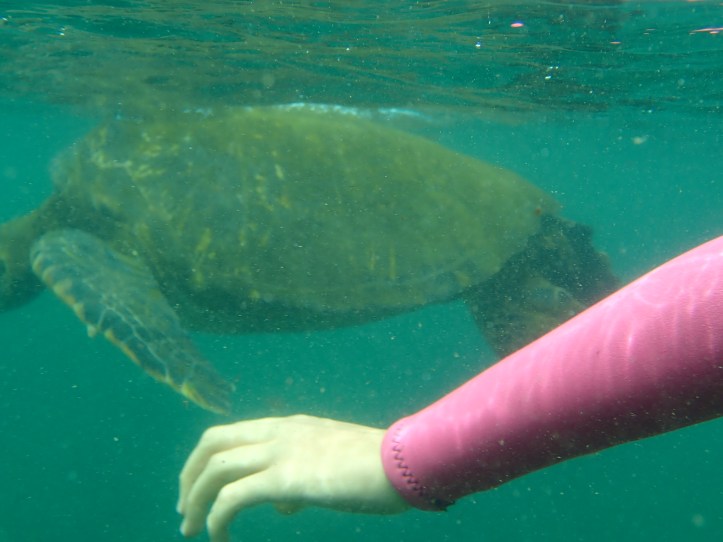
As we approached some mangroves we were told we might see some sea turtles. People tucked their heads underwater and marvelled at what they saw, but I couldn’t see a single sea turtle. The problem was that I wasn’t expecting them to be so large. When I looked at the bottom, a sea turtle filled my entire field of vision.
Black-tip sharks
As we got closer to the mangroves, schools of young black tip sharks were an arresting sight. They moved without any regard or concern to our presence and I felt a bit like I was one of their tribe.
White-tip sharks
I had to wonder at the collective sense of my tour group — peeking at white-tip sharks as they slept in caves — but the sharks weren’t so much as stirring, and no one else was getting bitten.
Todd even stood on Henry’s shoulders so he could remain submerged for longer and get a better look at the sharks.
Back in the boat, we had a fast ride to our next snorkeling spot and ate the best fried rice lunch my children can recall. Each person had their own Tupperware box, which we liked as it allowed the tour operator to reduce waste on the island. Bouncing along the waves, in wet bathing suits, with the wind ripping through the tour boat, we were pretty cold.
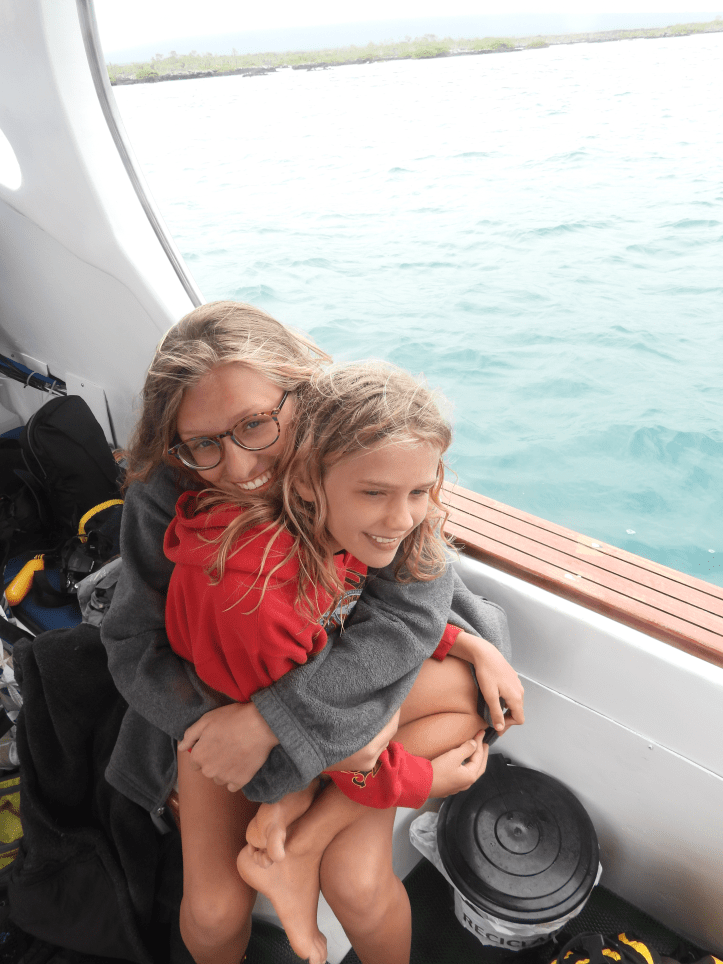
We all wore wetsuits. However, Karen is very thin and has little natural insulation. Her lips were still blue from snorkeling an hour before when we saw sharks and sea turtles. Betty stayed behind to keep Karen company.
I could see small penguins gathered together in the distance. It seemed like a miracle of nature to see penguins at the equator. We put our wetsuits on and went back into the water.
It was the coldest water I can recall outside of Canada and Alaska. But, its origins explain, at least in part, why the penguins arrived to the Galapagos in the first place. The Galapagos is where the Humbolt current from the California Coast converges with the southern current from Antarctica. David Attenborough explains their arrival in his three-part documentary series: Galapagos.
Galapagos Penguins
From only two feet away, I watched as a Galapagos penguin bobbed and stopped, bobbed and stopped and then finally committed to diving into the water. I poked my head underwater and watched the penguin jump and swim like a torpedo.

I was enchanted and soon lost track of my group. All the wet bobbing heads from other tour groups looked the same. At one point, I followed along with a tour group run by a rather militant-sounding woman.
“Follow me, let’s keep together and no talking. We all want a chance to see the penguins.”
The guide wore a Hawaiian-print bathing suit. Her skin was flushed pink but her voice betrayed no sign of being cold.
Brown shape
Still looking for other members of my tour group, a large brown shape came up to my side. Expecting it to be a person, I audibly jumped out of my skin when I met the soft brown eyes of a sea lion. I guess my scream echoed in my snorkel. The sea lion seemed to do a double take, made a sharp turn and swam off.
A transformative experience

“I will never be the same again,” I said, pulling my snorkel out and taking my mask out of my hair. Julia laughed and climbed back onto our tour boat ahead of me. But, I wasn’t joking.
I have now swam with sharks eye to eye. I have seen sea turtles as big as kiddie pools. Yet, nothing could compare to my thrill at swimming underwater with penguins and playful sea lions. To have seen the underbellies of penguins swimming above me — that was pretty rare and wonderful.
Next post in the Galapagos series: Red, Blue, and Clawed: Animal Feet in the Galapagos
Pin it
If you enjoyed this story, you can save it to your own Pinterest board using the image below. Thanks for reading and following our journey.
 Becoming a Sailor
Wow! Just Wow. Wh
LikeLike
Yes it was an amazing day.
LikeLike