

Long Reads Galapagos includes five stories from our ongoing circumnavigation on our sailboat, and a link to whimsical post for kids or the young-at-heart.
In This Long Read
The Galapagos first captured my imagination in my high school textbooks. Images of giant tortoises appeared somewhere near a colourful graphic of Mendel’s experiments with pea plants. Leaving Panama, the terrain of the Galapagos was impossible to resist and one of our favourite places to visit since we began our circumnavigation.
Approaching the Galapagos
Originally written on June 11, 2022 at sea at 5 23.873S 115 57.082W
This is an excerpt from a longer blog post called What Lies Beneath? Barnacle Busting Outside the Galapagos at 2,000 Meters Deep.
Leaving Panama, we had not intended to stop in the Galapagos. It is expensive and, after living through the paperwork and endless nose-swab tests relating to quarantines and COVID, the red tape for entry to the Galapagos was more than we wanted to tackle.
But, after weeks of sailing, we spotted land. An island appeared before us, looking like a Martian landscape. The urge to visit the Galapagos was irresistible. We headed back out to sea to clean our boat bottom.
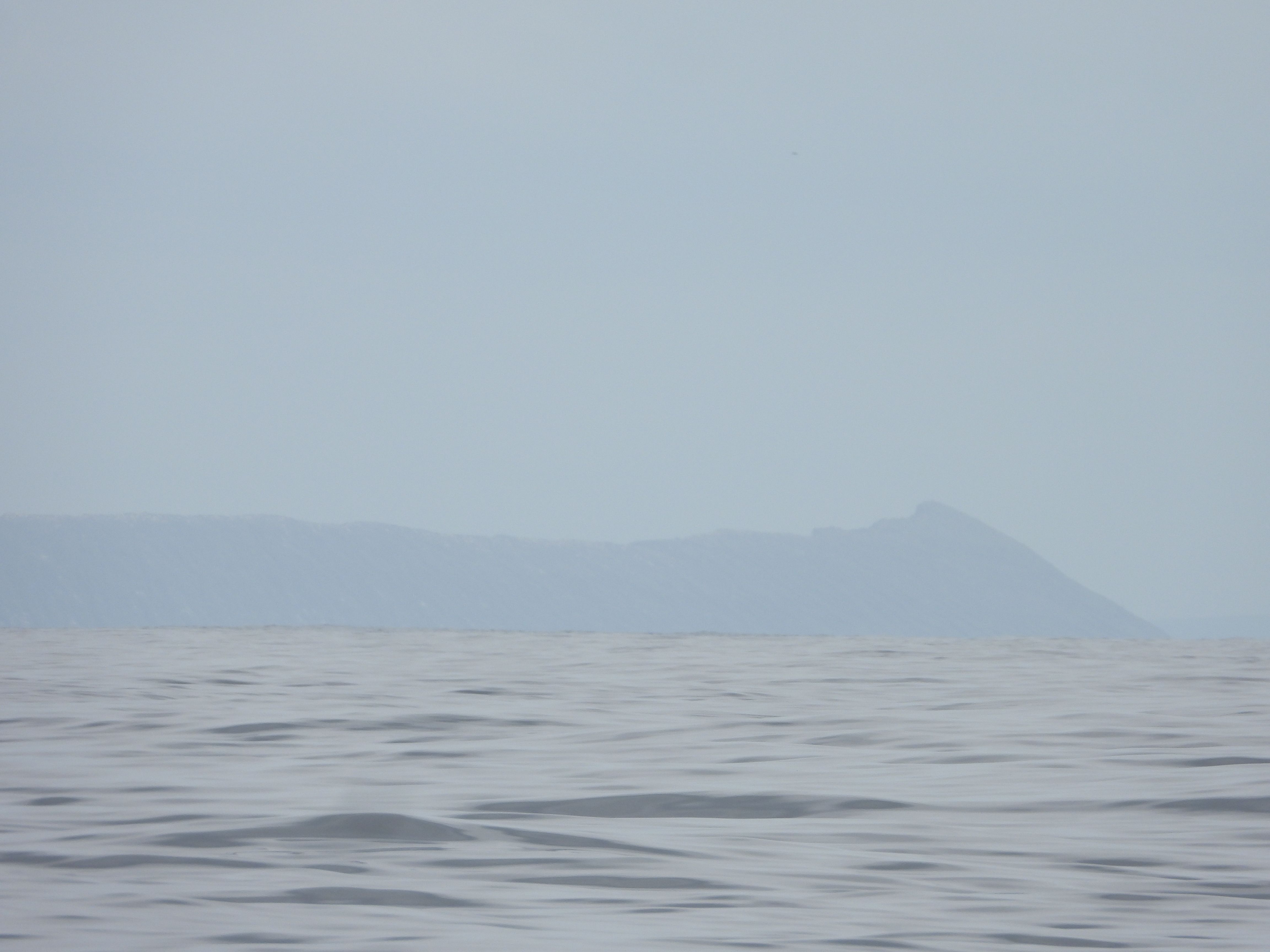
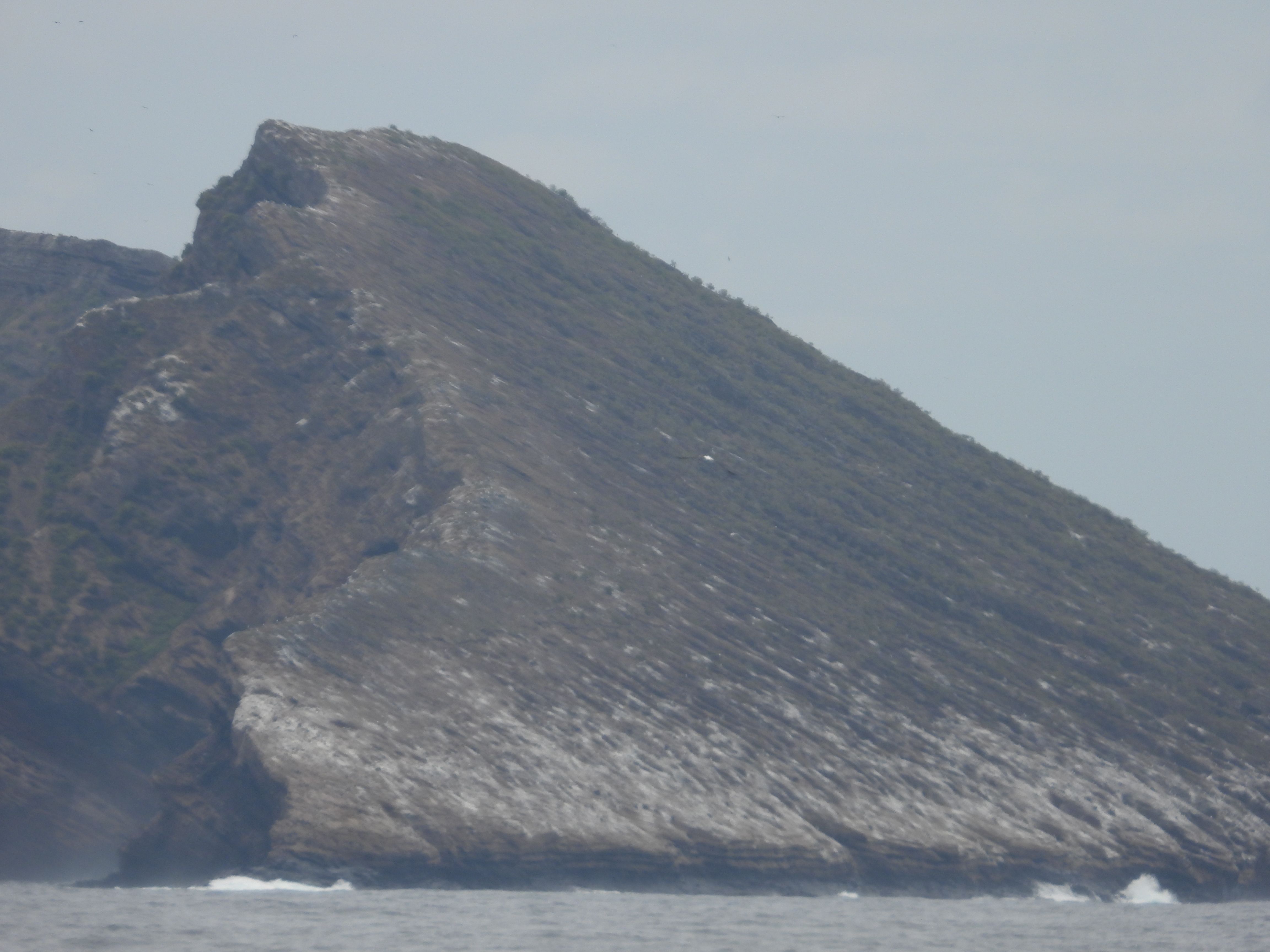
We knew that Ecuador, much like New Zealand, is protective of its ecosystems and does not want to introduce invasive species by way of algae or other marine growth. We had heard that, as part of the entrance procedure, port authorities would put a camera under a boat and look for signs of growth. Rumour had it that a single barnacle was enough for the authorities to send you back out to sea to do a proper cleaning. Divers are available to do the work at your expense.
…
When we arrived in the Galapagos, I expected someone to run a camera along our boat bottom. But that did not happen.
Swimming with Sharks, Penguins, and Sea Lions
Originally written on June 6, 2022
What happens to sailors in the Pacific?
I had always wondered what happened to sailors in the Pacific. Everyone I spoke to had swum with a shark and no one blinked an eye discussing it. I heard comments like “Yes, we could see the hammerhead sharks, but they were 50 feet below us.” Or, “The sharks won’t hurt you. They are a bit like dogs.”
And now, I am one of those people. In the Pacific, my entire family swam with a school of blacktip sharks.
Our family was on an organized tour. It is the only sanctioned way to see the sights in the Galapagos.
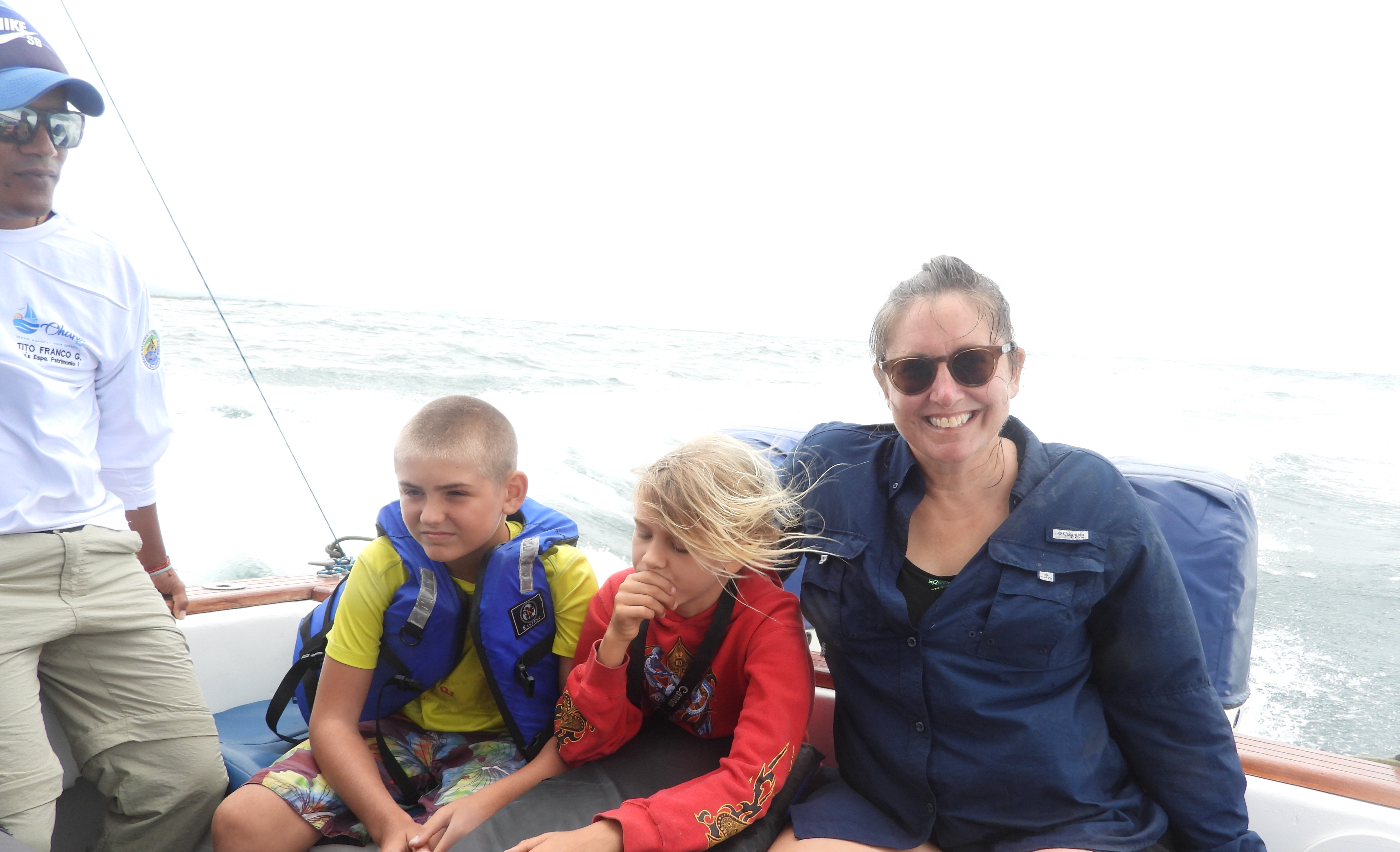
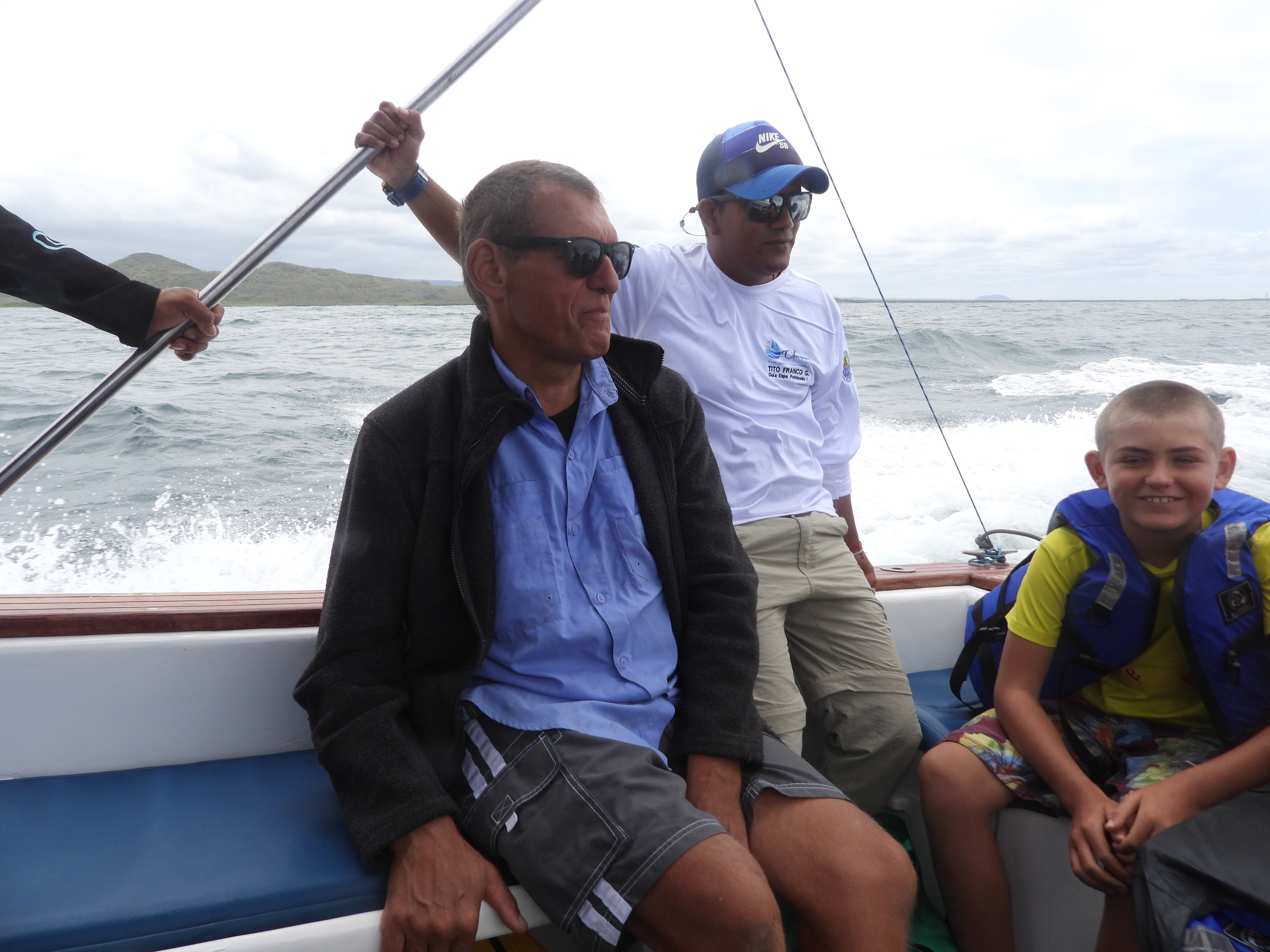
Other passengers on the tour
On our boat was a doctor named Julia, and three men who, like us, had sailed from Panama on a US-flagged boat called Sweet Reach.
The owner of Sweet Reach was an emergency room doctor who later tended to me when I cut my finger on a fishing knife in French Polynesia.
Also aboard were his childhood friends: a firefighter and avid surfer, and a dive guide who once worked on Catalina Island for marine research.
We later dubbed him “Blowfish Todd” (pictured). We got to know Todd and the crew of Sweet Reach as we kept meeting them in French Polynesia.

It’s amazing what paying $100 per person buys you in terms of safety, real or imagined.
Jumping in
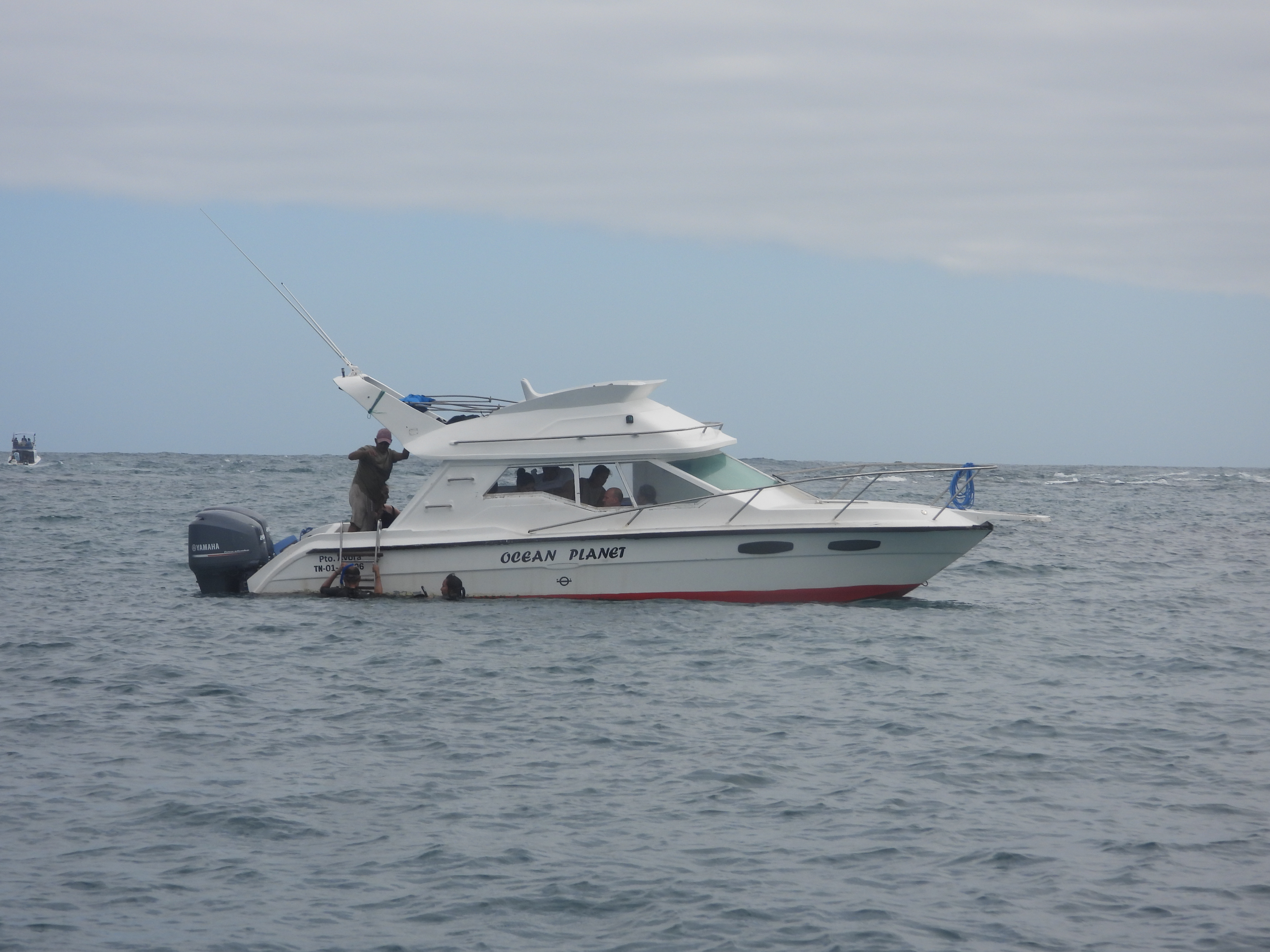
We jetted to the snorkeling spots in a powerboat. The conversation was lively. We learned that Julia had been traveling solo for three years. Todd was very tempted to jump off the boat to see a manta ray that we could see swimming beneath the waves. But, he refrained.
Seeing his level of excitement, I kind of wish that he had seized the opportunity — although, understandably, it would have annoyed our tour operator for the sheer recklessness. I would have been happy to live that moment vicariously.
We stopped the boat in an area protected from wind and waves, and jumped in.
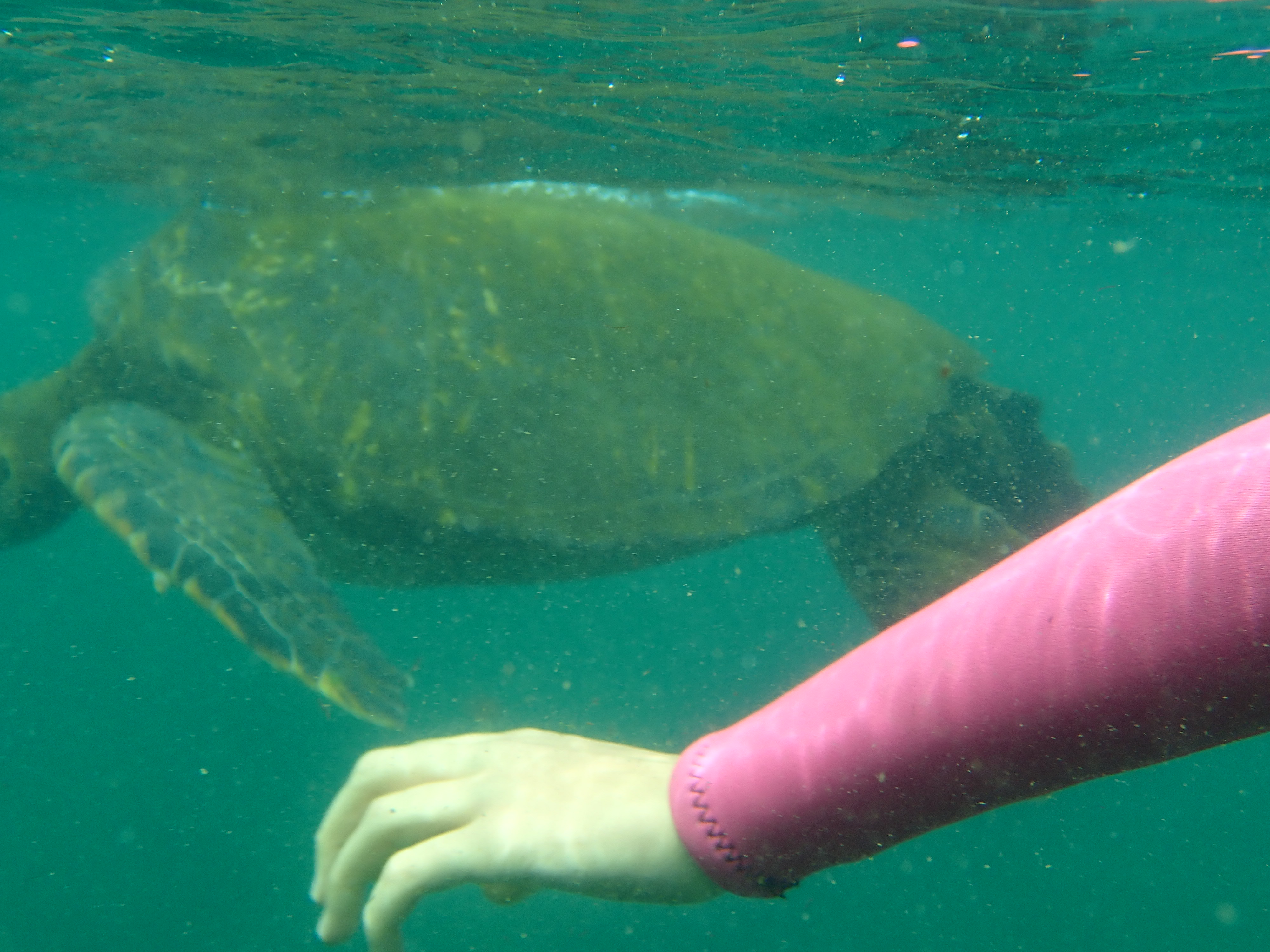
Sea turtle
As we approached some mangroves, we were told we might see some sea turtles. People tucked their heads underwater and marvelled at what they saw, but I couldn’t see a single sea turtle. The problem was that I wasn’t expecting them to be so large. When I looked at the bottom, a sea turtle filled my entire field of vision.
Blacktip sharks
As we got closer to the mangroves, schools of young blacktip sharks were an arresting sight. They moved without any regard for or concern about our presence and I felt a bit like I was one of their tribe.
White-tip sharks
I had to wonder at the collective judgement of my tour group — peeking at white-tip sharks as they slept in caves — but the sharks weren’t so much as stirring, and no one else was getting bitten.
Todd even stood on Henry’s shoulders so he could remain submerged for longer and get a better look at the sharks.
Back in the boat, we had a fast ride to our next snorkeling spot and ate the best fried rice lunch my children can recall. Each person had their own Tupperware box, which we liked as it allowed the tour operator to reduce waste on the island. Bouncing along the waves, in wet bathing suits, with the wind ripping through the tour boat, we were pretty cold.
We all wore wetsuits. However, Karen is very thin and has little natural insulation. Her lips were still blue from snorkeling an hour before when we saw sharks and sea turtles. Betty stayed behind to keep Karen company.
I could see small penguins gathered together in the distance. It seemed like a miracle of nature to see penguins at the equator. We put our wetsuits on and went back into the water.
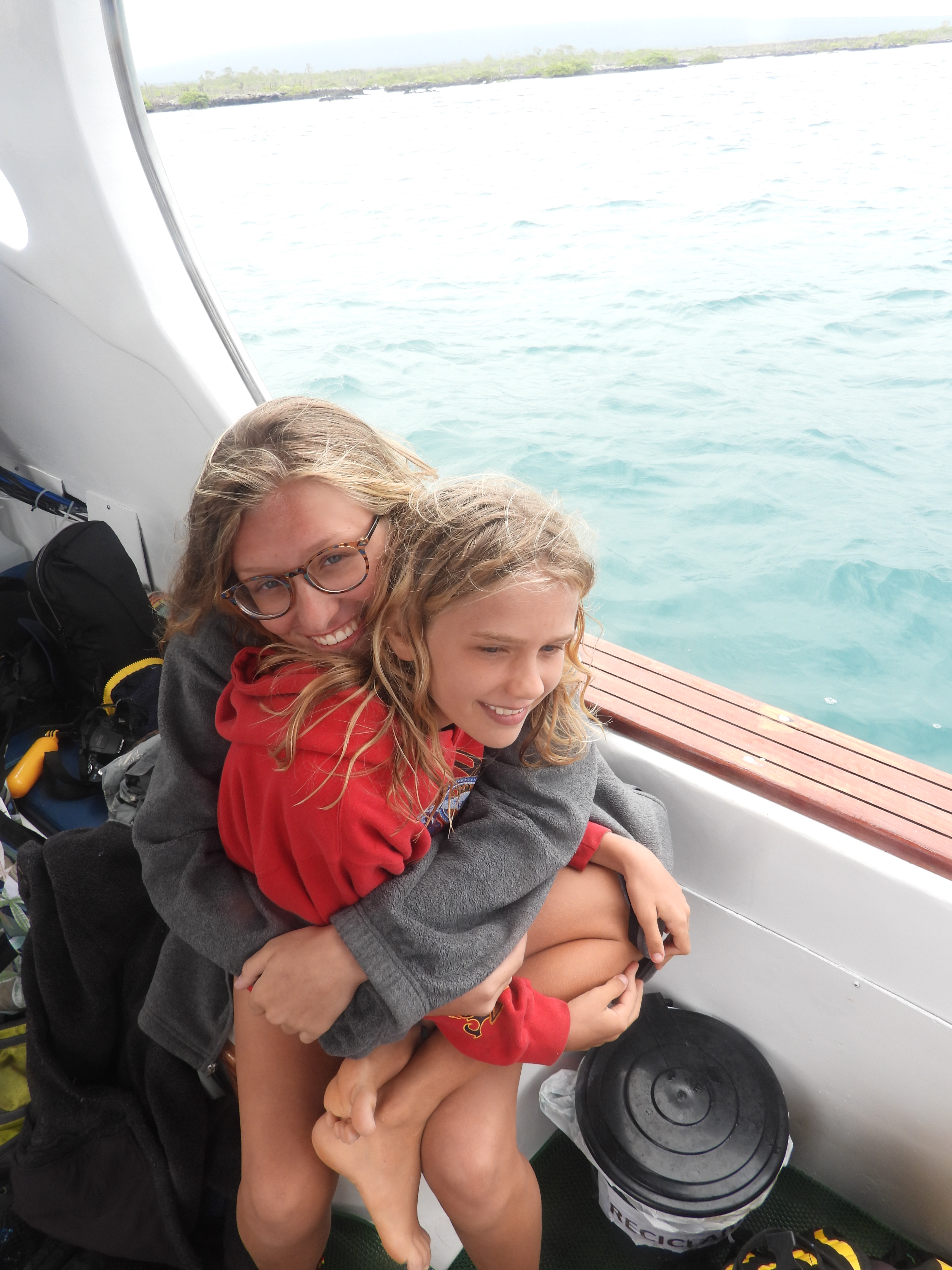
It was the coldest water I can recall outside of Canada and Alaska. Its origins explain, at least in part, why penguins arrived in the Galapagos in the first place. The penguins are thought to have reached the islands on cold-water currents, then become marooned there. David Attenborough explains their arrival in his three-part documentary series: Galapagos.
Galapagos penguins
From only two feet away, I watched as a Galapagos penguin bobbed and stopped, bobbed and stopped, and then finally committed to diving into the water. I poked my head underwater and watched the penguin jump and swim like a torpedo.
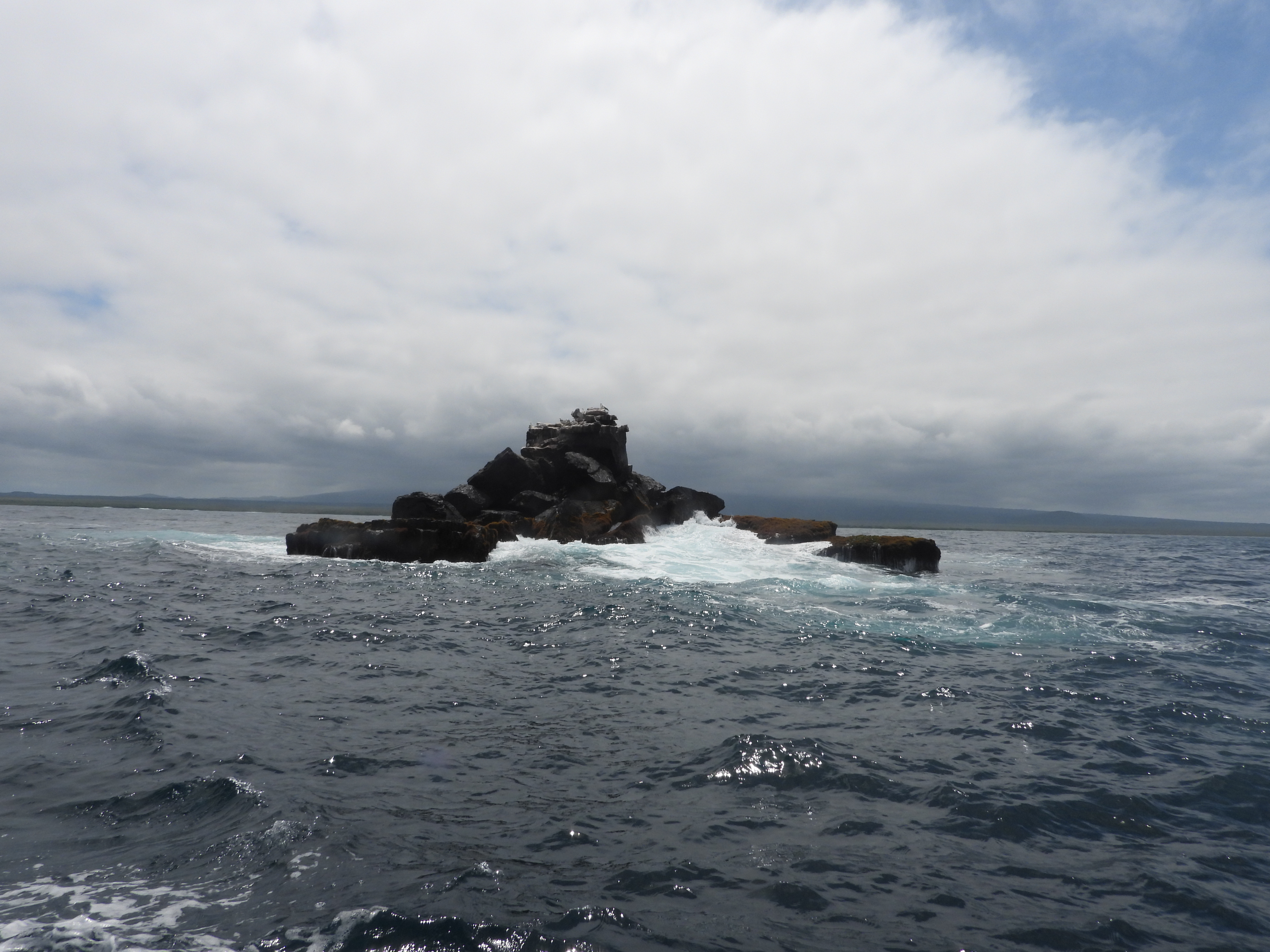
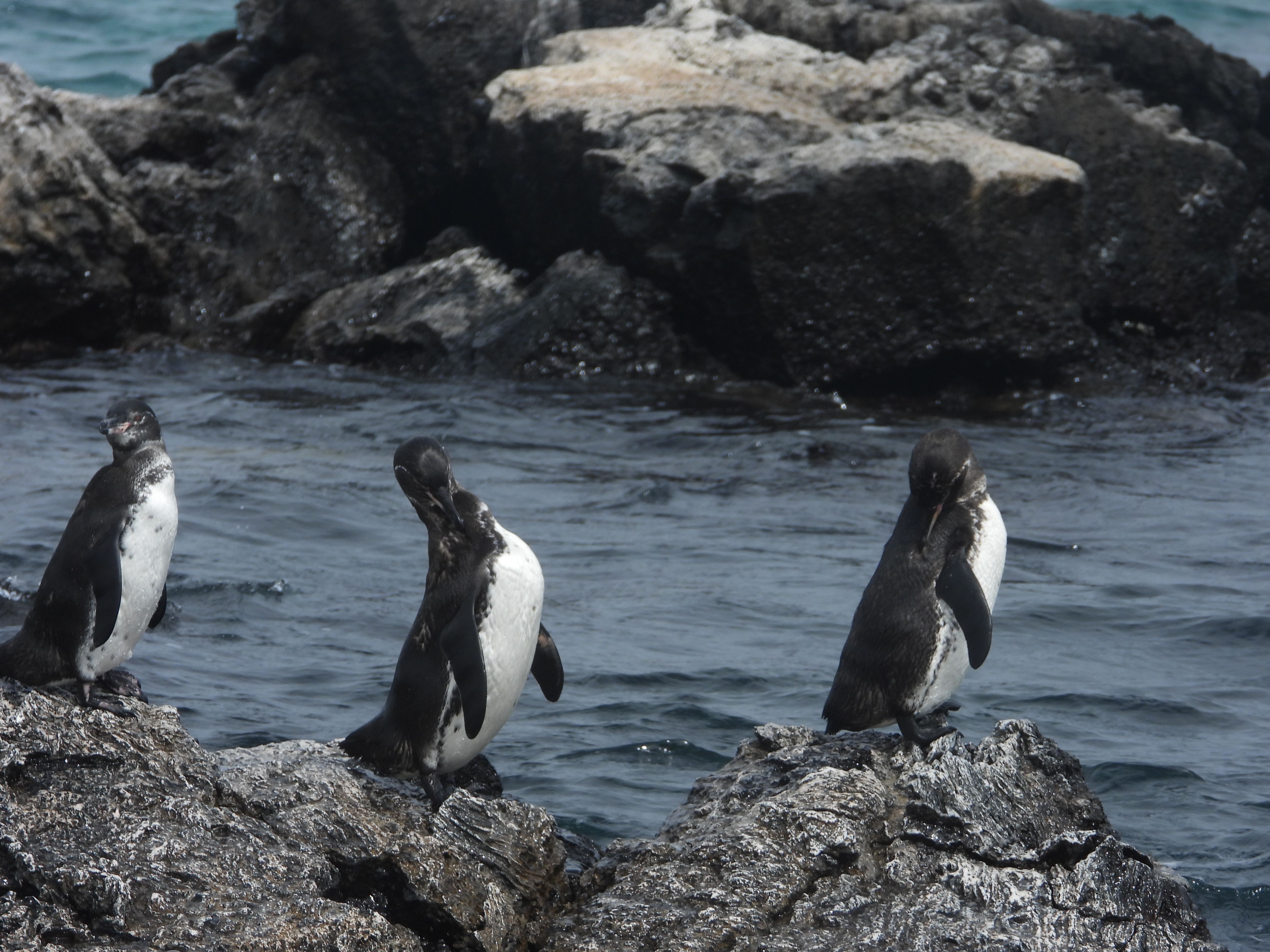
I was enchanted and soon lost track of my group. All the wet bobbing heads from other tour groups looked the same. At one point, I followed along with a tour group run by a rather militant-sounding woman.
“Follow me, let’s keep together and no talking. We all want a chance to see the penguins.”
The guide wore a Hawaiian-print bathing suit. Her skin was flushed pink but her voice betrayed no sign of being cold.
Brown shape
Still looking for other members of my tour group, a large brown shape came up to my side. Expecting it to be a person, I audibly jumped out of my skin when I met the soft brown eyes of a sea lion. I guess my scream echoed in my snorkel. The sea lion seemed to do a double take, made a sharp turn and swam off.
A transformative experience
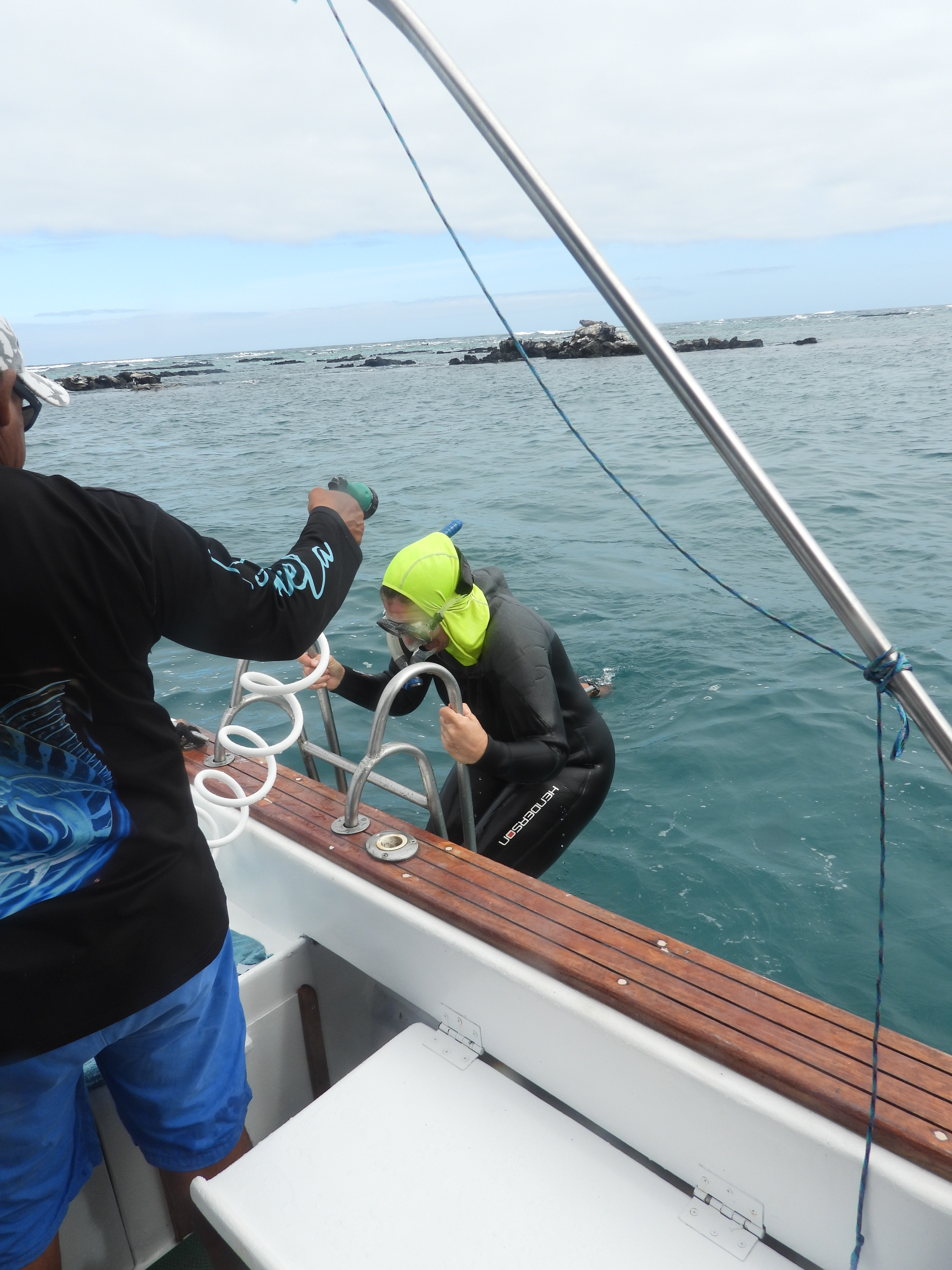
“I will never be the same again,” I said as I pulled my dive mask out of my hair. Julia laughed and climbed back onto our tour boat ahead of me. But, I wasn’t joking.
I have now swum with sharks eye to eye. I have seen sea turtles as big as kiddie pools. Yet, nothing could compare to my thrill at swimming underwater with penguins and playful sea lions. To have seen the underbellies of penguins swimming above me — that was pretty rare and wonderful.
Hiking the Sierra Negra Volcano
Originally published on June 9, 2022
Leaving town in Isla Isabela
On an organized hiking tour on Isla Isabela, Galapagos, we got a ride from town to the trailhead of Sierra Negra, which is an active volcano.
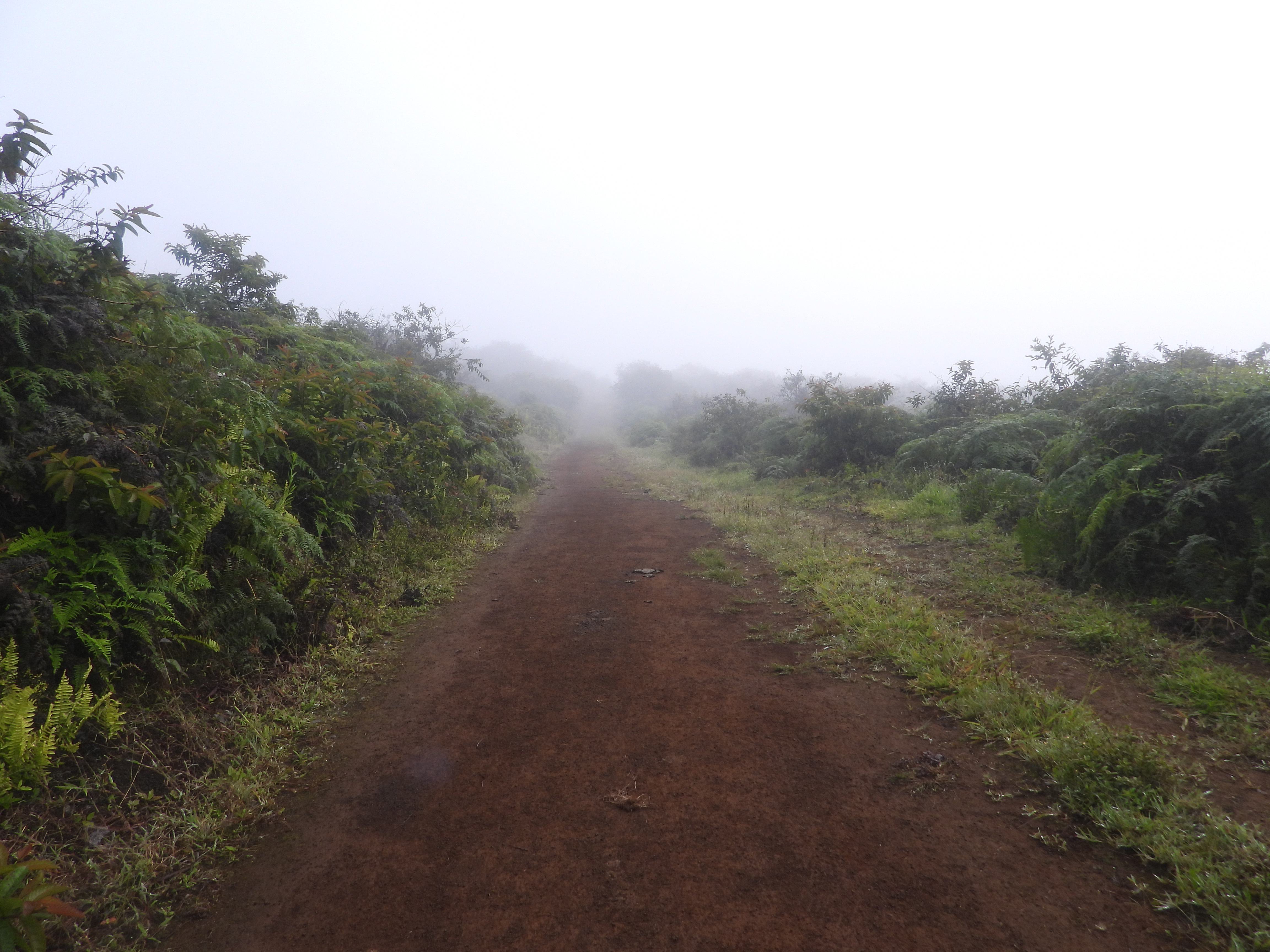
We could have been in the English countryside on a damp and foggy morning, except this was the Galapagos. Situated at the equator, I would have expected the Galapagos to be hot. Yet, cold ocean currents cool the islands to the point that a species of penguin now calls the Galapagos home.
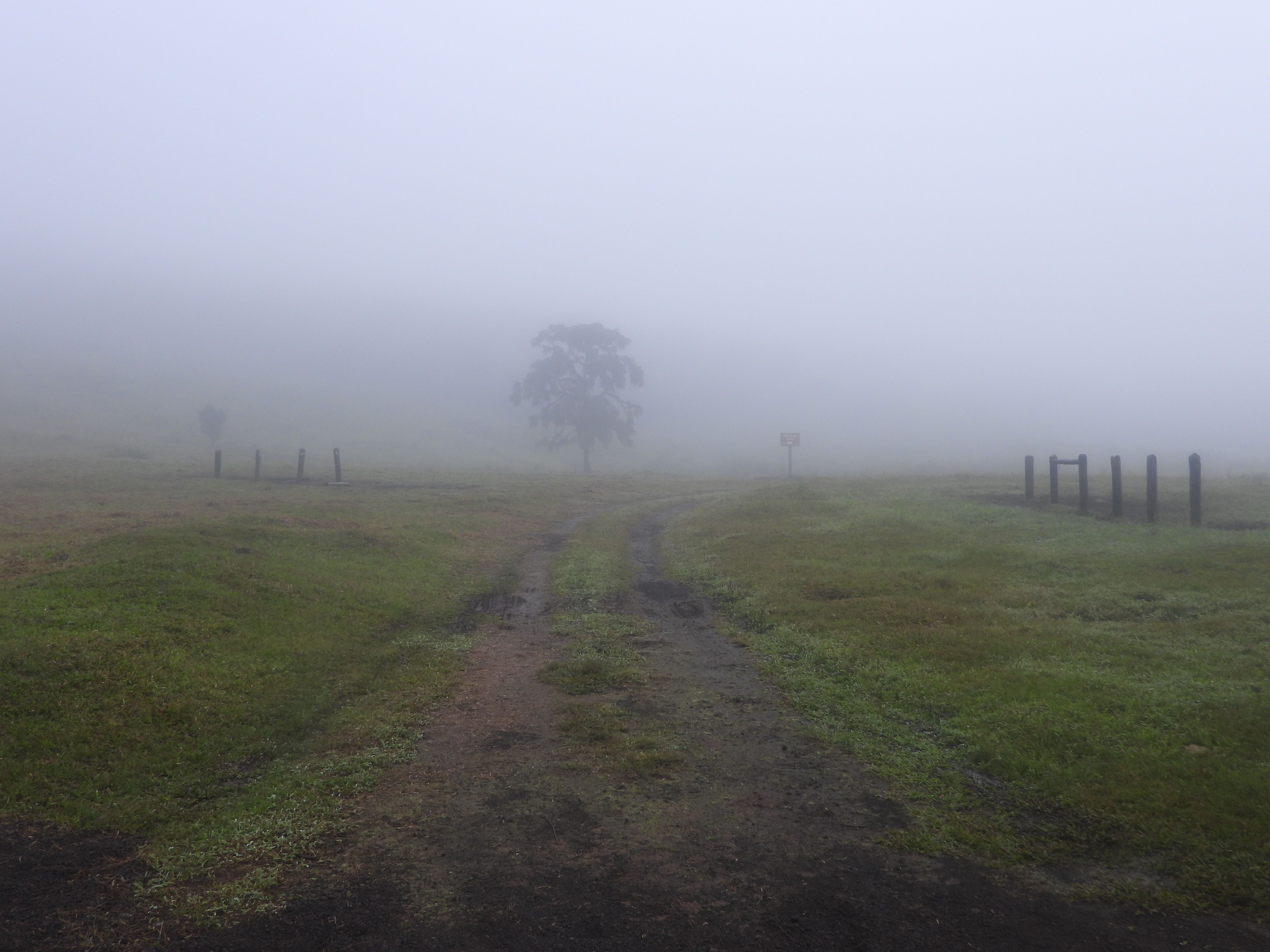
A militant start to a 10-mile walk: it’s go time!
“We will split up,” said our guide. “English speakers follow me. Spanish speakers follow the other guide.” A crunch of feet followed with some random chatter. The noise died out and our guide continued.
“Due to the rain, there is not much to see this morning. We will be walking along the south side of the crater. We should be able to see into Sierra Negra when the sun comes out.”
Surveying the other members of our group, I began to wonder if this was such a good idea. A 10-mile hike on rocky terrain with limited views.
“The start of the hike is hard because it’s uphill. For the first hour and a half we won’t stop for breaks, except for water. It is important to stay hydrated. At the top of the hill, there is a hut. We will stop for snacks and then start our descent into the volcano where we will stop more often as I provide greater explanation.”
We set off in the footsteps of Charles Darwin
There are 16 of us. At first, I am towards the beginning of the pack. I match my pace to the people ahead of me, keenly aware of the footsteps behind me.
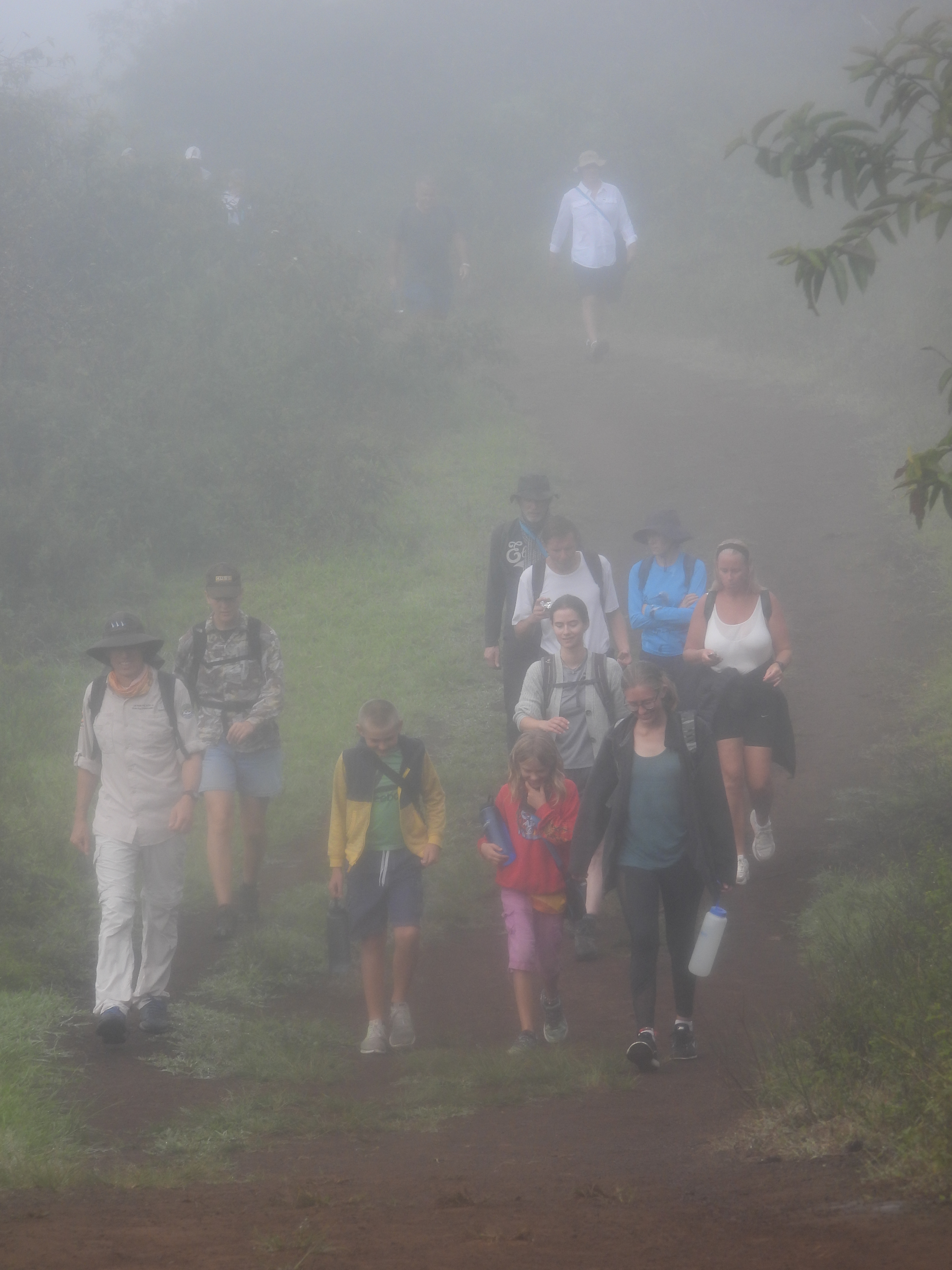
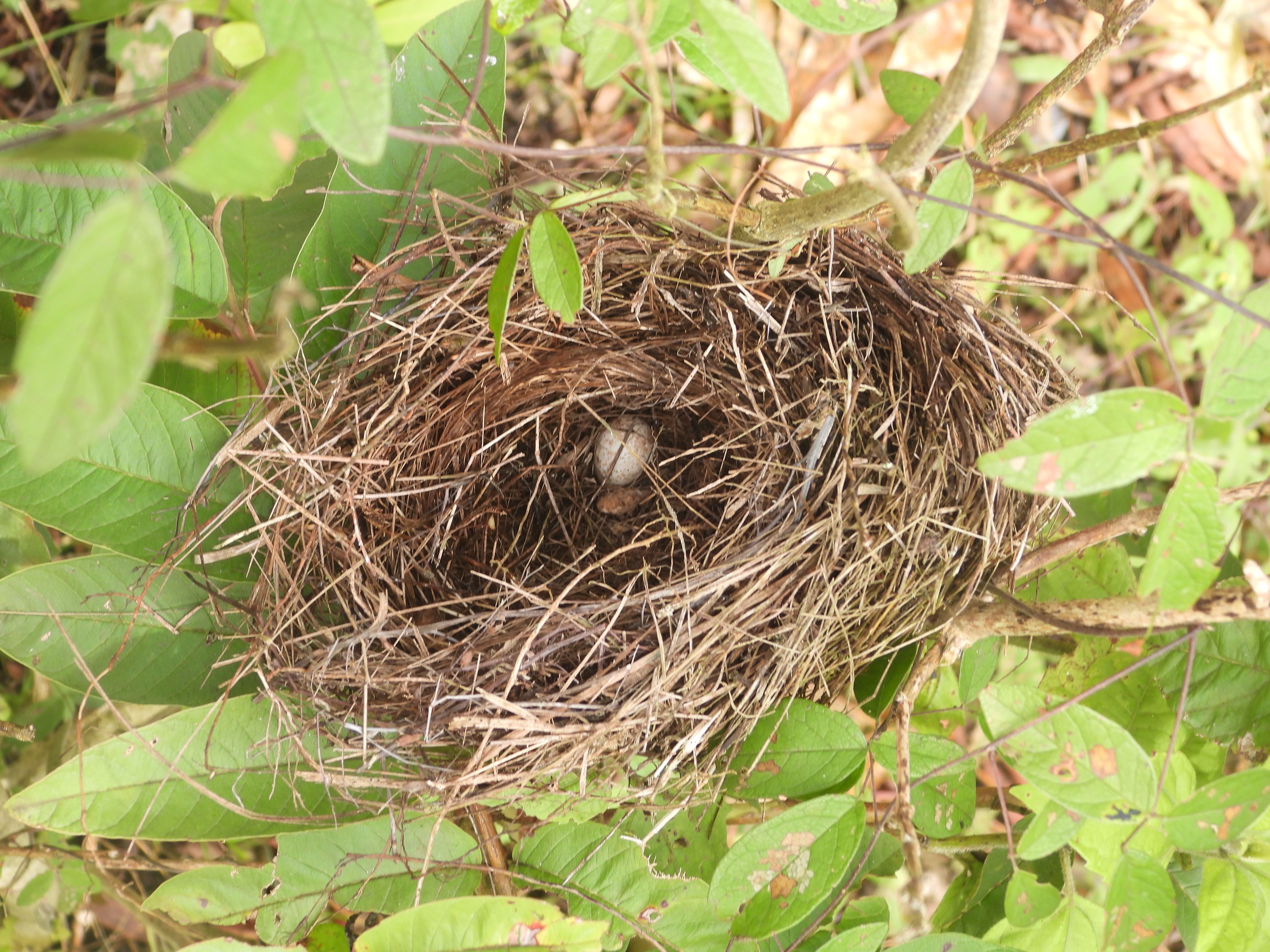
Finch. Spotted.
This is the Galapagos. I spot three finches and feel rewarded. Darwin studied the finches on the Galapagos. He was in the Galapagos for only five weeks. What a banger of a trip it must have been.
In just five weeks, Darwin observed the shape of finch beaks, posited that the same species adapted to different conditions, which helped him develop the theory of evolution.
Why finches?
With all the interesting plants and animals in the Galapagos — giant tortoises, huge sea turtles, blue-footed boobies, dandelion plants that grew to be trees, cacti growing in wetlands, and penguins — the world was his oyster. I have to wonder, why finches? How did Darwin come to realize he could prove his theory of evolution by studying the finch, such a basic-looking bird?
I had wondered if Darwin might have been a bird-watcher with blinkers on. Rick, my husband and scientist, has this to say:
“It’s because their beaks rapidly evolved to meet their needs on each of the very of the different islands. It’s amazing that Darwin was able to see past the staggering diversity of life here and identify the importance of the lowly finch’s beak. All in only five weeks. Unbelievable.”
The march continues
Soon, I am overtaken by a couple of people and then some more. I can feel a metallic taste in my mouth. I continue to work hard and focus on the feet of the people ahead of me.
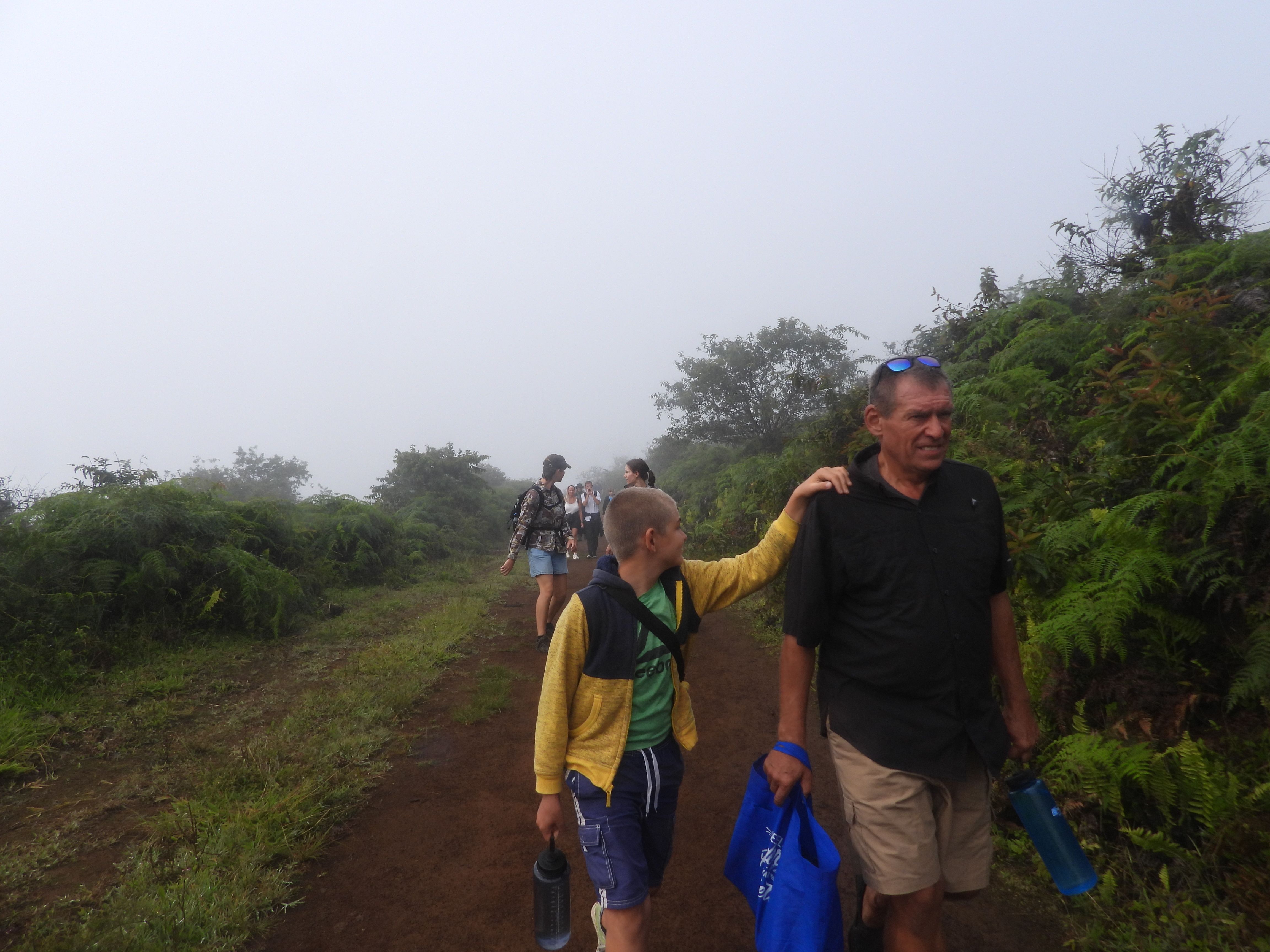
“Really? Congratulations!” I hear one couple from Missouri say to a lone German man. The German is strikingly tall. His pants and mid-layer jacket must have been purchased at the same time because the colour match is spot on. I missed the reason that he is being congratulated. I imagine he has just graduated from university or got married. I catch myself concocting stories about why his wife is not on this trip.
I am in the Galapagos. The flora and fauna are unique in the Galapagos. Constructing possible dramatic situations in the lives of strangers is not where I want my mind to wander.
I focus on the people ahead. One woman affects the confident stride of two chicken drumsticks. She is chatting to the woman next to her whose legs are coated in sunscreen.
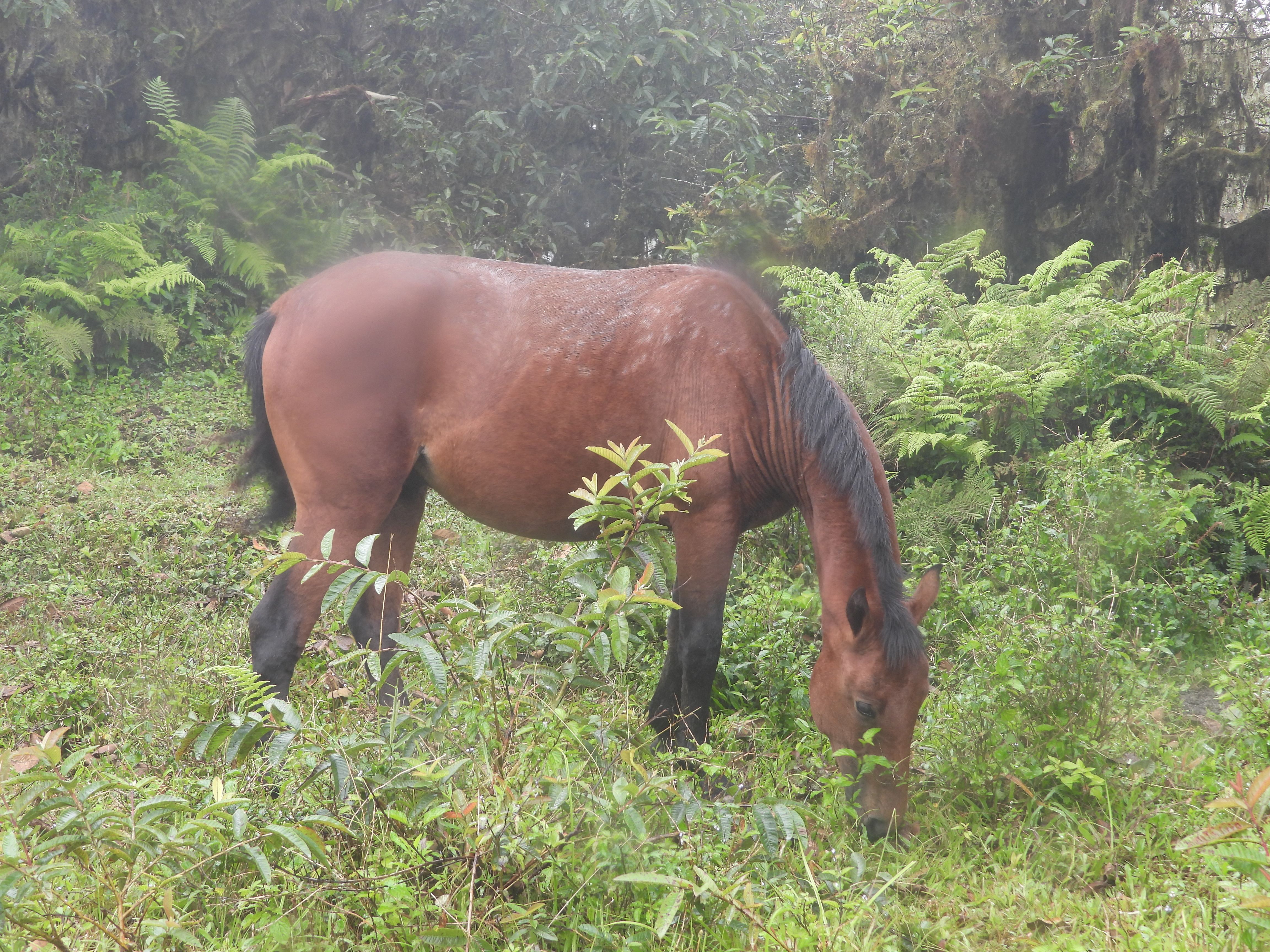
Still, we plod along a muddy, rutted road. I see finches, I hear cows (imported), and my feet dodge horse droppings. I can tell where the huge volcano crater might be, though we do not have a clear view of it. The crater is so large there are clouds and fog inside, below our elevation.
Reaching the crater of the Sierra Negra Volcano, Galapagos
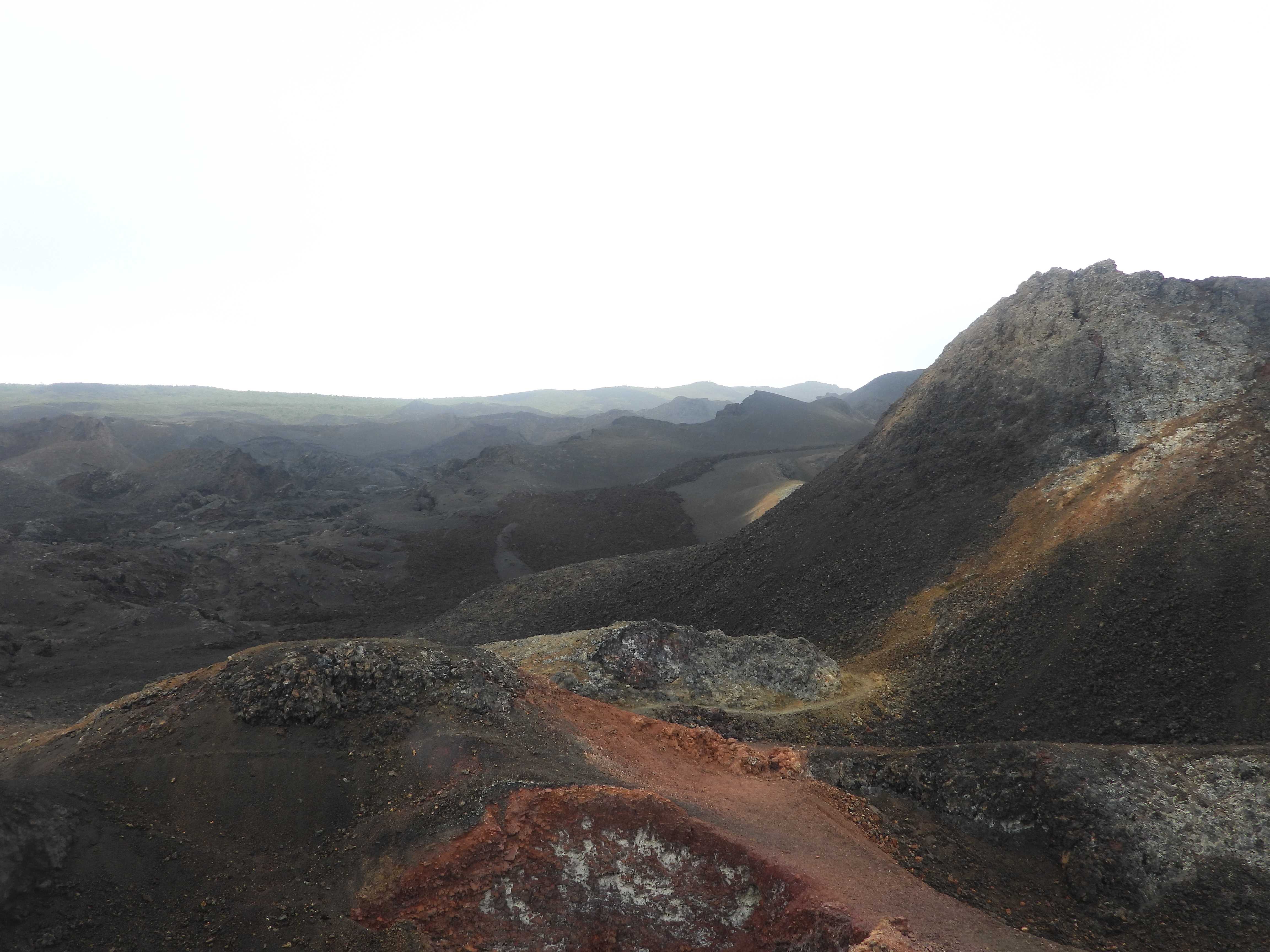
By mid-morning, it feels like midday. We are at the top and the edge of the crater. The view is great, the sun is getting hotter and we can see the nearer parts of the crater a long way below. We can see where recent lava flowed by following the black rivers cutting through the lush, green floor of the crater.
Stopping for lunch, chit-chatting and gaining new perspectives
We spend about 45 minutes eating and chatting with a couple of men we had met the day before on a snorkeling tour. They are Wayne and Todd — aka Blowfish Todd — whom we would see again in French Polynesia.
Earlier in the day, Todd greeted us by doing a blowfish on our truck window. Karen (sitting on my lap in the front) thought this was fantastic. More than once, she traced his mouth print with her hand as we travelled in a convoy to the trailhead of the volcano.

The Spanish guide and group joined us at the hut. Betty met a couple of young women who were first-year medical students. They were on a foreign exchange to learn Spanish. I think they said they were from the University of Iowa.
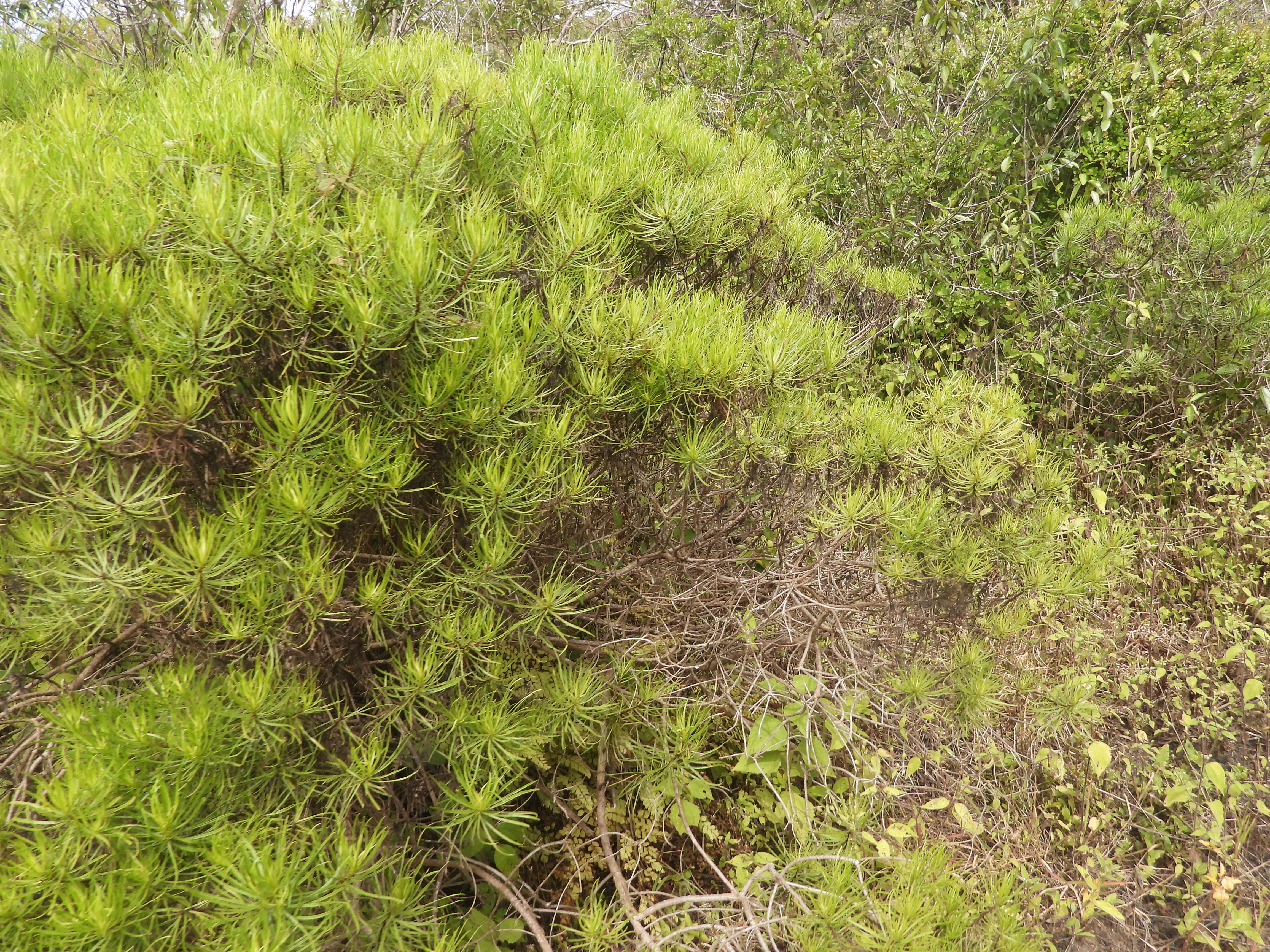
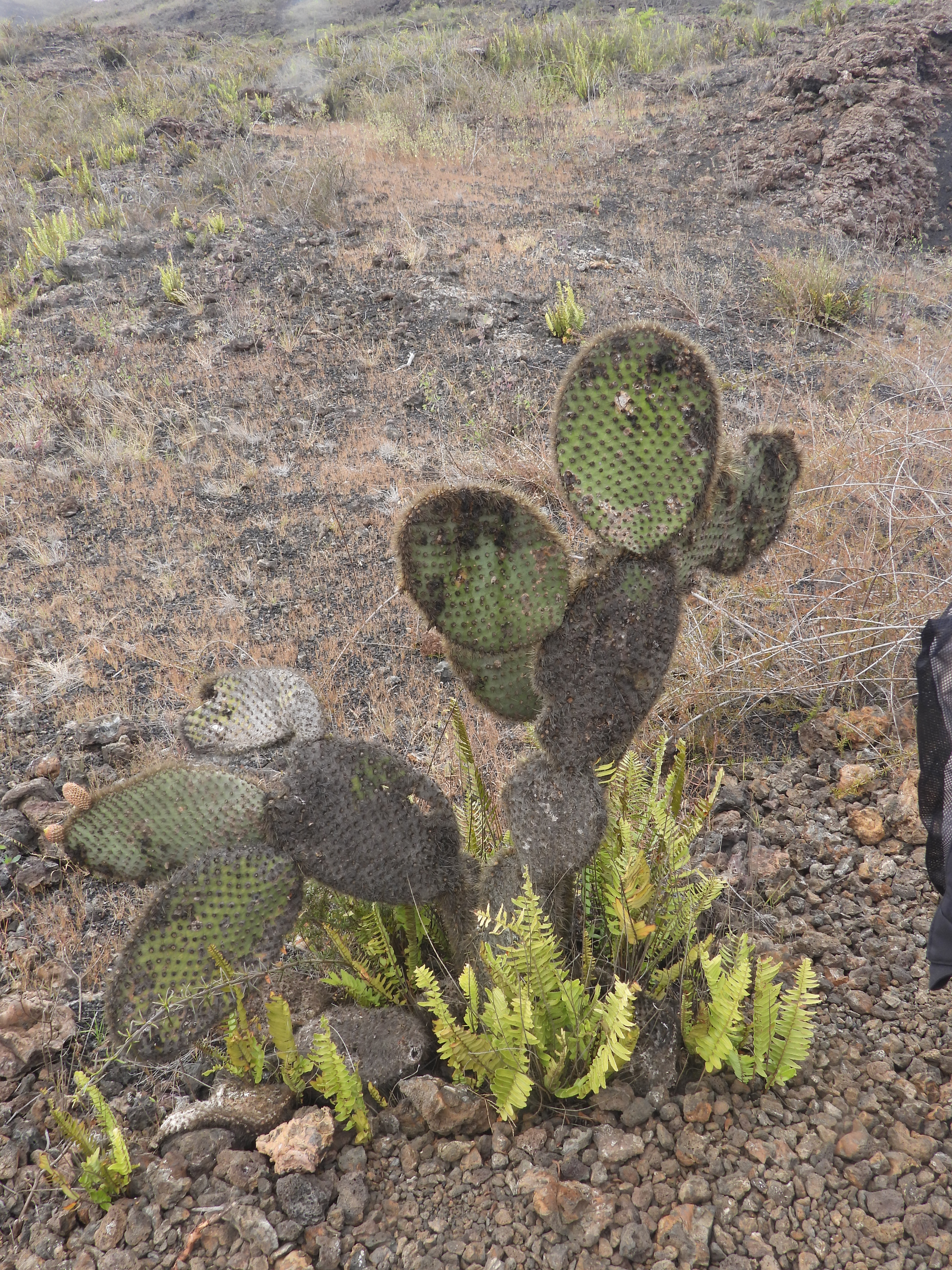
“Have you taken many pictures?” I asked Paul. “There’s nothing to see,” he replied cheerfully, taking a bite of his sandwich. “Well, I saw ferns that looked a bit like pine trees,” I said but he did not seem convinced. Later, our guide mentioned the ferns are endemic to the Galapagos and I felt intelligent and vindicated.
At the hut, I ate a wonderful tuna sandwich and cookies, and had a drink box. The lunch was arranged by the Tortuga Touring Company. I had no reason to pick this company other than I was walking by the shop and caught the eye of a pleasant-looking woman at reception (Edith). I sensed she was the right person for my family.
Edith of the Tortuga Touring Company, Isabela Island
Edith wore her thick hair in a simple fashion. She wore a pale pink shirt that said, “Follow Your Fucking Dreams Not Me.”
Free of frills, Edith did her best to explain the tour until she was helped by someone who looked exactly like her, only younger.

Admission prices
At first, Rick wasn’t sure that he wanted to spend the money on the hike. But, over the years, Rick and I have honed a system: sometimes we alternate who gets to be budget-minded. When the cheaper person relents, we can buy things that we might not usually afford. A five-hour hike with a packed lunch, guide, and transportation cost $40 per person, plus a $60 tip. There are six members of my family so the cost quickly adds up.
That is how I found myself about to proceed into the most otherworldly landscape I could have imagined.
A walk in a moonscape on Earth
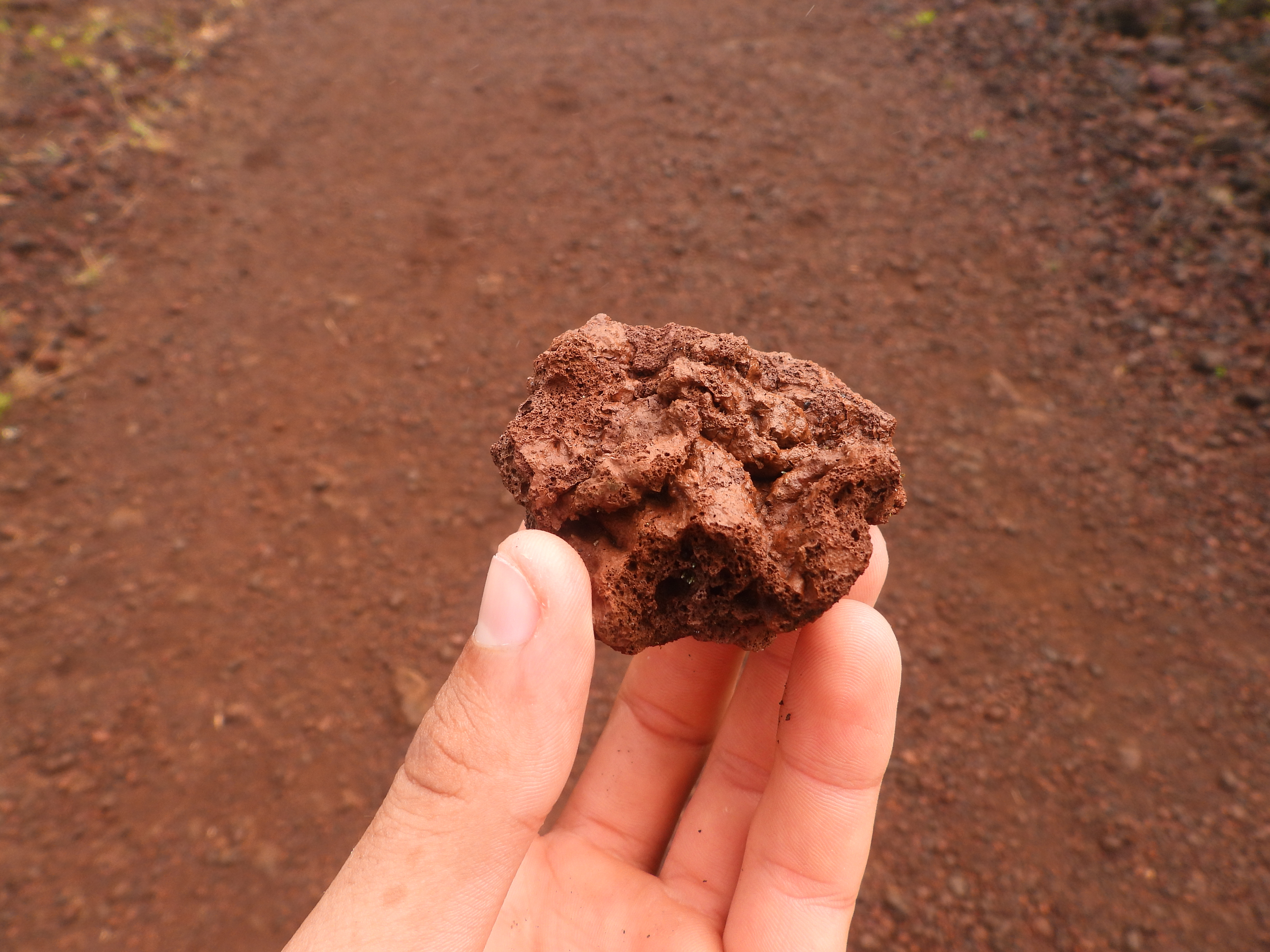
The south side of the Sierra Negra volcano is lush and green. The crater, however, is a hard, dry, sharp-lava moonscape.
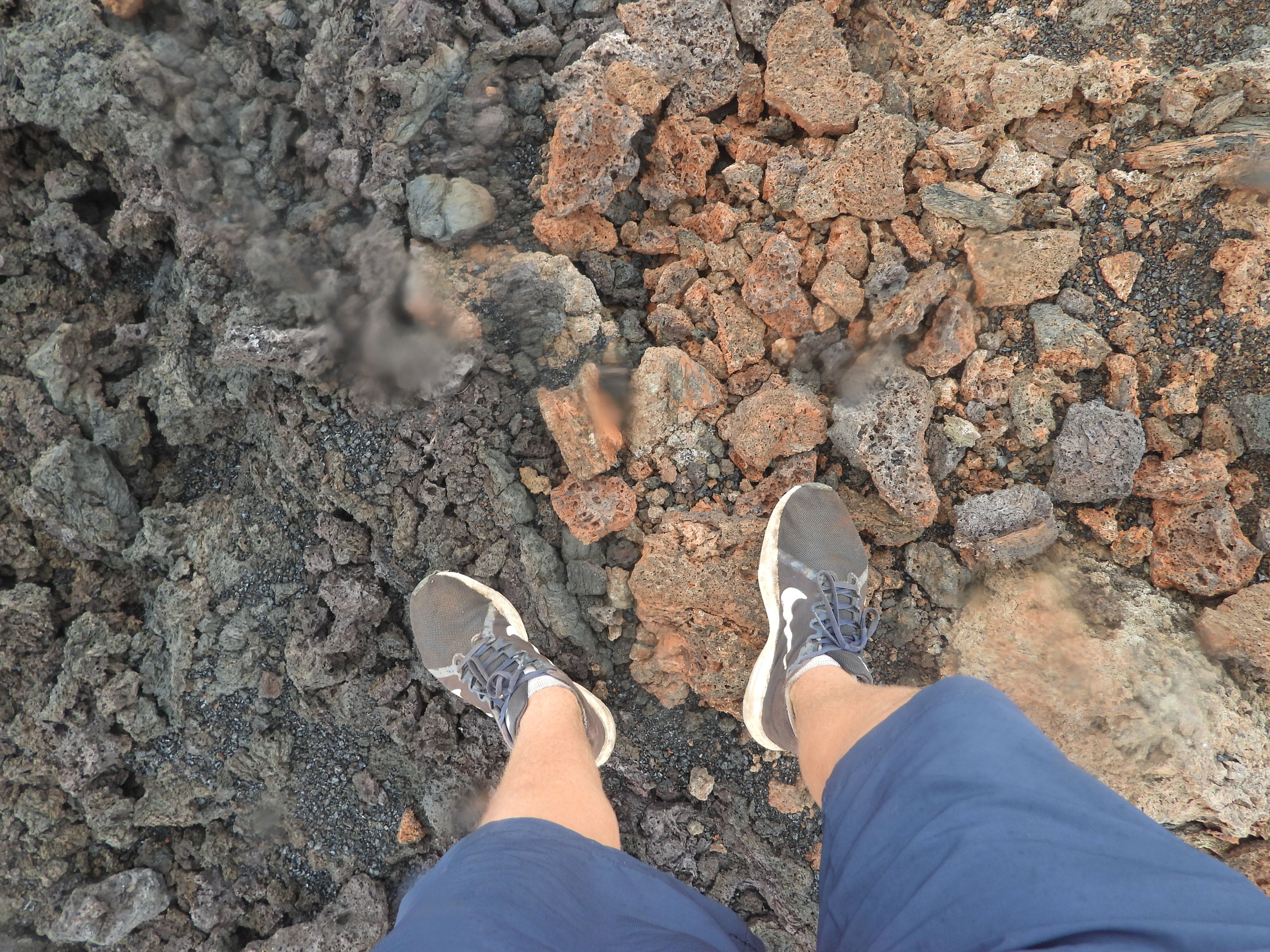
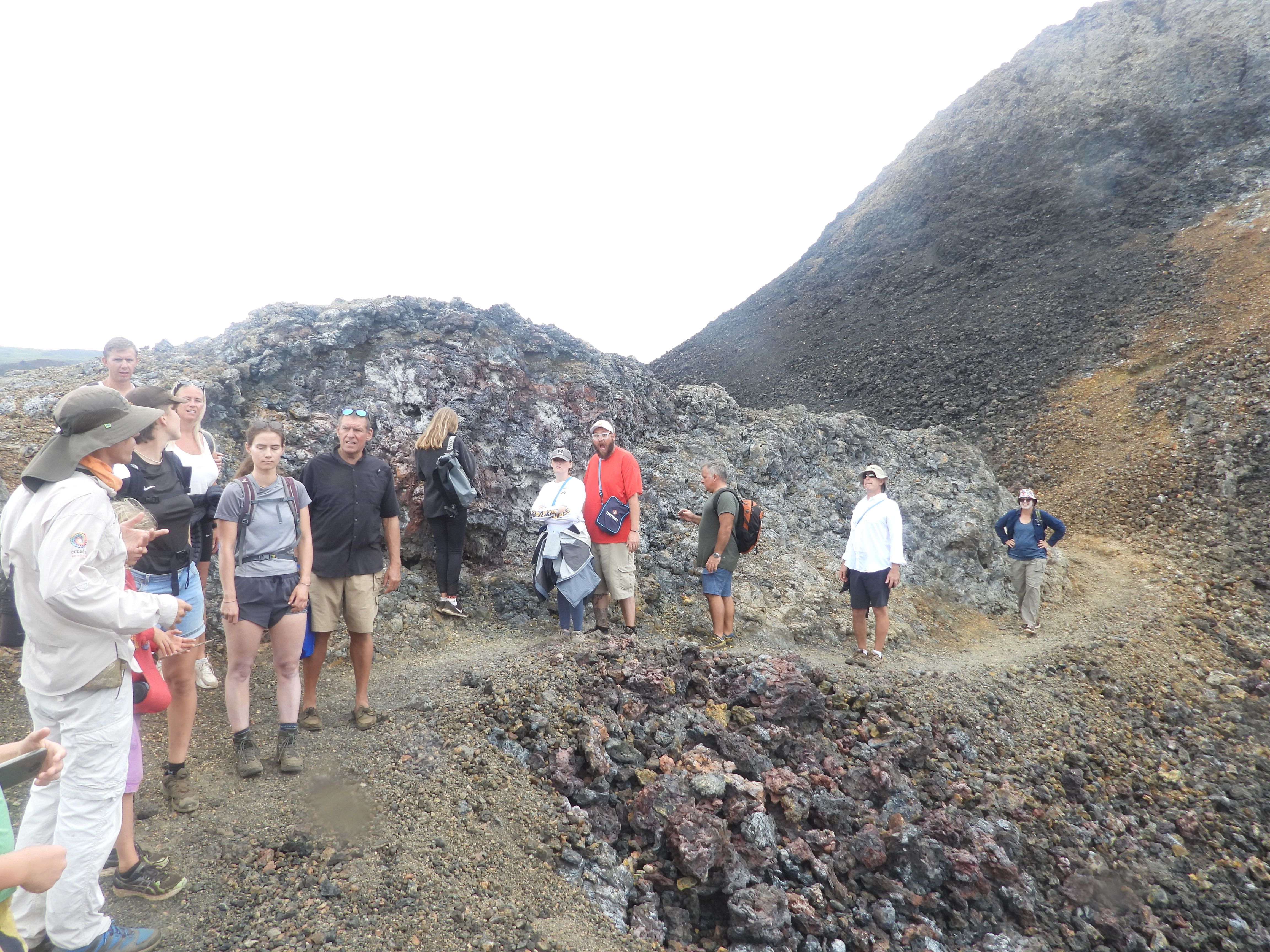
On our visit, we saw fissures and put our hands inside fumaroles to feel the heat.
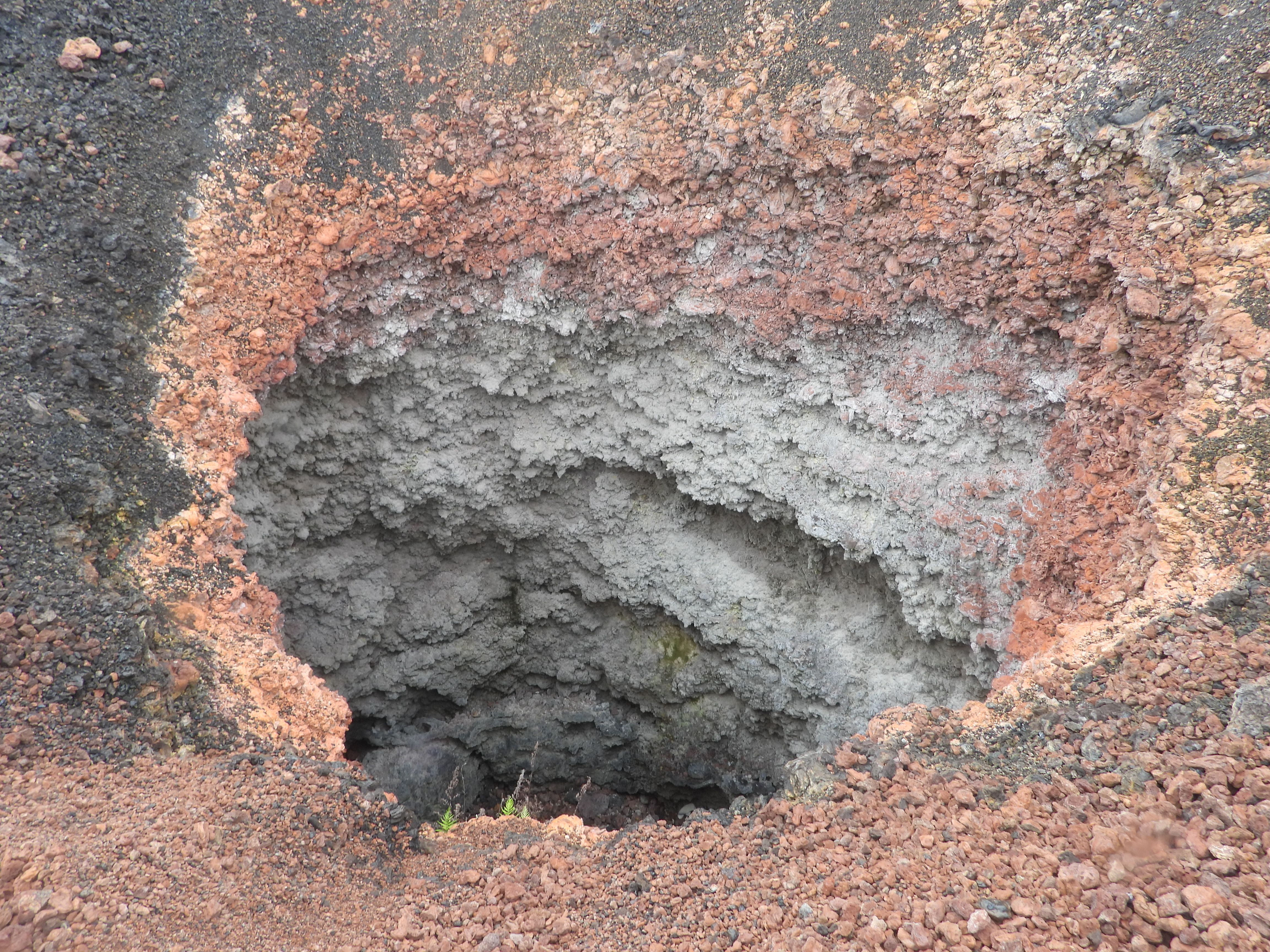
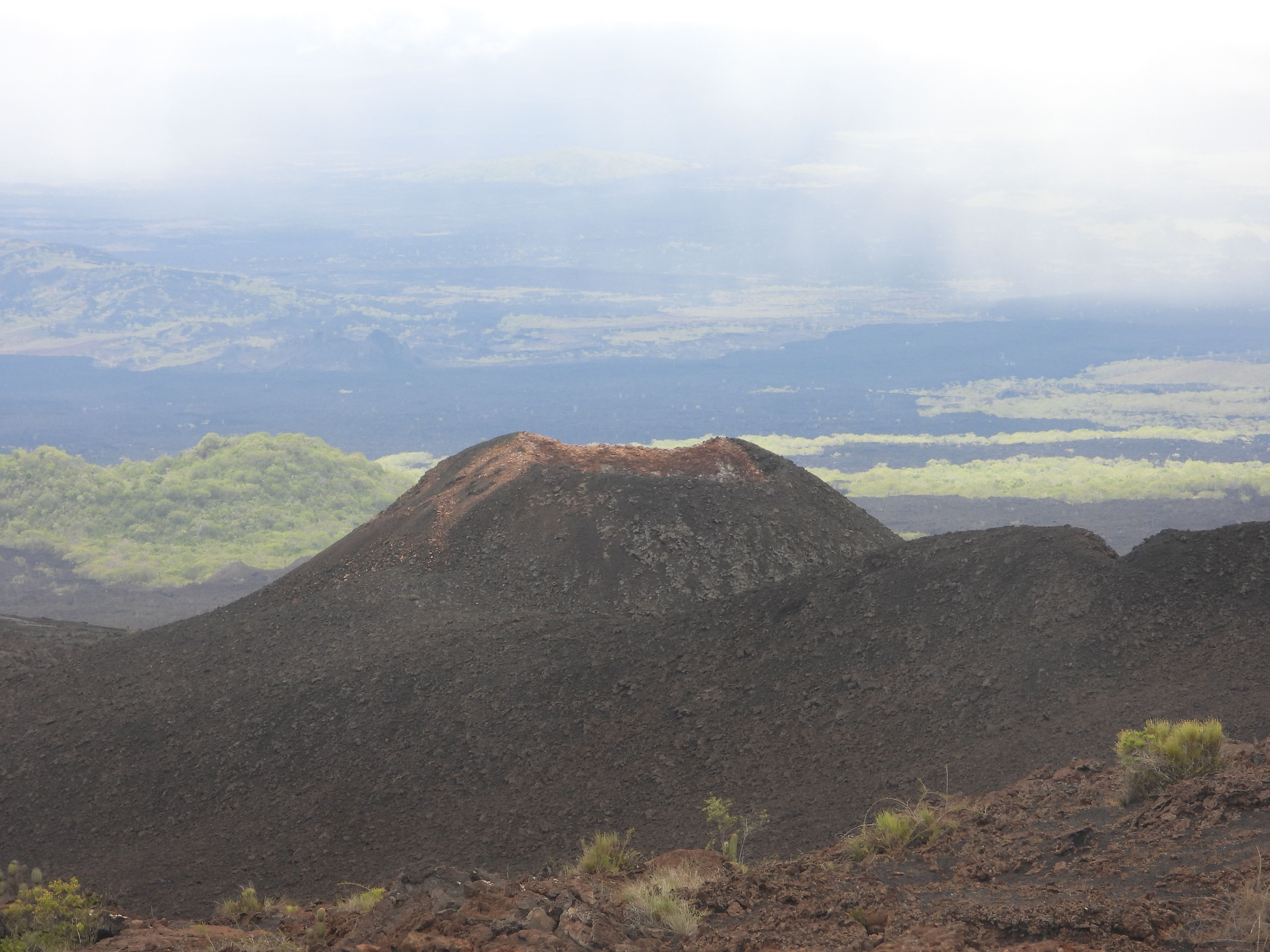
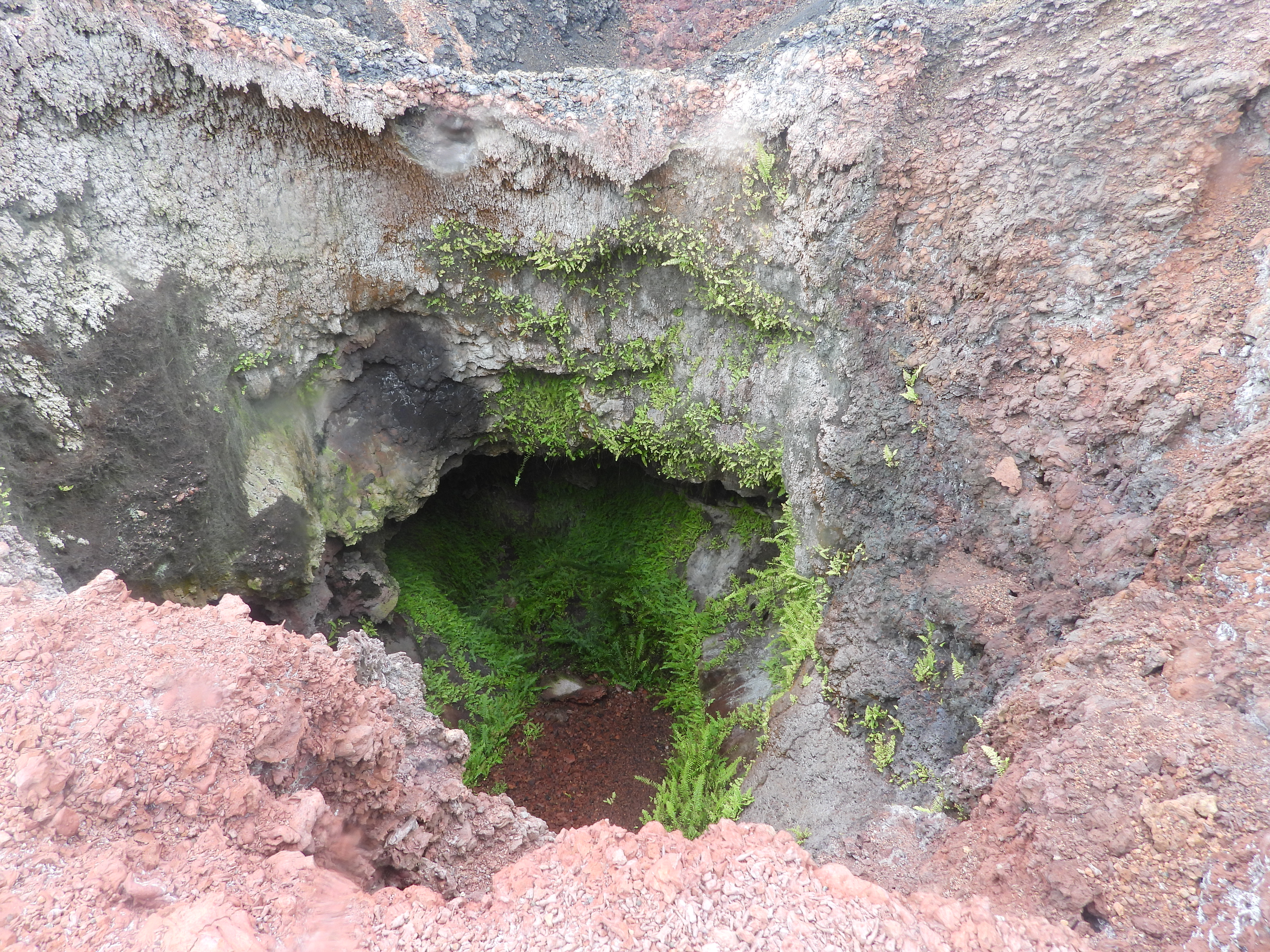
Some of the rocks were shiny. Our guide explained that they had solidified quickly. He showed us colourful mineral deposits, and tiny shards of rock that were evidence of volcanic splatter.
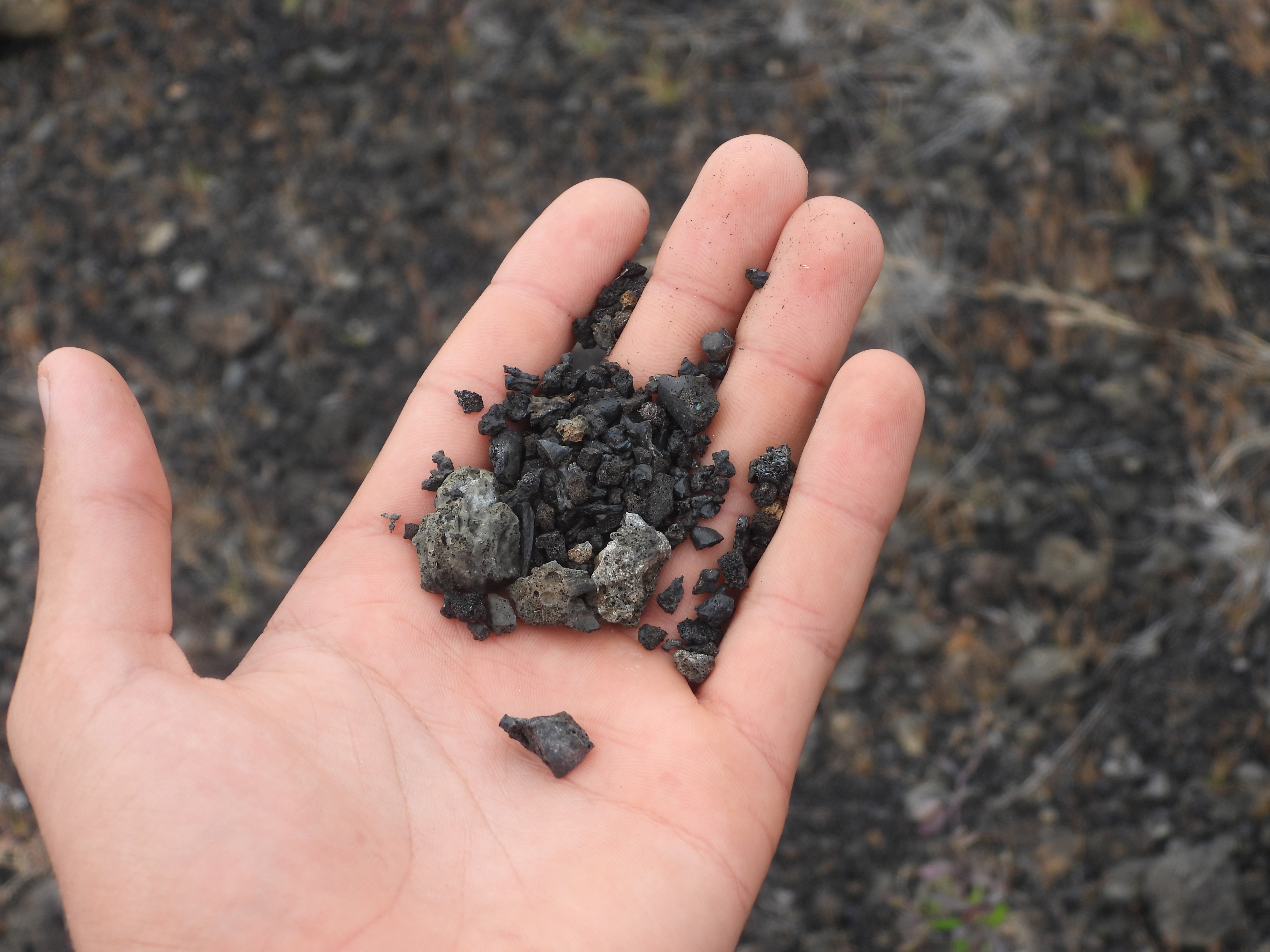
We saw lava scars embedded in cactus plants that grow only one centimetre a year. Some of the cactus plants appeared to be a couple of metres high and the scars were evidence of prior eruptions.

As we descended further into the volcano, we could smell sulphur, and the rocks were tinged with yellow.
The Galapagos has several large islands and many more smaller ones. Isla Isabela was not often visited until the early 2000s, when the tourism industry began to grow. And few people have visited the volcano because a 10-mile (relatively strenuous) hike is not on everyone’s bucket list.
Our group sat on a craggy viewpoint and took some photos. I realized how special it was to be right here, in 2022. Not many people have seen Sierra Negra.
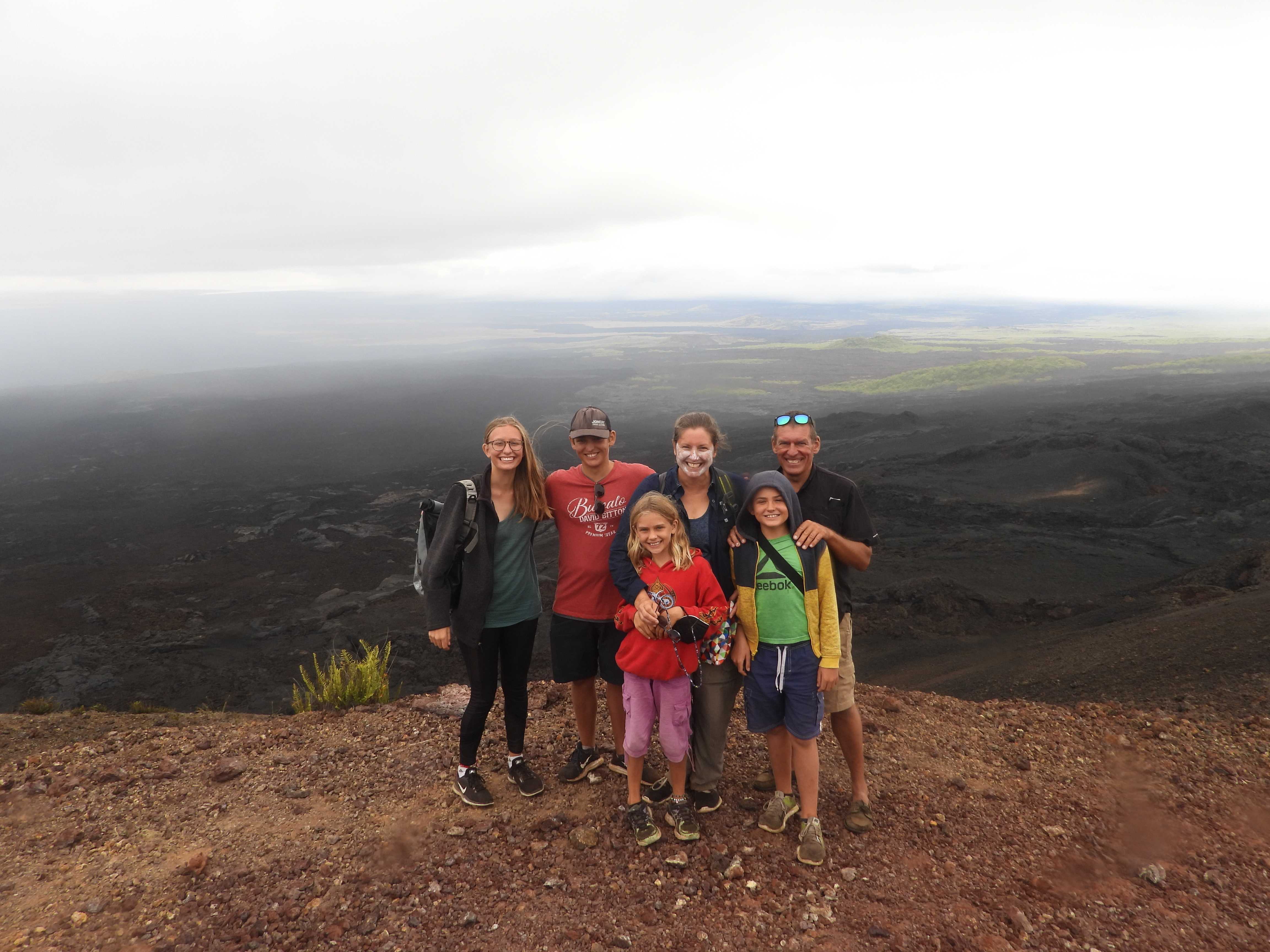
While the rest of the trip was overcast, I cannot complain. The temperature was just right for hiking.
Isla Isabela: six volcanoes
There are six volcanoes on Isla Isabela. Our guide told me that he had been there to camp for a weekend with his wife just two weeks prior. They had checked in with a Galapagos park ranger and had the area to themselves. Camping gear (tents and sleeping bags) is available to rent on the island, as are bicycles.
Adult vacation alert: not many kids in the Galapagos
We didn’t see a lot of tourists with young children in the Galapagos. The sights are highly regulated and must usually be visited with a guide. Air travel aside, I think the cost per day in the Galapagos is comparable to visiting Disney World and staying near the Magic Kingdom.
Last year, we investigated going on an in-depth, one-week educational cruise in the Galapagos. It would have cost $5,000 each — $30,000 for all six of us — with no discount for kids. A three-day stay on our own boat cost us a small fraction of that.
After the Galapagos
Originally written on June 4, 2022
All of the fish that I saw today were dead.
There are few birds. We’re too far offshore for most of them to reach us — though I did see an albatross out my galley window as we approached the Galapagos. There are only two types of fish: those I can see and the monsters of the deep that I imagine.
At least twenty flying fish and squid landed on the deck today. Paul received two dead fish through his bedroom hatch. Sometimes I hear them arrive (alive) with waves that break across our decks. I saved one fish. But, generally, it’s either too dark or the waves have been too rough to venture out on deck to save them.
Our route to the Galapagos, on the other hand, had us ferrying birds on our deck. One bird had an injured foot. I was glad to have given it safe harbour, even if its compatriots chased it off eventually. I put painter’s tape on the rails so the birds could get a better grip.
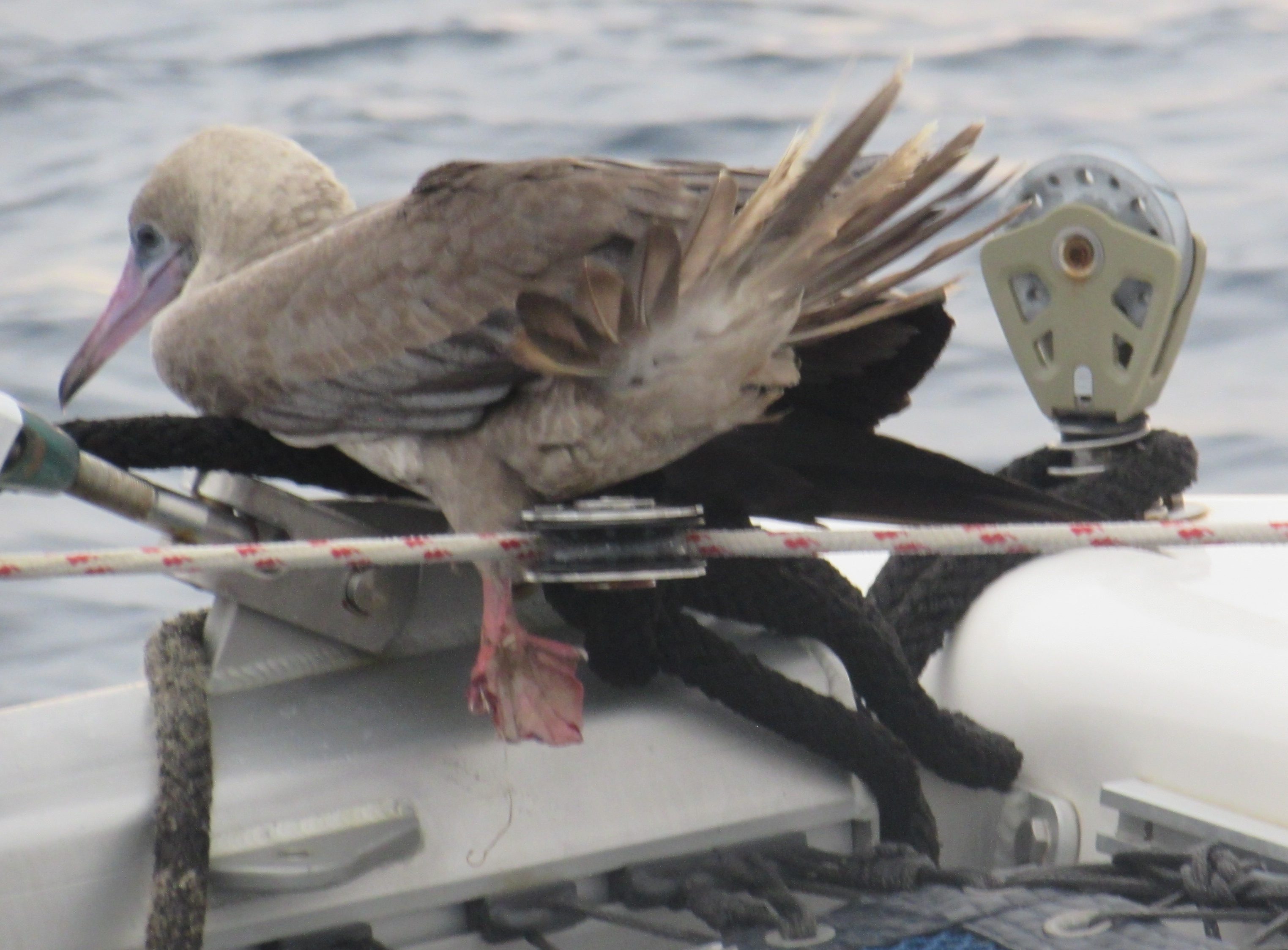
When I told Paul about my excitement seeing the birds in French Polynesia, he replied with standard teenage enthusiasm. “No, I think they’ll look exactly the same.” To a point. Wings and legs, sure.
For all his swagger, Paul was the first on deck with a camera and tripod to capture the wild Scarlet Macaws we saw in Costa Rica.
The Galapagos was teeming with life of all kinds. Just a day later, the emptiness of seeing endless blue waves could not be more extreme. There were no other ships seen or sighted on our radar all day. Then a little blip appeared. All I could see was the name “Guillemot, sailing vessel” and, for me, it was as though a light went on.
A race with SV Guillemot
I picked up our VHF radio.
“SV Guillemow. SV Gweeliomott. This is Sailing Vessel Aphrodite. I see you on my radar. With two boats on the water, I’d say that makes it a race.”
Silence.

On our chartplotter, I could see that our boats were getting closer together, but SV Guillemot was too far away to see. Our chartplotter soon provided greater detail. The boat I called was 141 feet — a superyacht, more than twice our size, and probably about twice as fast.
I challenged a boat you might see in a Rolex commercial to a race.


Later they called us on the radio and wished us a safe journey. But, at that point, I had gone to bed.
Our story with SV Guillemot was not over.
Seeing SV Guillemot again…
We saw this boat at a marina in Tahiti, as we schlepped our groceries past them in our dinghy.
…and again
We saw them again in Auckland, New Zealand, when they were at West Haven Marina. Then a full year after our first encounter we saw them in Luganville, Vanuatu. At that point, I paddled up to them in my kayak.
The crew were new, and leaving the next day. They were on a tight schedule to sail their boat for charter season in the Mediterranean. In low season, a week’s charter will set you back €120,000 per week + expenses (such as food, drinks, fuel, trips to shore, and tips for the captain and crew).
Because we are all being pushed by the same east-to-west trade winds, it is not uncommon for us to see the same boats over and over, sometimes thousands of miles apart.
At night: an intergalactic glow of fishing boats
As Guillemot sailed on, something different appeared on our radar. In the distance, we could see the glow from 20 to 30 industrial fishing boats (Zhou You 930, Yong Xiang 9, and the Fu Yuan YU7670 to name a few) harvesting the ocean.


We saw these huge fishing boats two nights in a row. The glow of their work lights lit up the entire horizon from east to west — each spaced 5 to 10 degrees apart — like a string of white pearls.
They were located about 200 to 400 miles off the coast of the Galapagos. Their bright lights loomed for 50 miles.
We kept well away from these ships, not wanting to become tangled in a net or cross a fishing line. However, later on in Fatu Hiva, French Polynesia, we met a couple who sailed very close to the fishing boats. They said the fishermen looked emaciated and they speculated that they were Chinese prisoners in fishing labour camps, where they are permanently at sea and food is brought in to them by ship or helicopter.
They may have been right.
Forced labour at sea: modern-day slavery
“The Outlaw Ocean Project produced a four-year investigation of forced labour
and other crimes tied to the Chinese fleet and the world’s seafood supply.” You can read about their findings in a 2023 report published in the New York Times and Canada’s Globe and Mail article, “‘They treat us like dogs’: Inside the deadly world of Chinese squid ships“.
Shark finning
The documentary Sharkwater shows industrial fishing boats around the Galapagos performing shark finning and using drift nets. Shark finning is the practice of slicing off the fins of the shark, and casting the rest of the shark back in the water to die. Drift nets can be miles long and basically remove every living thing from the water. Only what’s wanted is kept; everything else is discarded dead. Even if they were fishing for mullet.
I am looking forward to seeing signs of life again. I think we have seen the last of the sea birds for a while. We are sailing a distance of 3100 nautical miles. Our kids are finishing their school year at the American School of Correspondence and will send in their completed exams as soon as we have internet again.
(The original blog post — written at sea — predated Starlink.)
5º 25.472 S 101º 03.608 W
Karen’s Message in a Bottle
Originally written on June 11, 2022
After leaving the Galapagos, Karen dropped a wine bottle into the ocean. She had been looking forward to this moment since September 2021. Her bottle was sealed with a cork and wax. It contained a note, contact information and a US ten-dollar bill.

We like to think that Karen’s bottle is still floating in the rolling swell of the Pacific Ocean.
Where is Karen’s bottle now?
According to ChaptGPT, which used drift models from NOAA and NASA:
“Dropped west of the Galápagos on June 10 2022, Karen’s bottle likely rode the South Equatorial Current for thousands of kilometers—now drifting somewhere between Kiribati and the Solomon Islands.”
And, according to me: Every Little Thing She Does is Magic.