
My husband, Rick, is home from Sailing training in Antigua and he’s already thinking about where he would like to go next: Gibraltar. Why? Because Gibraltar has tides. The Caribbean, which is where he has just been, usually has such a small tidal difference that it’s barely noticeable.
We witnessed a neap tide in Grenada. It was remarkable to see coral structures peeking above the surface; the tide had dropped low enough to expose our favorite swimming spots. But, in the Caribbean, this is the exception, not the norm.
What’s Going On? Amphidromic Areas
The technical term for an area in the ocean that has zero or near-zero tides is amphidromic. Using repetition to reinforce the term:
amphidromic
am-phi-drom-ic (adjective)
pronunciation: am-fee-draw-mick
In an article called “Caribbean Tides, Killer Words” Matthew Alice identifies there to be about a dozen amphidromic areas in the world. The Caribbean Sea is one of them.
Where else does this happen?
As Steve Baum explains, “[an] amphidrome is a stationary ocean point around which tides rotate” in either a counterclockwise or clockwise direction. The direction will depend on whether you are in the northern or southern hemisphere, respectively. (S. Baum, The Encyclopedia of Earth, “Amphidrome”). The rotational behaviour of the tides is called the Coriolis effect. (M. Alice).
Matthew Alice likens the tides at an amphidromic point as being similar to the motion when you swill a coffee cup, the edges move, but the center remains relatively flat and constant. The Caribbean is an example of an area that remains relatively flat and constant.
The following map displays the global distribution of amphidromic points. I like this map because the land is grey, whereas the sea is a kaleidoscope of color.
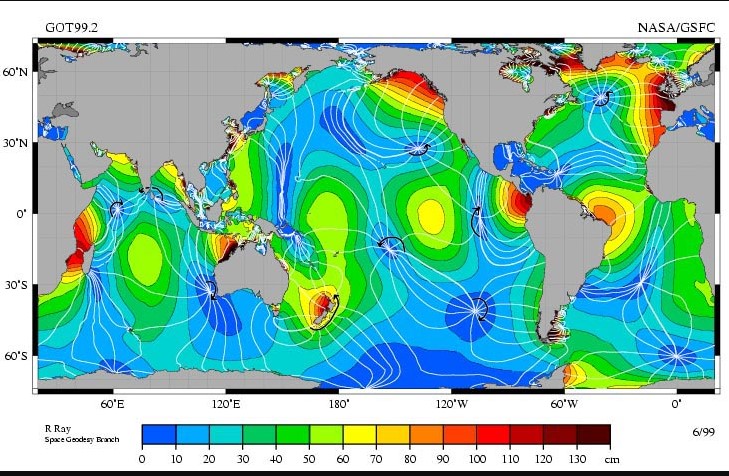
On the map, amphidromic areas appear as spider-like formations. The colour scale indicates the strength of the tide “with blues being weaker areas and reds being stronger”. (S. Baum, “Amphidrome”). Because there’s little movement in terms of tide, amphidromic areas are shown as dark blue sea.
The map shows, for example, that Perth, Australia on the Western coast experiences small tides because of its proximity to an amphidromic area. (Flinders University, Exercises in Physical Oceanography, “Exercise 5: Tides”). But, if you are from Perth you would know this already. I’ve never been to Australia.
In contrast, Panama: big tides and disappearing beaches
When we crossed the Panama canal, the tidal difference was striking. Indeed, on the map you can see that Panama is surrounded by a rainbow of red, indicating that the tides there are very strong. Coming from the Caribbean, we found it disorienting to go to sleep on our sailboat in one landscape and wake up to something that looked unlike anything we remembered.
The tides in Panama range from 11-18 feet (3-5 meters). During high tide on Taboga Island, Panama, a popular sandy beach disappears entirely.
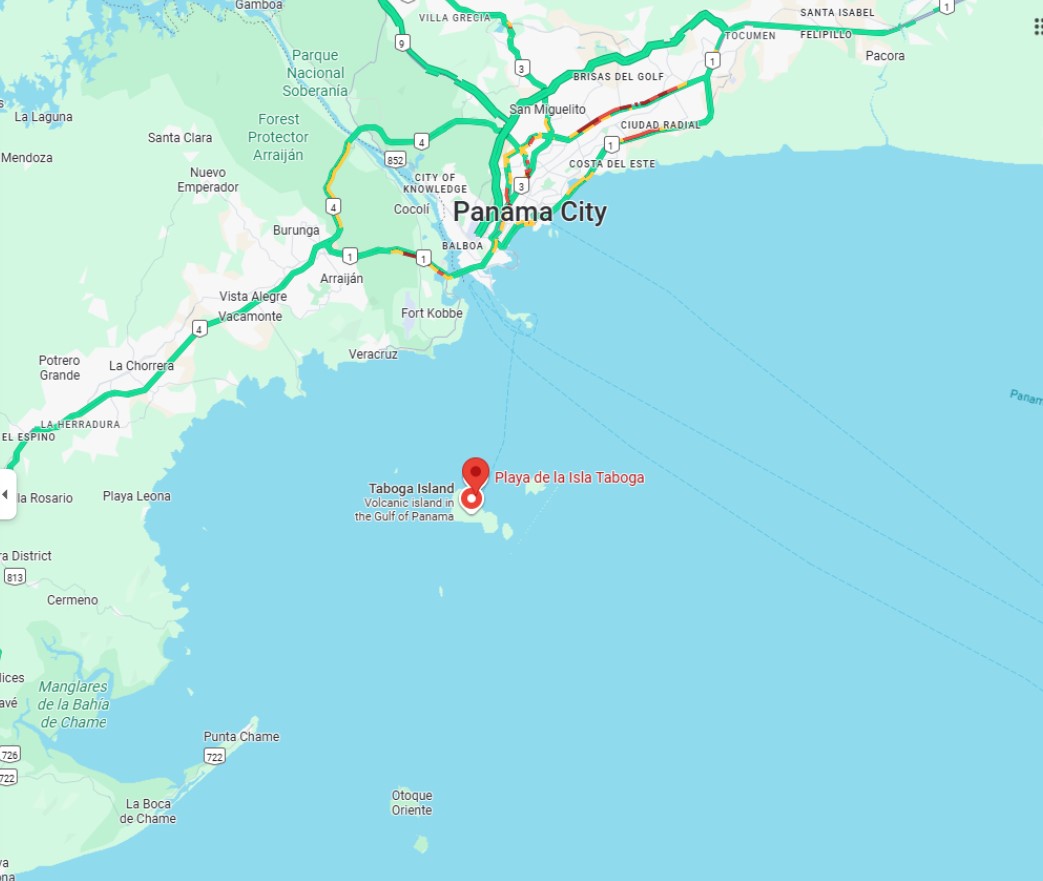
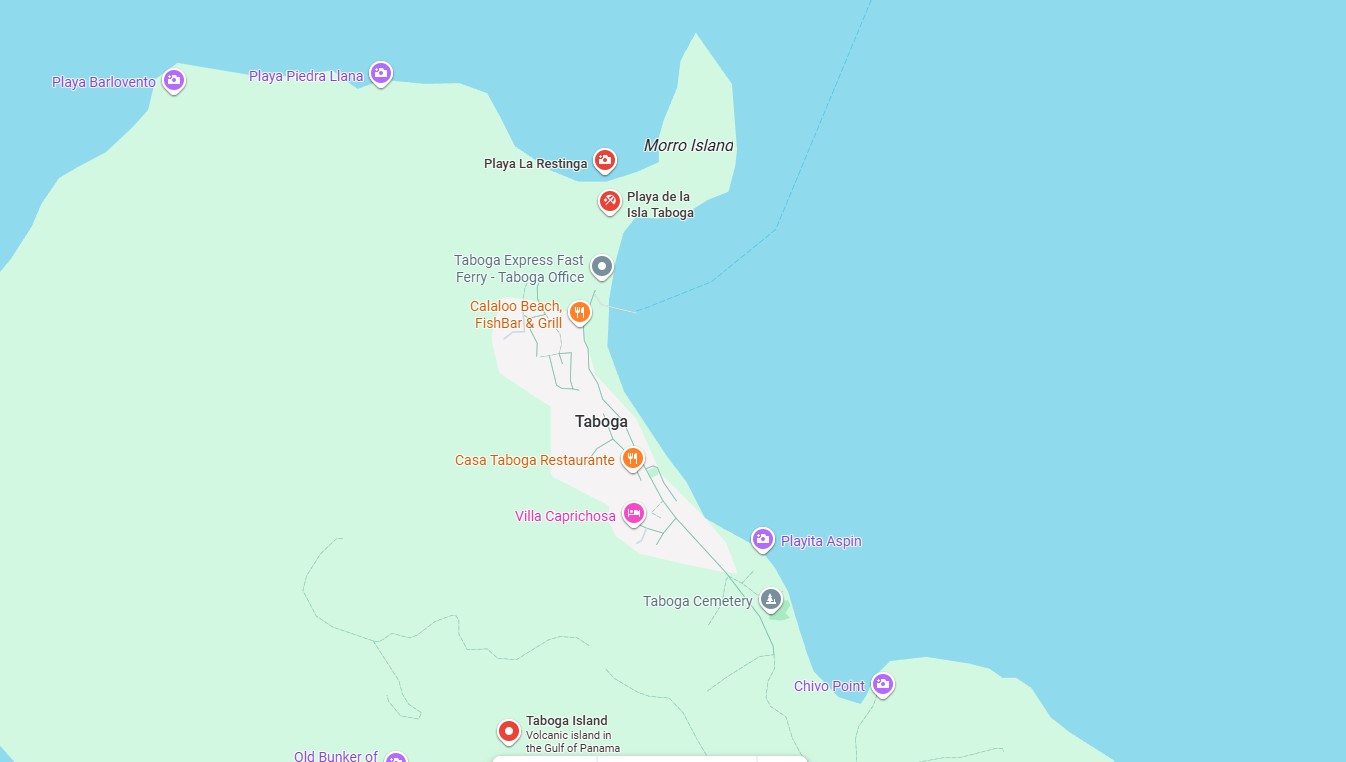

During high tide, people back up their beach chairs, and take their pineapple drinks elsewhere. Playa de la Isla Taboga becomes submerged; the spit of Morro Island becomes fully separated from Taboga Island.
Want a deeper dive?
If you’d like to learn more about amphidromic areas and why they occur see the Southampton University website for an article called, “Amphidromic Points: tidal spiders in a real World“. This article is sure to satiate the curiosity of the most geeky of geeks. And, I do say this with affection. My own husband has a passion for math and physics.
Thanks for reading.
Written by Lorraine Escher of SV Aphrodite: Becoming a Sailor.
Access note: The Encyclopedia of Earth entry “Amphidrome” by Steve Baum is no longer publicly accessible at the time of writing (returns a 403 “Forbidden” error). The quotations used here was taken from the article when it was publicly available and is cited in good faith.
Pin it
If you enjoyed this story, you can save it to your own Pinterest board by clicking on one of the images below. Thanks for reading and following our journey.
 Becoming a Sailor