
In short
At Nawi Island Marina I thought the sevusevu ceremony was a spectator event, until the leader offered me the cup. You clap once, drink the kava in one go, then clap three times. Kava is made from a root; it isn't alcoholic, but it numbs your mouth, and it tasted like potato starch water with a hint of bitterness. In Fiji, cruisers bring kava root to the village chief as a gift, asking permission to anchor.
What does a sevusevu ceremony look like?
At a restaurant at Nawi Island Marina, I chose a table right near the musicians, foolishly considering the traditional Fijian sevusevu ceremony to be a spectator activity. I thought I had a prime spot.
I had been encouraged to sit on the woven mat with the musicians but I thought they were kidding. Other, more experienced, cruisers arrived a little later than my family and began assembling on the floor. They sat cross-legged and were given flower necklaces. I kind of wish I had a flower necklace. They were simple and beautiful.
Is kava alcoholic?
The sevusevu ceremony began. The chief provided an explanation. The kava drink was in a large, elevated bowl. The kava is made from a root. It is not alcoholic but it can cause your mouth to become numb and also cause you to be sleepy.

The people on the mat were asked to clap once to receive the Kava. Then, they were told to gulp it down all at once. And, finally they had to clap three times. And, so the ceremony began.
Clap.
A cruiser, acting as chief of the cruisers, took a gulp.
He clapped three times.
Reactions to trying kava (video)
You can see our designated ‘chief’s’ reaction in the video below.
The process was repeated in clockwise fashion.
Men and women participated in the ceremony.
As the ceremony began to come to an end, everyone on the mat had received a cup of kava. I began to worry and turned to Julia.
“Okay, so this is really terrible, but I think I have to go. I am really worried he is going to offer me it.”
“You’re fine. I’m sure he’s not.”
“Can we just say no?”
“I’ve read that it is rude to decline.”
I turned around and faced the ceremony. At that point, the man leading the sevusevu said, “Would anyone else like kava?” As he spoke his eyes met mine and he extended the cup in my direction.
I stammered. So far, I have avoided eating raw fish, and wild tern eggs, but the kava experience was not going to let me off the hook. There were too many eyes watching. Sevusevu is an experience we will encounter when we travel in Fiji. There is no escaping it.
“Yes, I will try.” I clap once. I take a sip and swallow.
What does kava taste like?
My tongue becomes mildly numb. I look into the cup. I drink it to the last drop and clap three times.
The drink reminds me in taste and texture of potato starch water with a hint of bitterness. It was not a good taste but it was not horrible
Lorraine Escher (me), first time Kava drinker

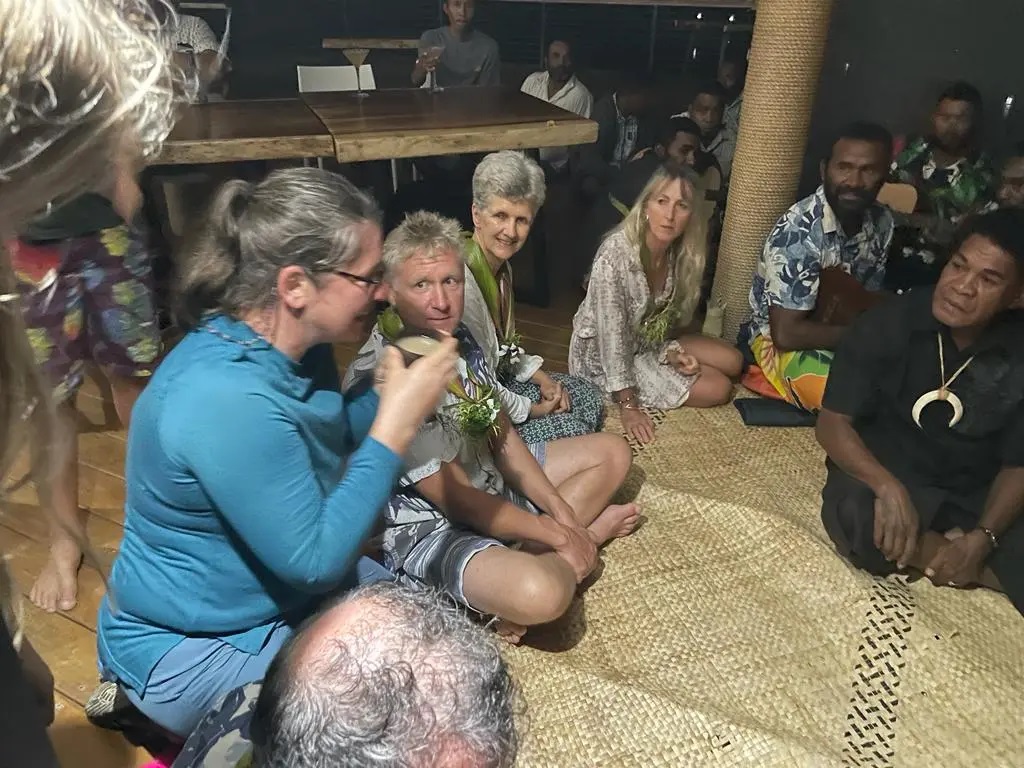

Then Zing: suddenly, I’m singing
But, soon, my chin is numb and my whole jaw is disconnected. In short order, I am singing along to “Islands in the Stream” as though I know all of the words. My mouth moves like a muppet. The effect of the kava was short but the intent of the traditional sevusevu ceremony was strong.
Twenty years from now you will be more disappointed by the things that you didn’t do than by the ones you did do.
Mark Twain
Kava is An Essential Part of Fijian Social Life
Kava root is central to many Fijian social traditions. We will carry it on our boat because, at a superficial level, bringing kava to a village is a little like bringing a bottle of wine to a dinner host. The difference is that we are asking permission to attend dinner in the first place.
How Do You Present Sevusevu to a Village Chief?
The rule of thumb we were given is to bring one bundle of dried kava root (yaqona), about half a kilo, for each village where we plan to anchor or go ashore. A bundle costs roughly FJ$25 to FJ$30 at the market. The roots are tied together and wrapped in newspaper, often with a twist of raffia.
Once ashore, we ask for the turaga ni koro, the village headman, dressing modestly: a sulu (sarong) covering our knees, shoulders covered, and hats and sunglasses removed. He takes us to the chief, where we sit cross-legged on a mat with the bundle in front of us. The headman carries it to the chief, remaining low as he presents it and speaks on our behalf in Fijian.
If the chief accepts the offering, he says a few words of blessing. From then on, we are guests of the village. Often, a bowl of kava is prepared and passed around, accompanied by the same clapping we saw at the marina. This is followed by a long, friendly conversation about where we have sailed from.
Before we head to the Lau Islands, we have been advised to stock the boat with about FJ$150 worth of fresh and powdered kava root.
In Fiji, a village’s relationship with its surrounding waters matters as well as its land. We bring kava as a gift to the village chief because we are asking permission to enter and stay. A village is under no obligation to let us anchor.
Without the kava, it would be like camping in someone’s backyard without asking permission.
Fiji is very welcoming and friendly
Since we have arrived in Fiji, we have felt welcomed by everyone we have met. The customs officers were very friendly. This is more than a motherhood statement. Micronesia, for example, had me on red alert on many occasions.


Fijian “Bula” everywhere
Strangers we see on the street greet us with ‘Bula’, which means ‘Life’. The handshakes are firm, much firmer than you might tend to find in Canada.
Active cruiser scene
The cruiser scene in Savusavu is lively. Interestingly, the first people we saw in the harbor, apart from the government officials, were from Ottawa on a boat called SV Coastal Drifter.

Sevusevu Ceremony in Savusavu then onto Suva, Fiji
We will remain in Savusavu until sometime next week. We are making a temporary rudder.
Today, Rick connected with a local man to do some welding work. We also met some people who are familiar with abandoned boats, and can give us access fiberglass through salvage. This will allow us to make a fiberglass-steel- fiberglass rudder sandwich until proper, new rudders can be made and shipped.
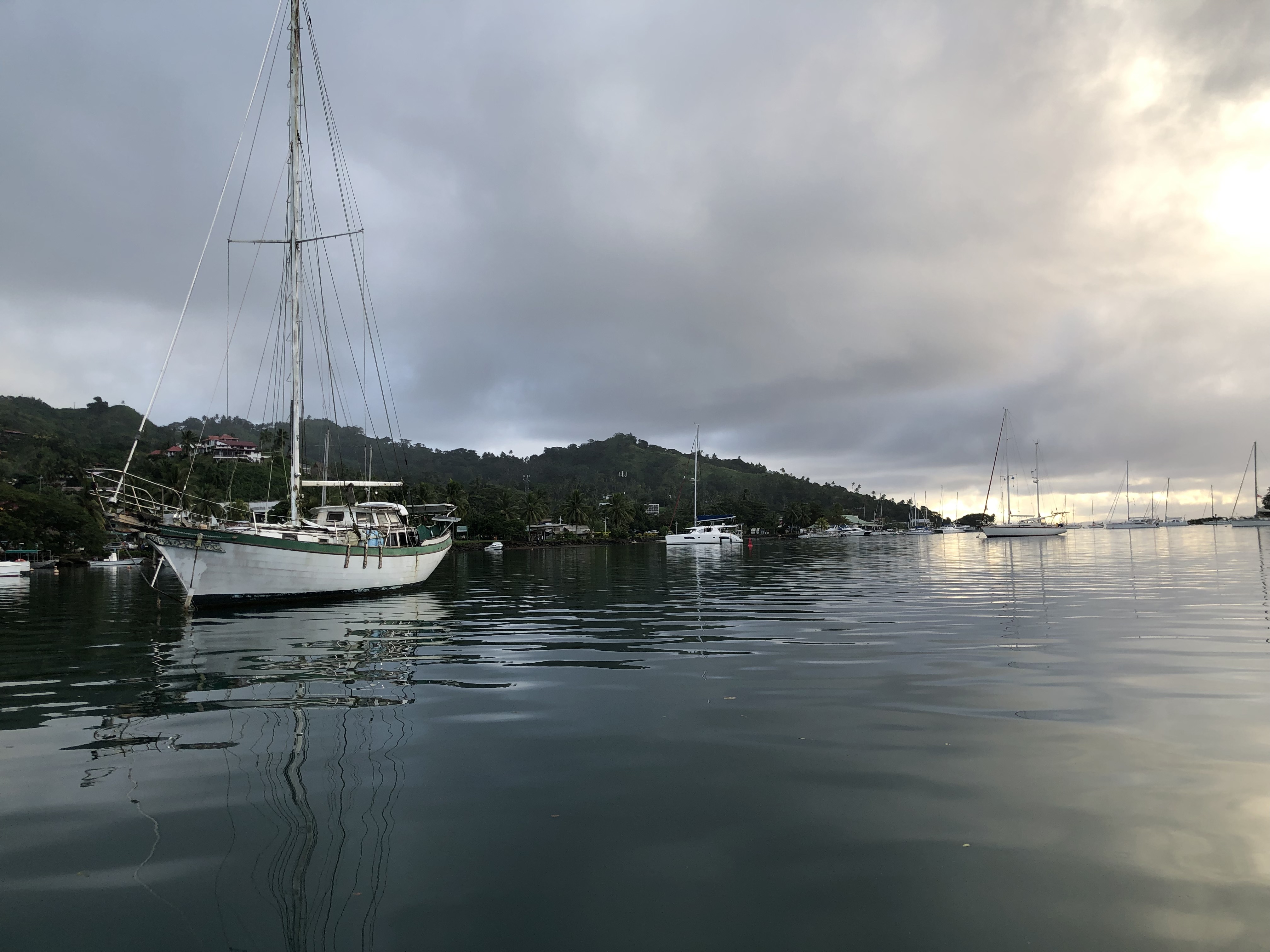
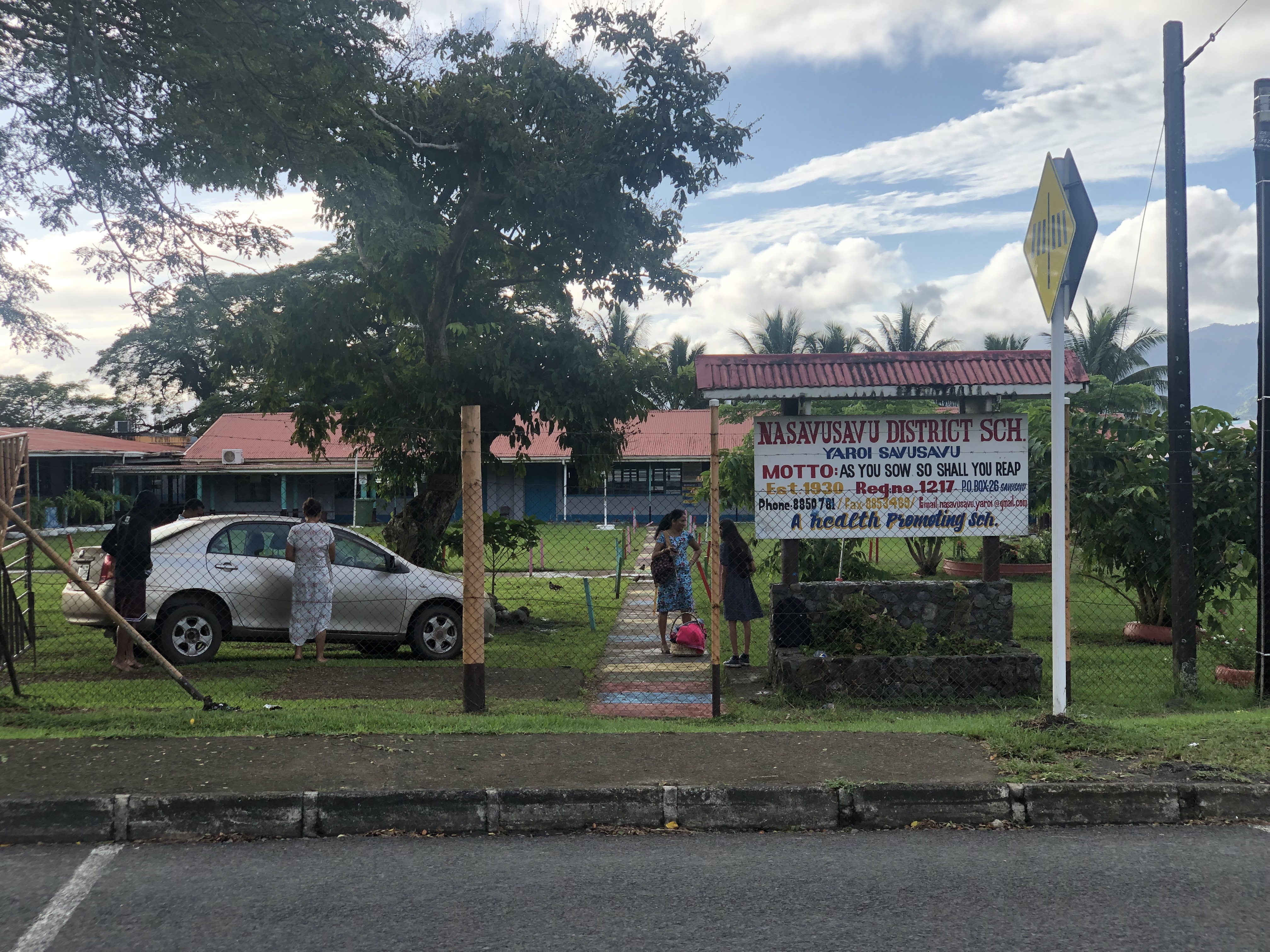
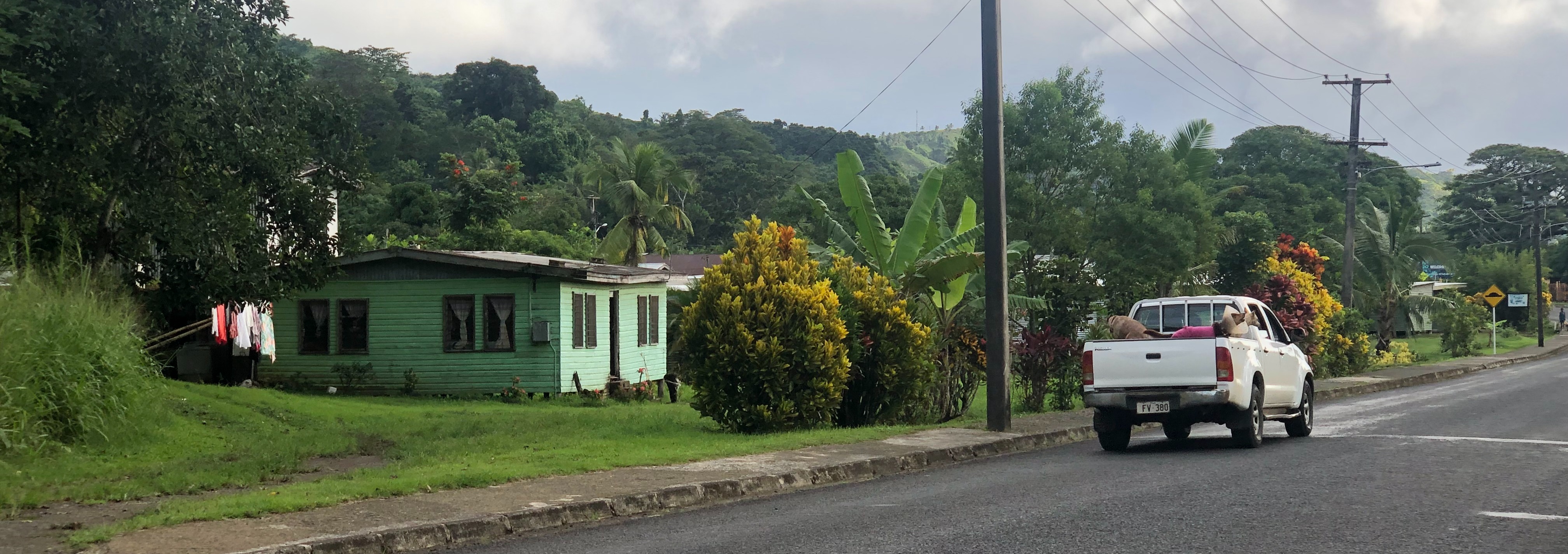
Here are some pictures I took today in Savusavu.
Boats on the waterfront
Scenes from Main Street, Savusavu


Savusavu Farmers Market


Pin it
If you enjoyed this story about Fiji and the significance of the sevusevu ceremony, you can save this pin to your own Pinterest board using the image below. Thanks for reading and following our journey.

Related posts