
In short
We spent six months of hurricane season in Luperón, Dominican Republic, with our four kids, and these eight stories show them going local. They played baseball at Andy's neighbourhood diamond, walked among Columbus's ruins at La Isabela, and started at Pedro A. Pina public school in $15 uniforms, with no Spanish. Ana Lopez helped when Paul had an allergic reaction and found Betty an English-speaking eye doctor in Santiago.

In This Long Read
The eight stories in this Long Read span tales of play, school uniforms and the sense of community in Luperón where we spent six months during hurricane season with our four children.
Baseball: Learning a Game and Understanding a Field of Dreams in the Dominican Republic
Originally posted June 10, 2016
Beyond the outer reaches of Luperón, Dominican Republic (DR), there are rich green fields and colourful, tin-roofed houses. Yesterday, this rural scene seemed almost painterly as my son Paul and I sat on the back of a motorbike. The scene was very pretty but inaccessible, in much the same way that zoo animals are interesting to look at but offer no further interaction. In passing, our driver pointed out where there are weekly cockfights.
Today, our family of six crammed into an open-air mototaxi to go to Andy’s house. Andy, as I mentioned in yesterday’s blog post, is the man who runs one of the service boats in the Luperón harbour.
In the mototaxi, we were travelling the same route, past the same neighbourhood, as yesterday. But this time we were on our way to play baseball.
What a difference a day makes.

From what I have read on the Internet and elsewhere, I gather that baseball is integral to the fabric of the DR. Kids in the DR dream of being scouted for the big leagues, and lifting themselves out of poverty in the process.
Andy plays baseball with his son and some neighbourhood kids every day at a baseball diamond behind his house.
Turning into Andy’s neighbourhood, we bumped along a dirt road. The colourful houses were tightly packed and separated by barbed-wire fences.
Many people were sitting outside on chairs when we arrived. Children played in the street, and mothers bounced babies on their knees. One industrious woman was sweeping the dirt path in front of her house.

We stopped by Andy’s house briefly. I was struck by how homey their house felt. Both Andy and his wife, Catherine, speak fluent English.
When I asked about the chickens in the adjoining yard, Catherine told me that the chickens belong to some extended family members. She said that they are surrounded by family. Andy and Catherine have a baby named Tristan and a son named Oliver.

Catherine says that living in close proximity to extended family has some drawbacks. For example, when she has an argument with her husband, the entire family will visit to see what’s up. A grandmother might be inclined to stop by to enquire why Oliver isn’t in bed at ten o’clock at night.
The baseball field is steps away from where Andy and his wife live. With Andy leading the way, the field was soon full of eager and extremely talented young children. I have never seen balls caught and fired so quickly.
Paul was keen to learn to play. He is like his dad, naturally coordinated in all things athletic.

Andy gave Paul some practice time. And soon the boys were ready to play. Paul really enjoyed playing the game, and he was coached by Rick along the way as he was new to the game and its rules.

Soon older boys began to gather and the little boys put their bats and mitts away.

With nightly games and informal practices, this is a neighbourhood that takes baseball very seriously. Andy pointed to one of the players on the field who had been scouted for a U.S. farm team.
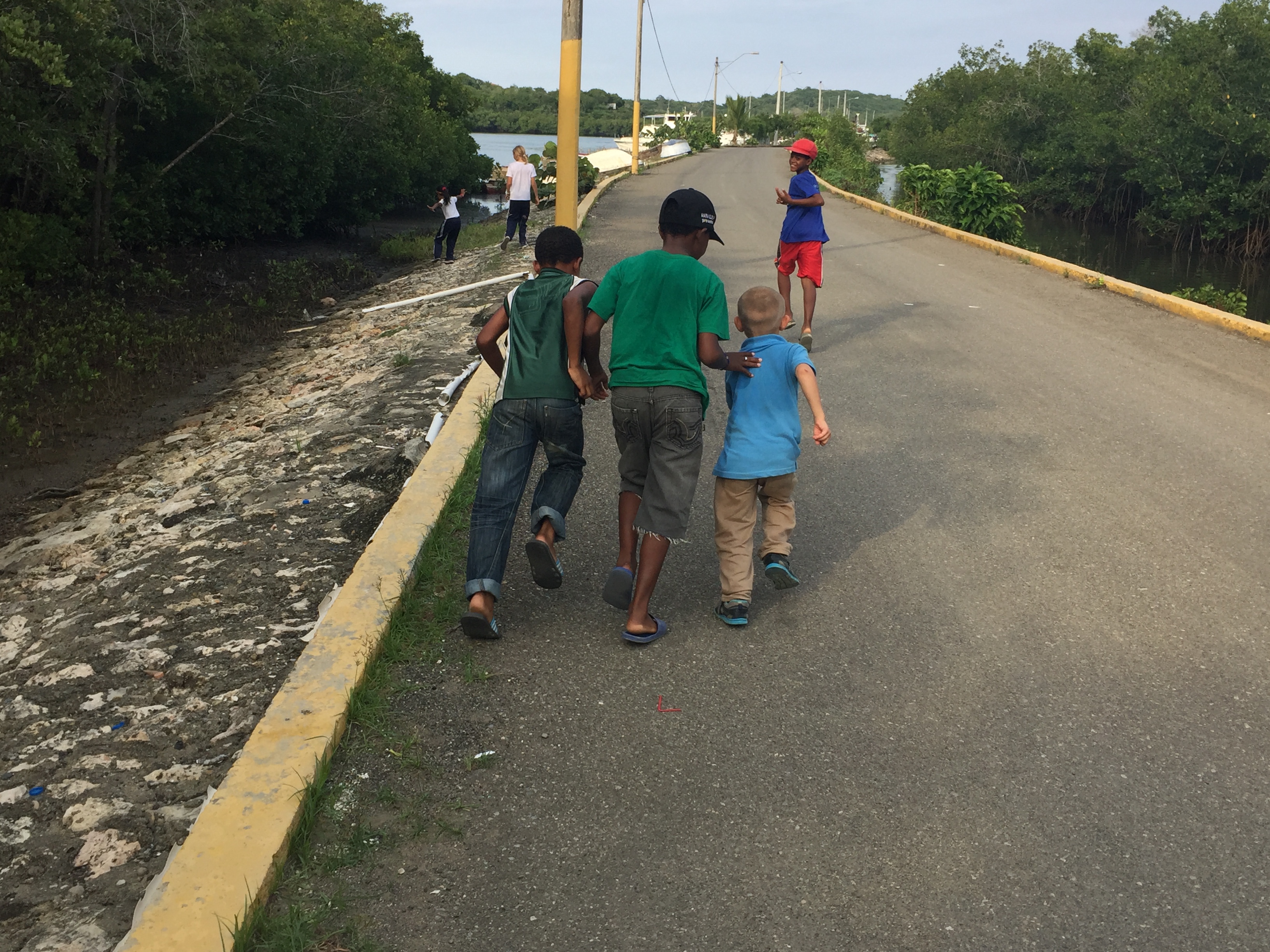
The kids made friends quickly, despite not being able to speak Spanish. We are planning to put Betty and Paul into Spanish lessons. Here is a picture of our kids with some of the children in Andy’s neighbourhood.

Andy arranged for us to ride home on three motorcycles. I wasn’t crazy about piling our kids on motorcycles without helmets. But it was only a short distance and this is how local people travel. The kids thought this was fantastic.
I was expecting to play baseball. I didn’t expect the game to open other cultural avenues.
For example, I learned tonight that people don’t bring their children to cockfights. Catherine told me that cockfighting involves gambling and sometimes results in physical altercations.
We plan to return to Andy’s field to play baseball on Saturday. Fabio from SV Odoyo, whom we first met in the Turks and Caicos, plans to go. Perhaps we will recruit some other cruisers to come with us as well.
A visit to the ball diamond introduced our kids to some new friends and helped to demystify a multifaceted culture. We can’t wait to visit again.
Columbus Comes Alive at La Isabela, Dominican Republic
Originally posted July 20, 2016
This week, Christopher Columbus was lifted off the pages of history; a visit to La Isabela, Dominican Republic (DR), saw our family walk among the ruins of what is reputed to be the first settlement in the New World.

We stood in Columbus’s cliff-top house and saw the remains of other houses, as well as a cemetery, and the first church to hold mass in the New World.


I thought it was interesting to learn that early roof shingles gained their shape by using the builders’ own legs. The kids were fascinated by the skeletal remains of someone who had lived in the settlement. Five-year-old Karen now dreams of being an archaeologist. Paul particularly enjoyed seeing a replica of one of Columbus’s ships.
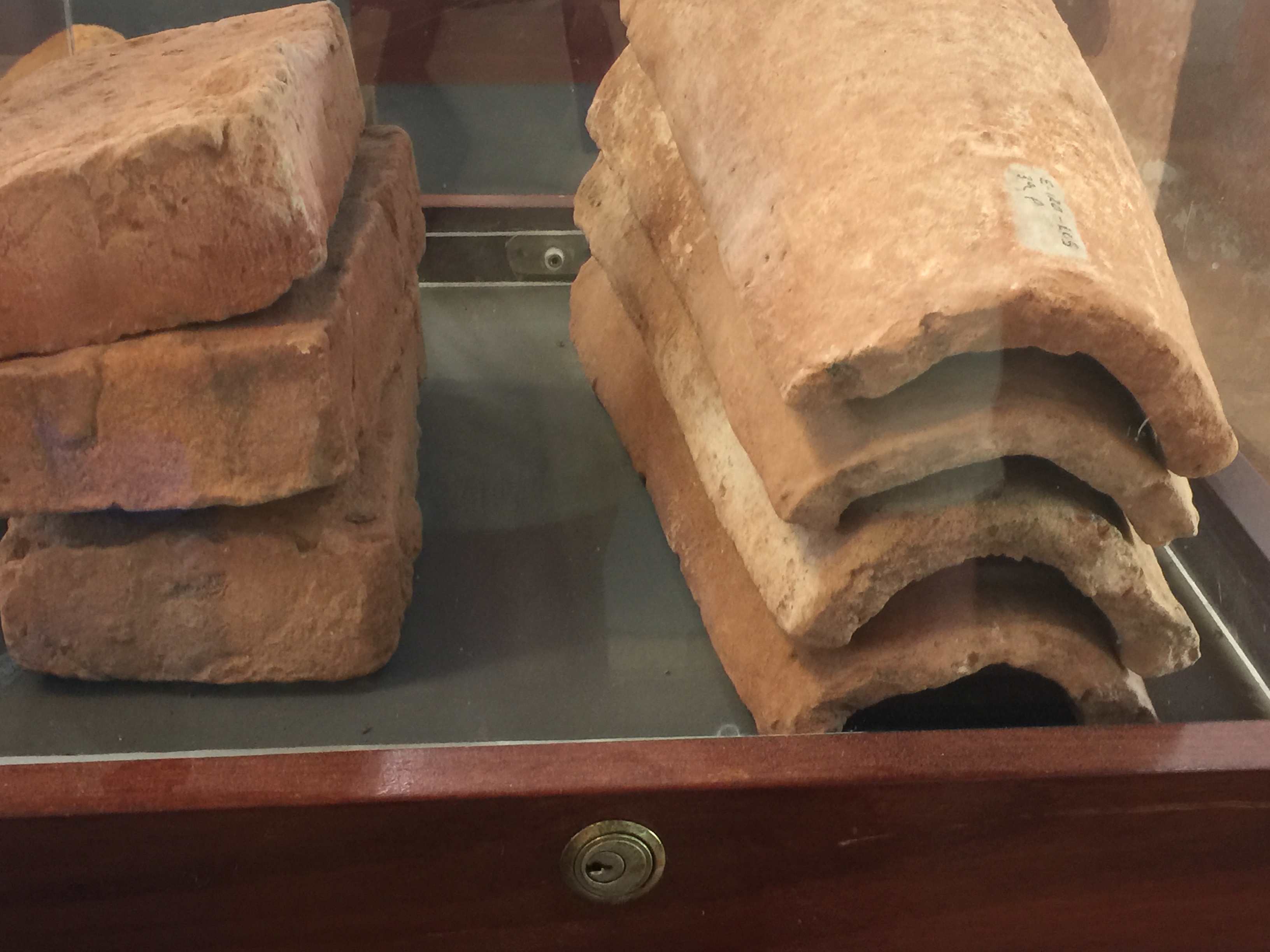
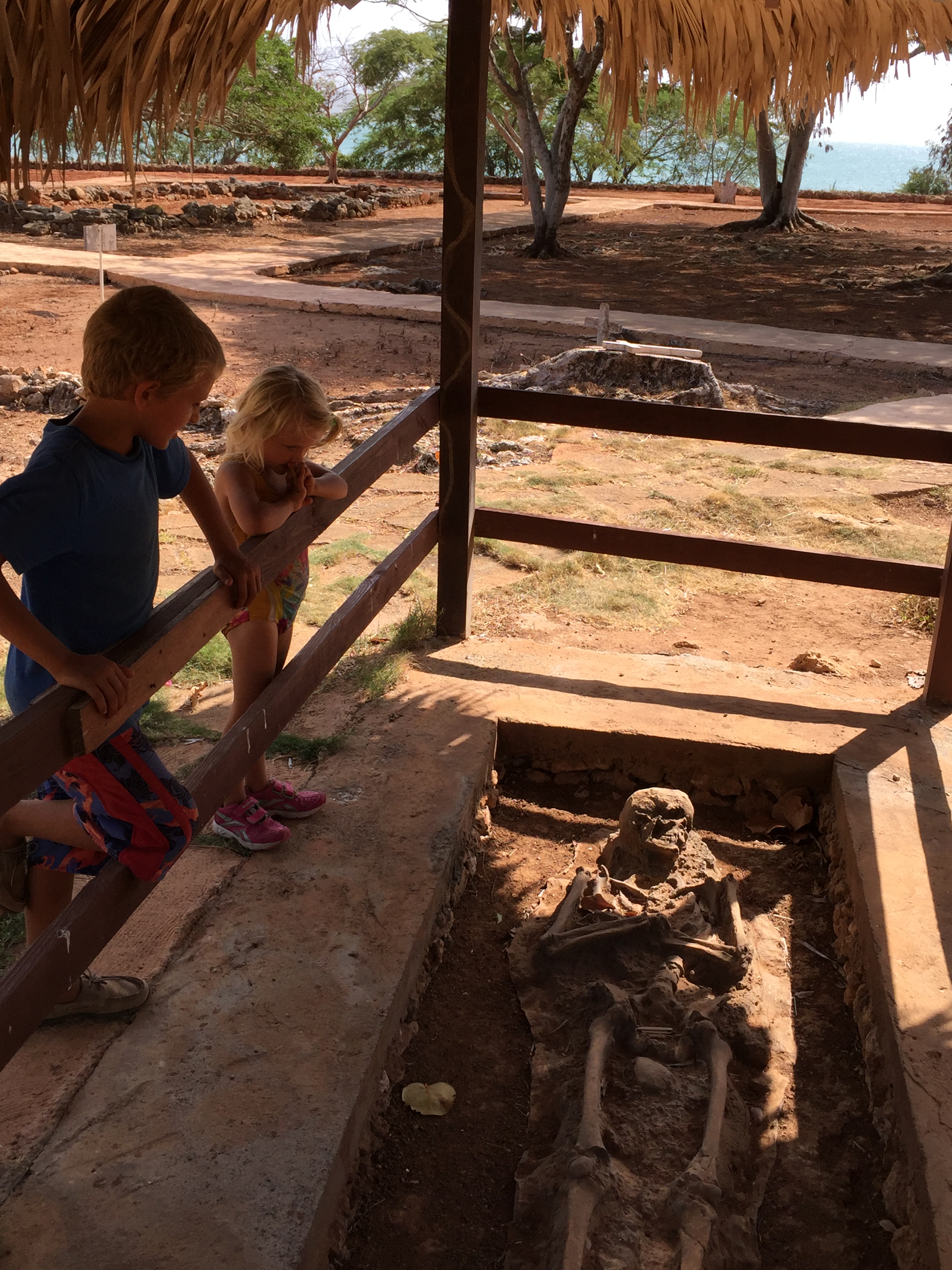

We feel very fortunate to have seen Columbus’s settlement from both land and sea. Like Columbus, we anchored at La Isabela when we first arrived in the DR. Columbus, however, had loftier intentions when he claimed and named the entire island of Hispaniola, which means “Little Spain”.
It wasn’t until we visited the La Isabela settlement by land that we realized we had been anchored in full view of Columbus’s house.
After visiting the settlement, Rick downloaded two documentaries about Columbus that had us on the edge of our seats. We learned that we had likely sailed over some of his sunken ships. As many as six ships are believed to be buried under many feet of mud at the bottom of the bay.
As a result of our trip, the kids have been eager to learn more about archaeology and the process of finding objects using a grid.
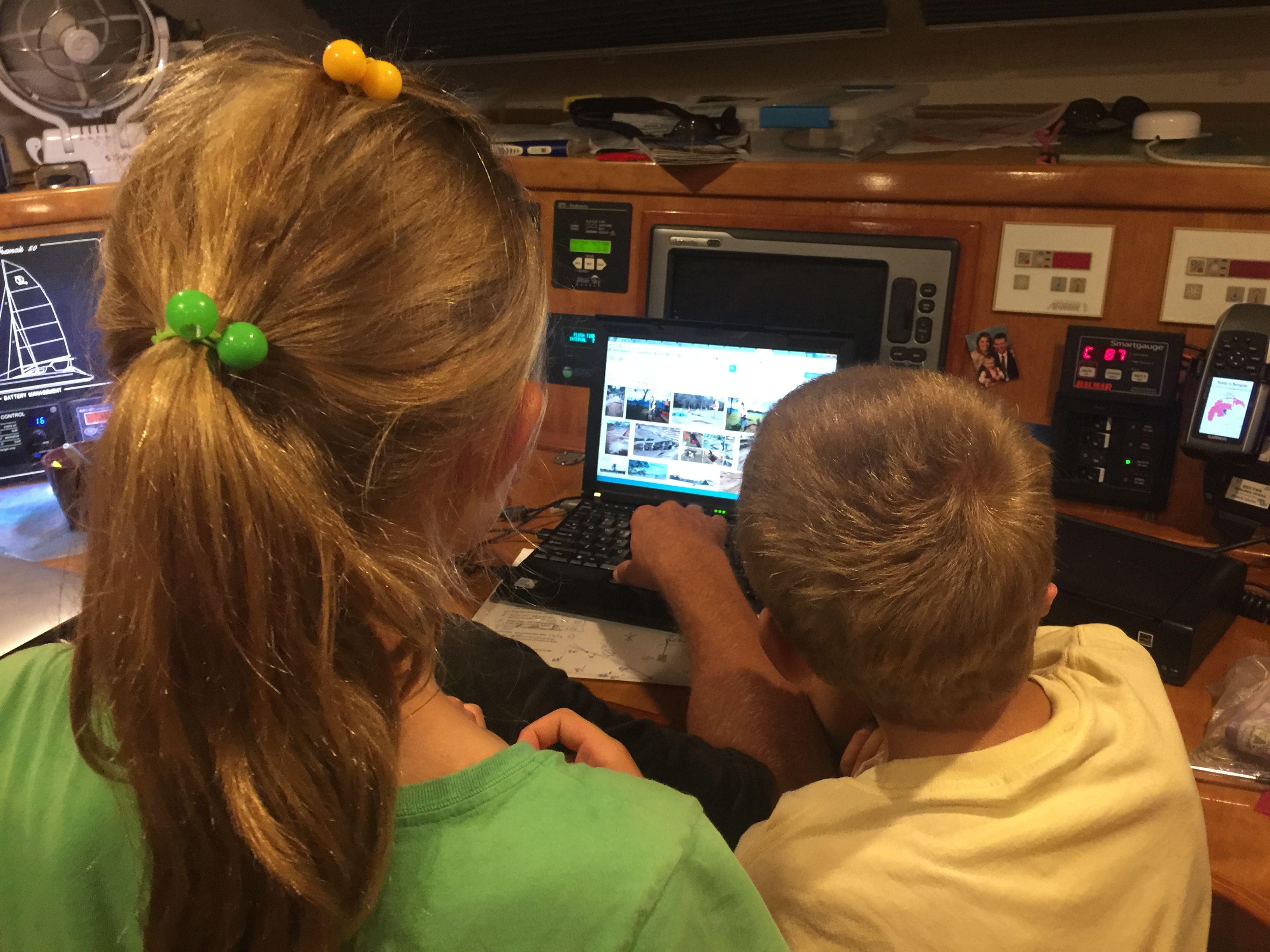
The two documentaries that Rick downloaded are:
- Expedition Unknown — Columbus: Legend or Liar? (TravelChannel.com)
- Columbus’s Cursed Colony (National Geographic)
We went to La Isabela with Will Aitken and his two dogs, Raven and Lupo. Will is a cruiser from Texas, and he suggested La Isabela as a day trip to us. Thanks, Will, for suggesting this trip and for doing all the driving. We had a great day!

Canadian Boat Kids Go Shopping for School Uniforms in Luperón
Originally posted September 11, 2016
People say our kids will learn Spanish fast. Let’s hope so. We are from Ottawa, Canada. In about a month, all four of our kids will start public school in Luperón, Dominican Republic (DR). The school is currently closed for renovations.
Our children are ten and eight, and our twins are five. We have been homeschooling our kids for a year. None of us speak Spanish, although my older children are taking Spanish lessons at the moment. They attend the George Washington Language Institute for one hour, three times a week.
I will be using the Spanish Rosetta Stone program to help our twins get ready for school. My older kids will stop taking Spanish lessons at the Language Institute when public school begins.
At the public school, tuition is free and meals are provided at no cost. The private Christian school would have cost $2 per child per month. But they were full and could not accommodate our twins.
I expect that learning a new language in a new school will be difficult. Meeting the schedule will require military-like discipline. And keeping uniforms clean and fresh — I’m losing my mind thinking about it. But we think that the school will provide our kids with a fantastic opportunity. They will learn Spanish and make friends their own age.

School is from 7:45 a.m. to 4:00 p.m. The dinghy dock is a 25-minute walk to the school. We could take a motoconcho if we were running late, but I prefer to walk. We need to seek opportunities for exercise when living on a boat.
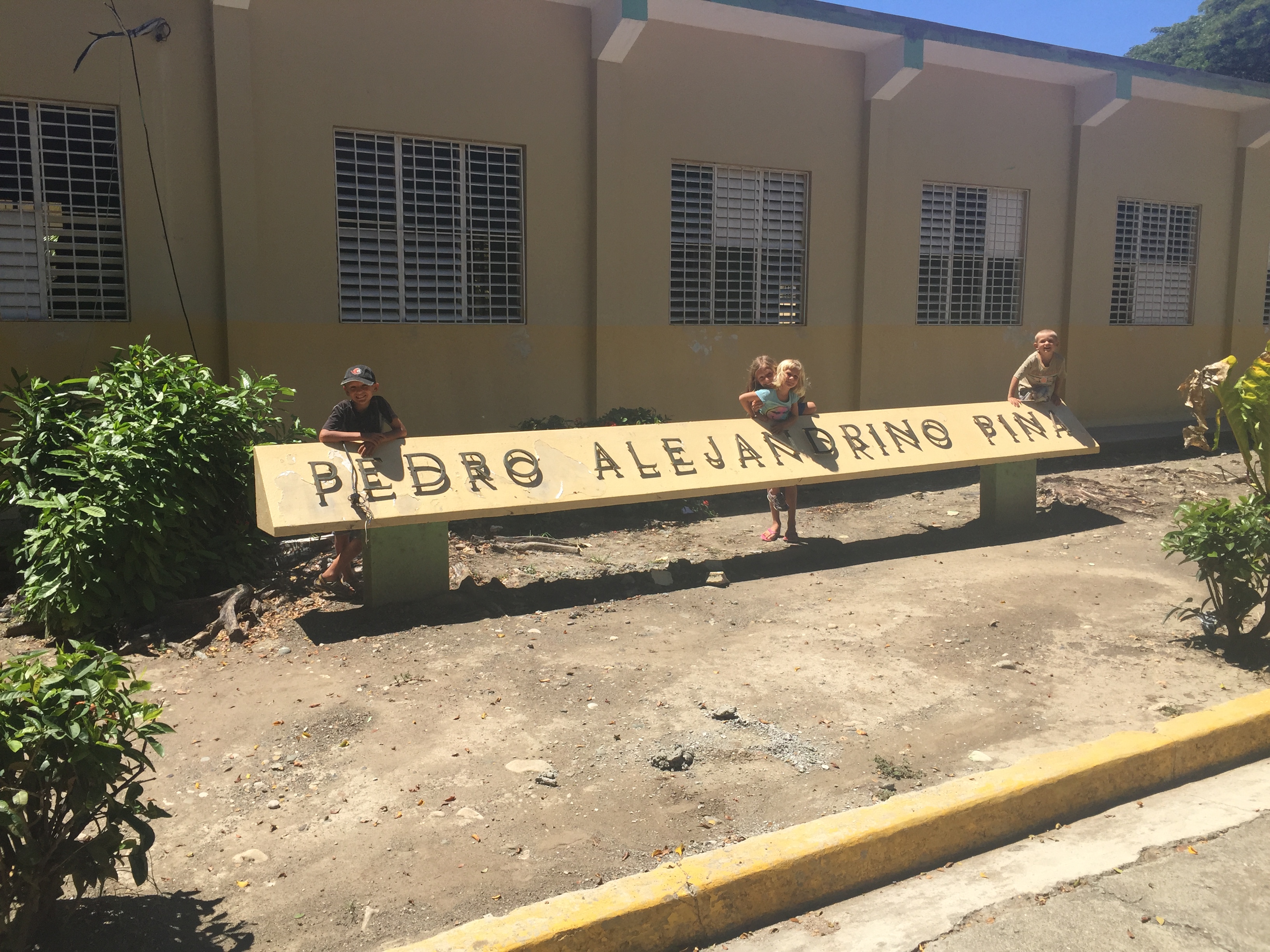
Today, we went shopping for school uniforms at a shop called “Tienda Berenice.” With four kids, it was very busy, but we managed. The uniform consists of beige pants and a blue shirt. A complete outfit (pants and shirt) costs $15 U.S. Each shirt is embroidered with a representation of Pedro A. Pina. The school is named after him. He was one of the founding fathers of the DR.

A local fisherman is very interested in seeing our kids go to the local school. He has volunteered to keep us updated on the renovation work at the school. When school begins, my husband and I will have more time to get some jobs done on the boat. We plan to leave the DR shortly before Christmas. While the traditional school experience in Luperón will be short-lived, I’m sure that it will not be easily forgotten.
Canadian Boat Kids Go to School in Luperón
Originally posted October 4, 2016
on work on the local public school has finally come to an end. Our kids began school last week in Luperón, Dominican Republic (DR). Our mission is for them to make some new friends and learn to speak Spanish.

They are attending Pedro A. Pina public school. The staff has limited English-speaking skills. So it has been an adventure buying school uniforms, communicating food allergies, and figuring out school start times.
On the first day of school, we assembled in the schoolyard and there was a ribbon-cutting ceremony, singing, and speeches. The staff wore pink uniforms.
As we waited for school to start, a delivery truck drove through a throng of waiting children. To us, it seemed quite dangerous. But this is a school population that arrives, in part, on motorbikes without wearing helmets. Seven-year-olds walk alone to school.
With the truck incident, there was no staff involvement. Kids simply moved out of the way as the driver lurched and revved his engine to make it over a hump in the asphalt.
That truck incident aside — and it happened again the second day — the school pride was evident, and similar to what you might see in North America. However, I don’t recall seeing any of my teachers sing a solo and sway to the music with such gusto.

On the second day of school, the teachers wore green uniforms. During this assembly we learned that school starts at 7:30 a.m. But it seems that the start time is rather flexible given that some teachers straggle in during the morning assembly. The official school end time is 4 p.m., but, inexplicably, school let out 7 minutes early on Friday.

The school design is bright and airy. The custodial staff seem to work hard to keep the yard maintained. That said, I was surprised to see a school custodian resting on a playground bench during class time.
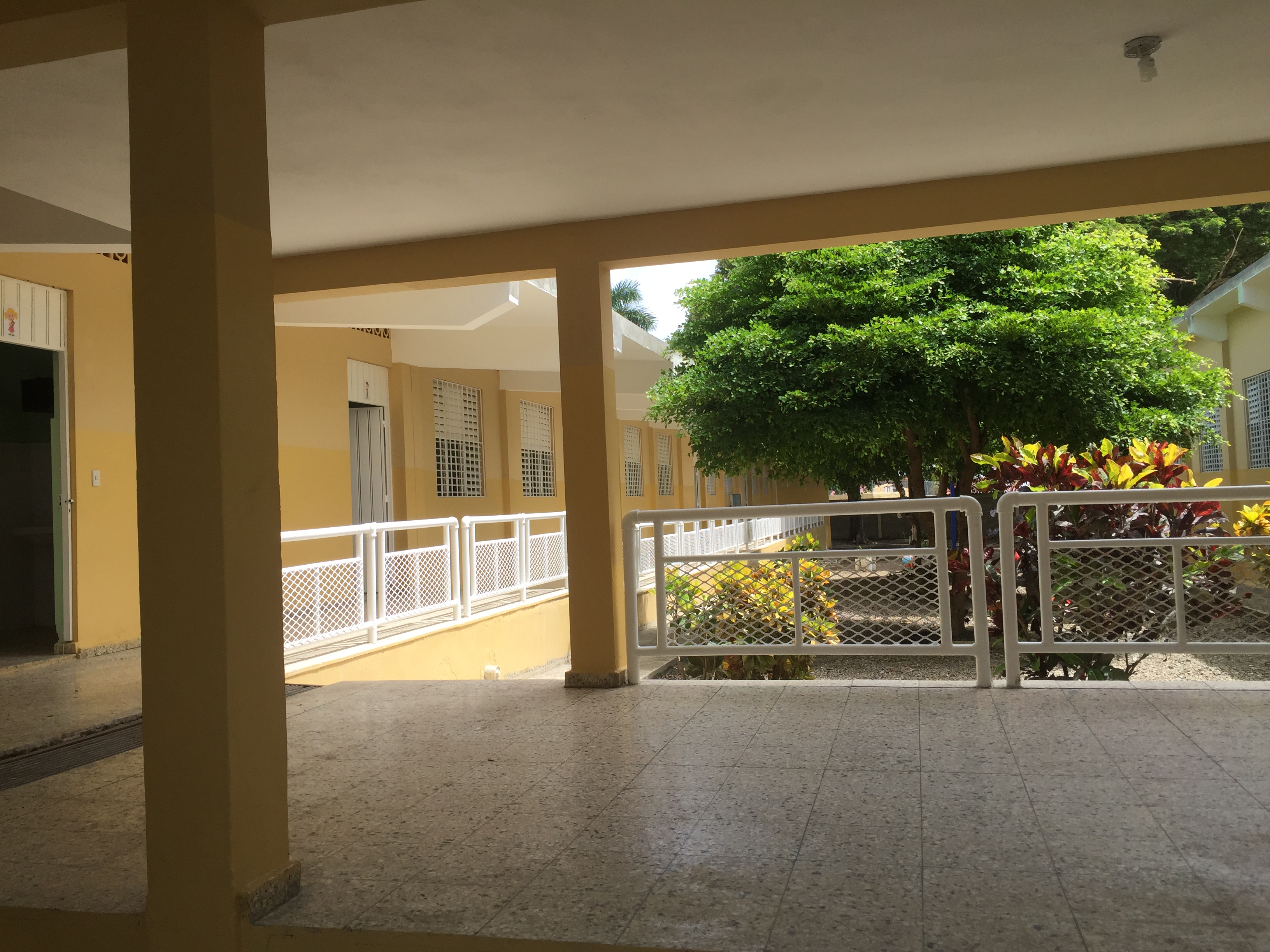
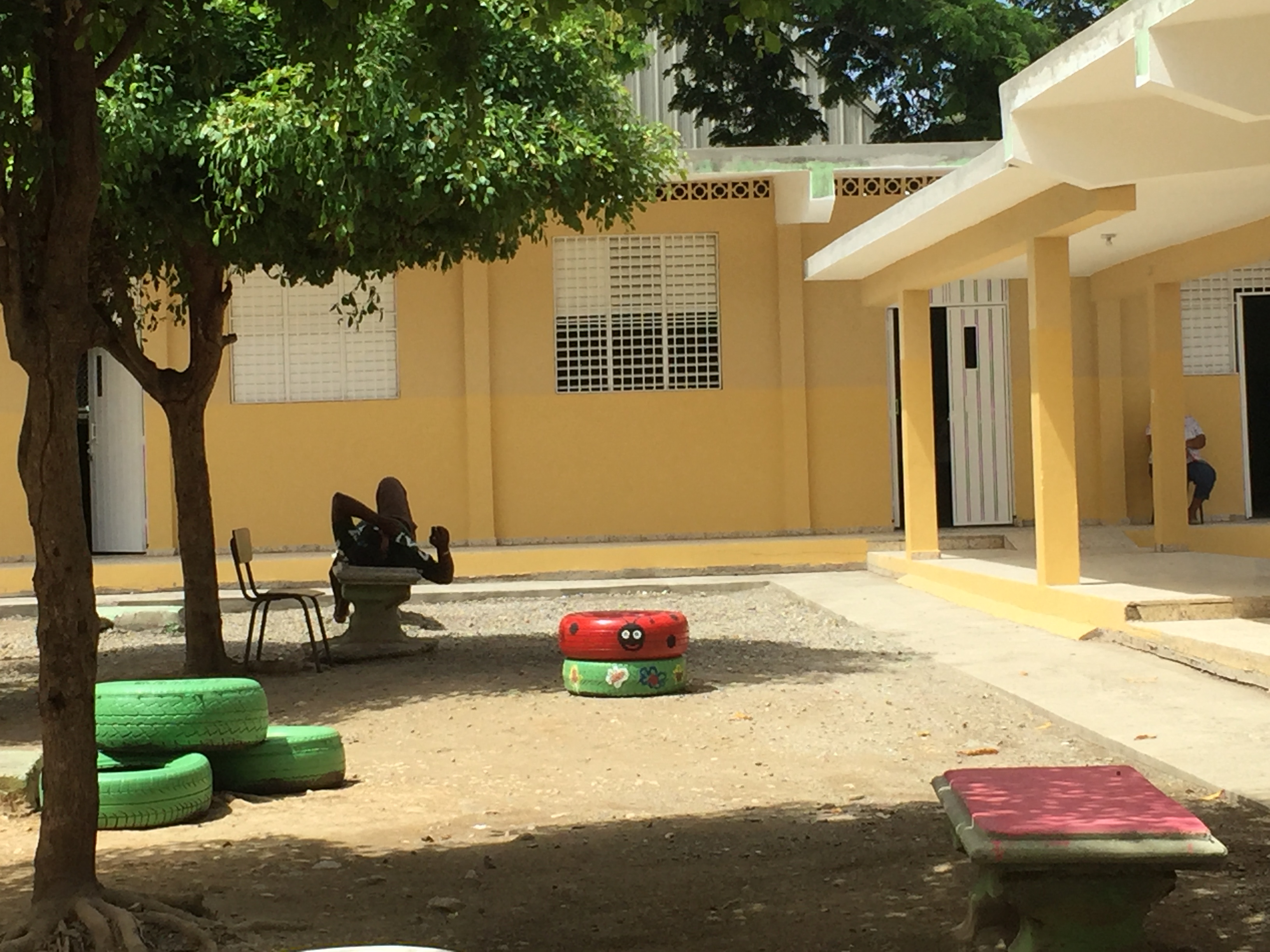
The school serves breakfast and lunch. Paul brings his own meals due to life-threatening food allergies. I met Paul at school for lunch each day last week to help with his transition. It is tough being the only kid with food allergies.
I expect that most of the school staff will not have heard of an EpiPen, especially given that a local ER doctor had never seen an EpiPen. I was asked by one staff member if Paul had to inject himself every day with it.
I admit that mealtimes are stressful. Henry cut his hand and I observed that there seem to be no first-aid protocols. The school does not stock Band-Aids. Hand soap is non-existent and even toilet paper seems to be in short supply.
Needless to say, Paul brings two EpiPens to school. He is a responsible boy and knows that he must consume only foods that I give him.
Here are some pictures of students in the lunch line-up and in the singing room. Kids bring their own plates and cutlery. The plates often have lids.
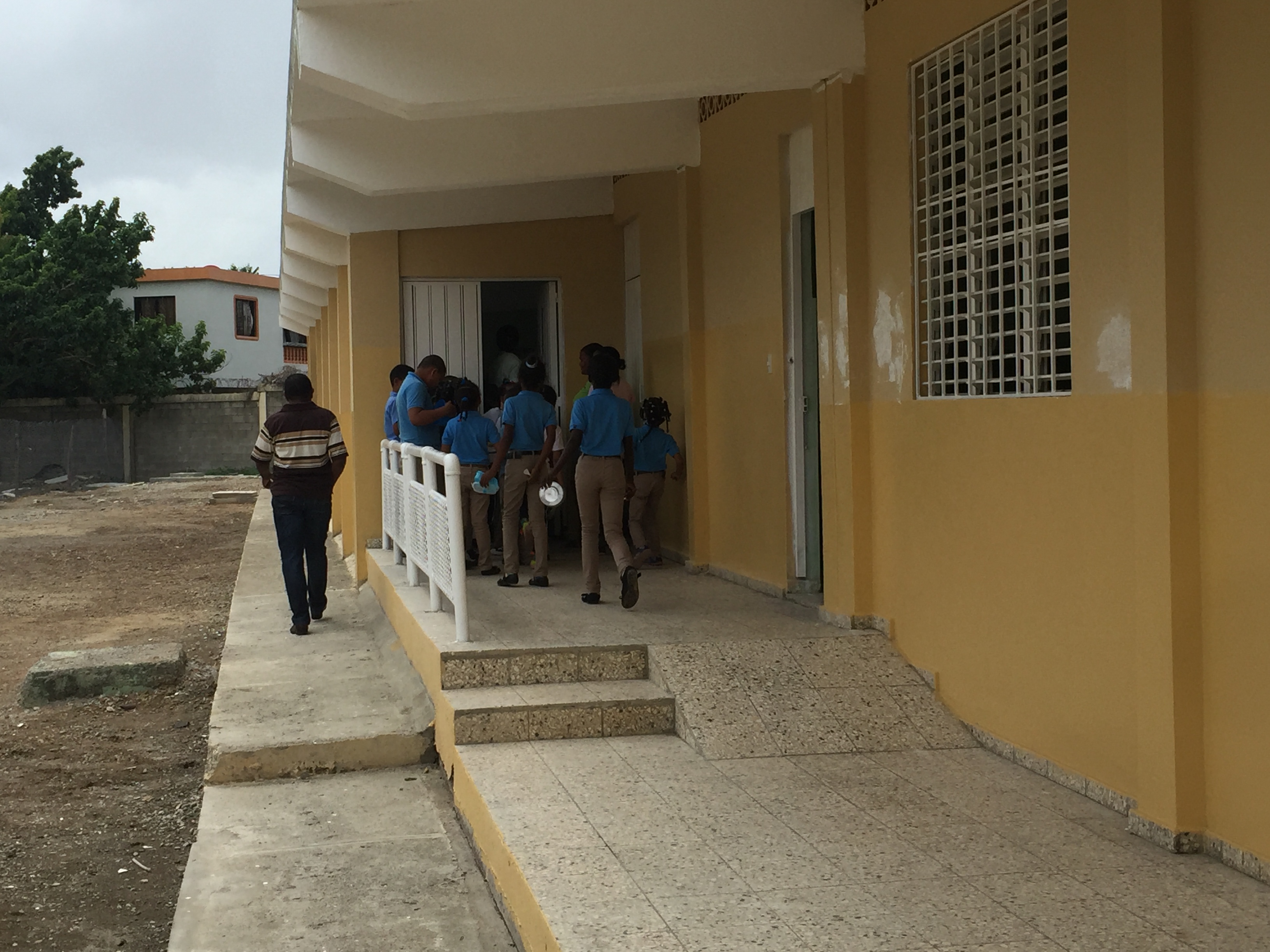
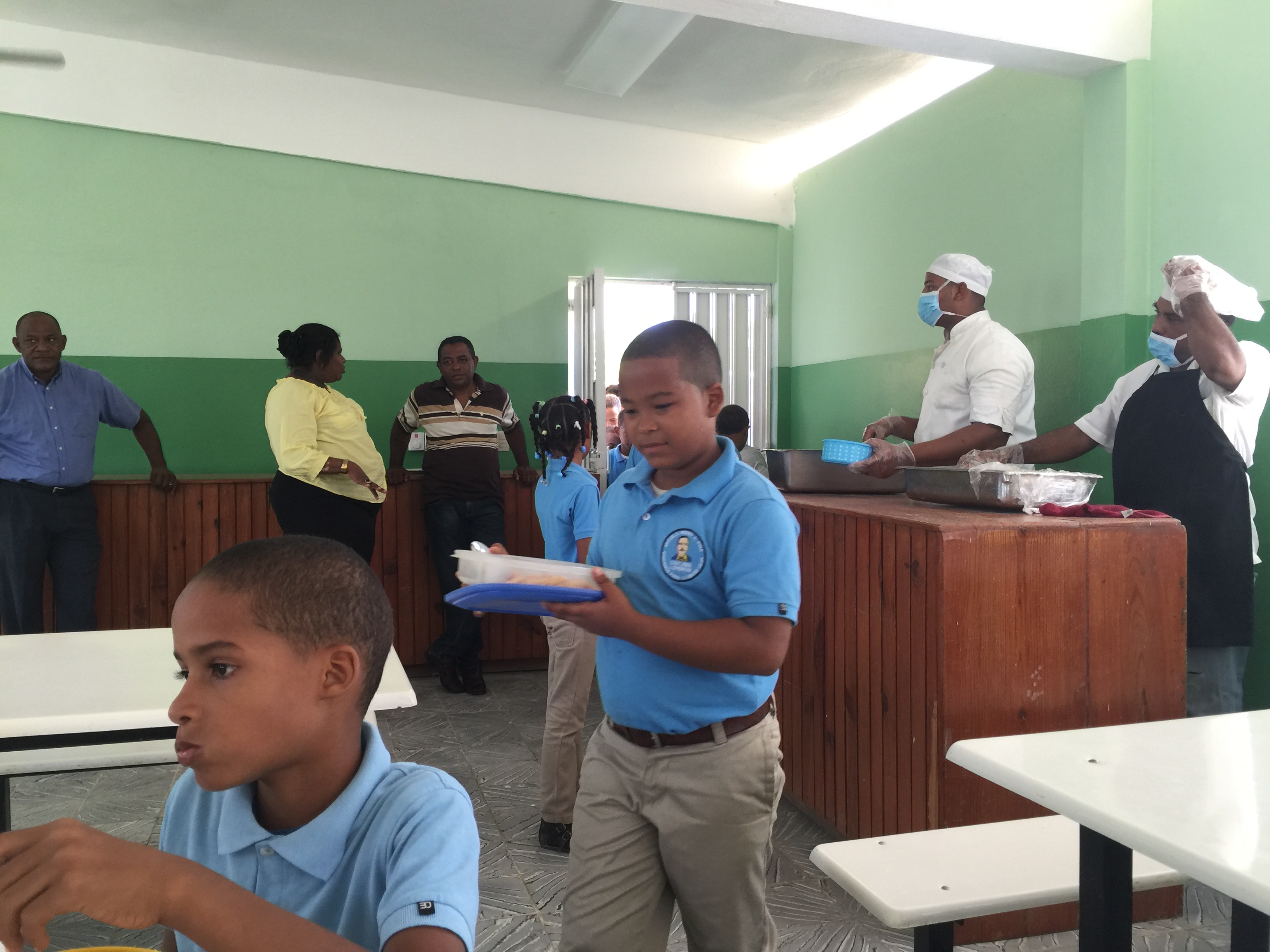
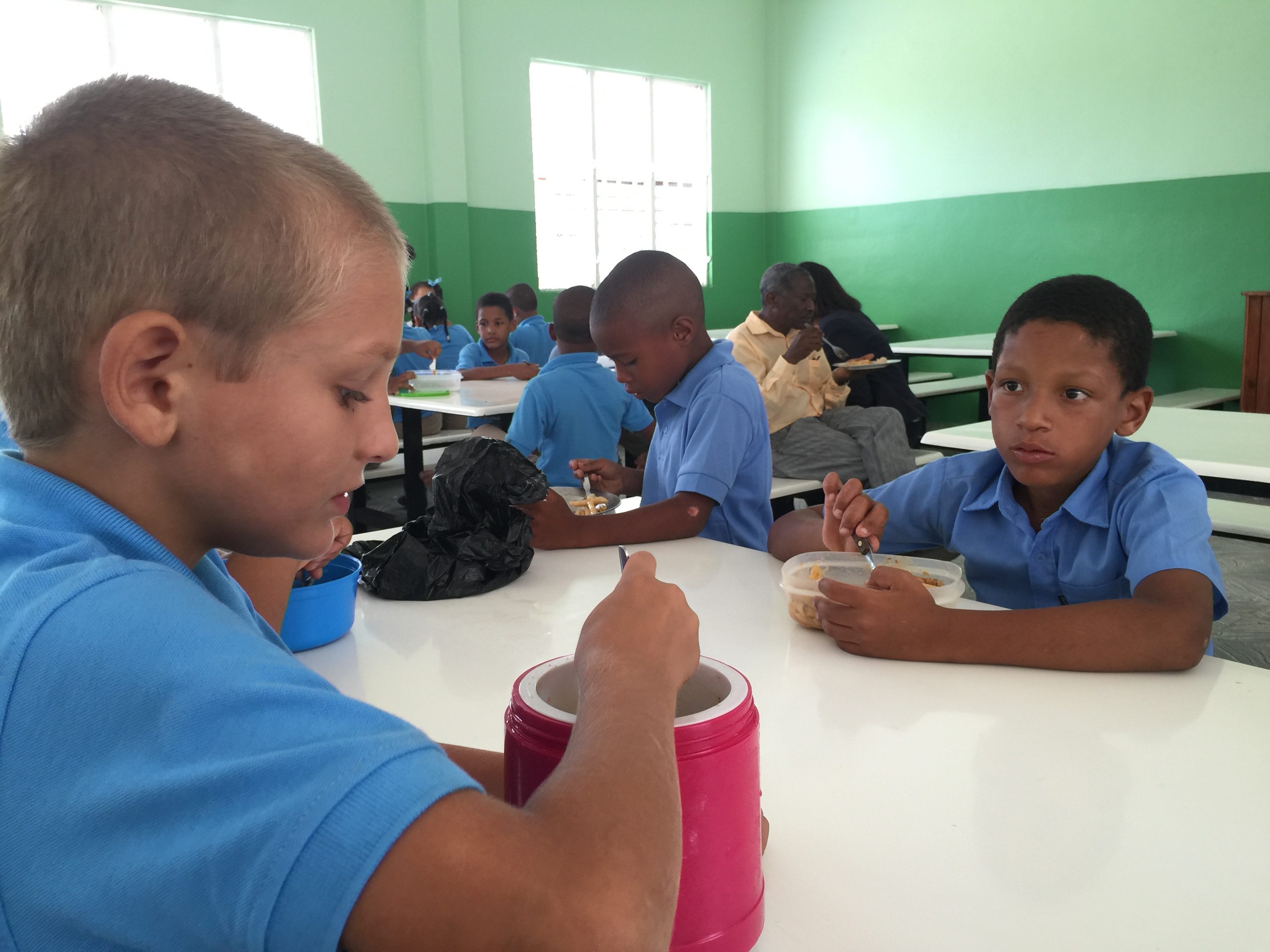
Amazingly, no one seems to label their plates, backpacks, or other belongings. There are no cubbies or lockers to store (or lose) belongings. Instead, students must bring all of their belongings to school each day — plates, cutlery, water bottle, and school supplies. Our kids’ backpacks are quite heavy.
The last photo in this blog post shows Paul’s teacher. Please take a moment to mentally offer this woman a hug.
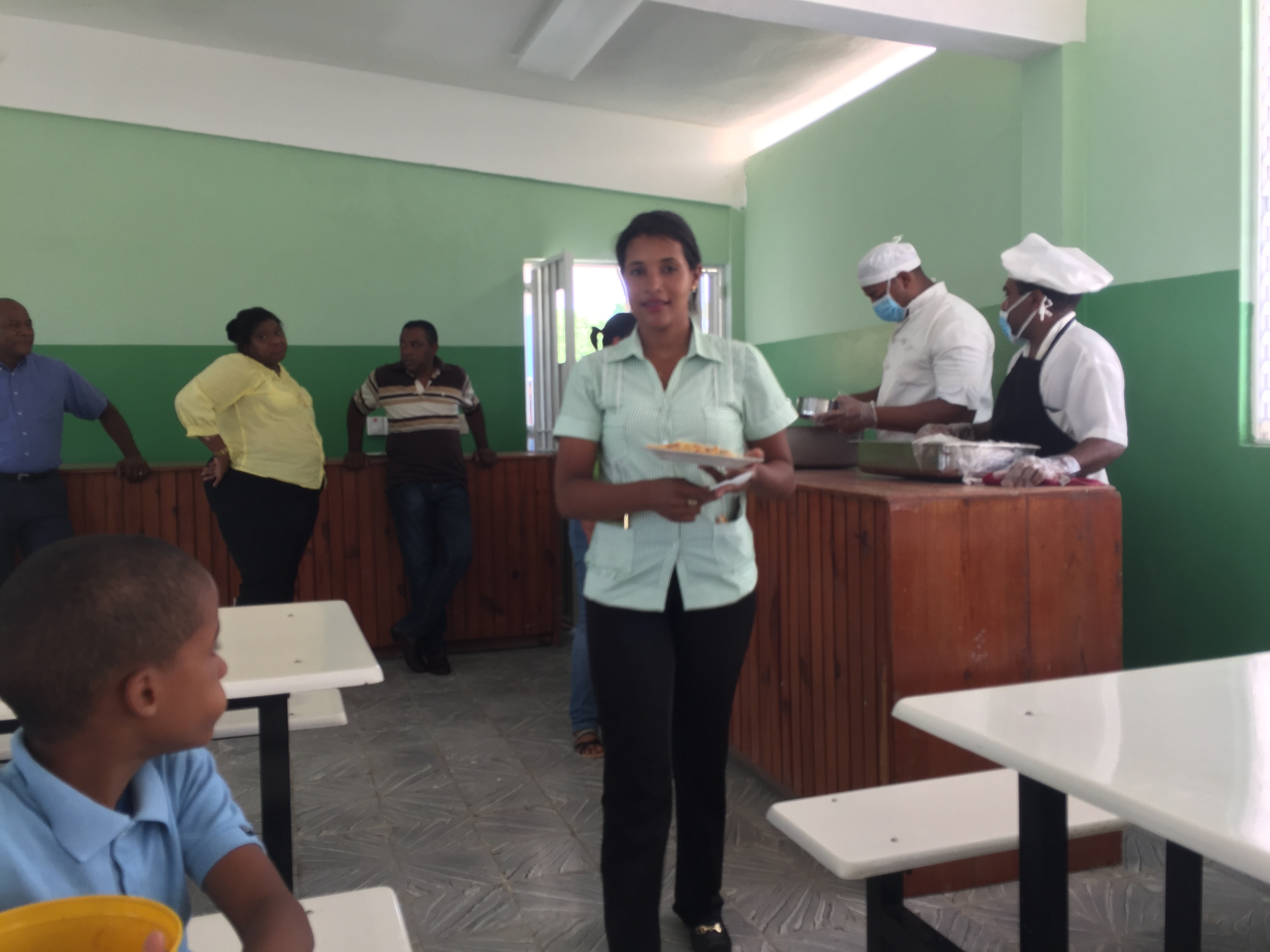
Paul’s teacher is young and forgets that body language is a large part of communication. Her demeanour indicates she would rather be anywhere else than managing an unruly classroom. To be fair, kids disappear out of her class about once every two minutes. They laugh, wrestle and shout without any apparent recourse.
This week we set off for our 25-minute walk to school. But we were turned back by local townspeople. Everyone seemed to know that school was closed for two or three days due to Hurricane Matthew.
Our kids are excited to be back on the boat, and we are all grateful for more sleep. In their short time at the school, our kids have transformed from being the only blonde kids at school to feeling part of the school community. By the end of the week, our kids had made friends and walked home with two of them.
We are watching Hurricane Matthew. It appears that the storm will not directly affect our area. We are in a virtually landlocked harbour, surrounded by mountainous terrain, which tends to break up the winds.
Paul’s Eye and the Power of Facebook — How News of an Allergic Reaction Reached Six Countries Before Mom and Dad
Originally posted October 17, 2016
Last week, Paul was sent to the school office. His teacher was concerned about his eye. The school was unable to reach me, so they got hold of my emergency contact, Ana Lopez.
Paul has multiple food allergies and is anaphylactic to tree nuts (walnuts, pistachios, and cashews). An allergic reaction must be taken seriously as his allergies are life-threatening.
Ana is the proprietor of a convenience store in Luperón, Dominican Republic. Her family has deep roots in Luperón. Ana provides a mailing service through her shop and has contacts within the cruising community.
When Ana heard from the school, she had no way to reach me. So she contacted another cruiser who happened to be in Puerto Rico. He sent out a Facebook message.
That message was seen by people in Canada, a friend in Mexico, and a cruising family in Grenada. Several cruisers in Luperón also saw the Facebook message. They found Rick and brought him to the school by motorbike.
Even my aunt in England saw the Facebook message.
Meanwhile, I was oblivious to the effort to reach us. As I stood in the schoolyard, it appeared to me that I was doing a standard after-school pickup. When I saw Paul, I thought he looked like he had pink eye.
I began treating him with antibiotic eye drops. Nagging doubts led me to take Paul to the hospital the next day.

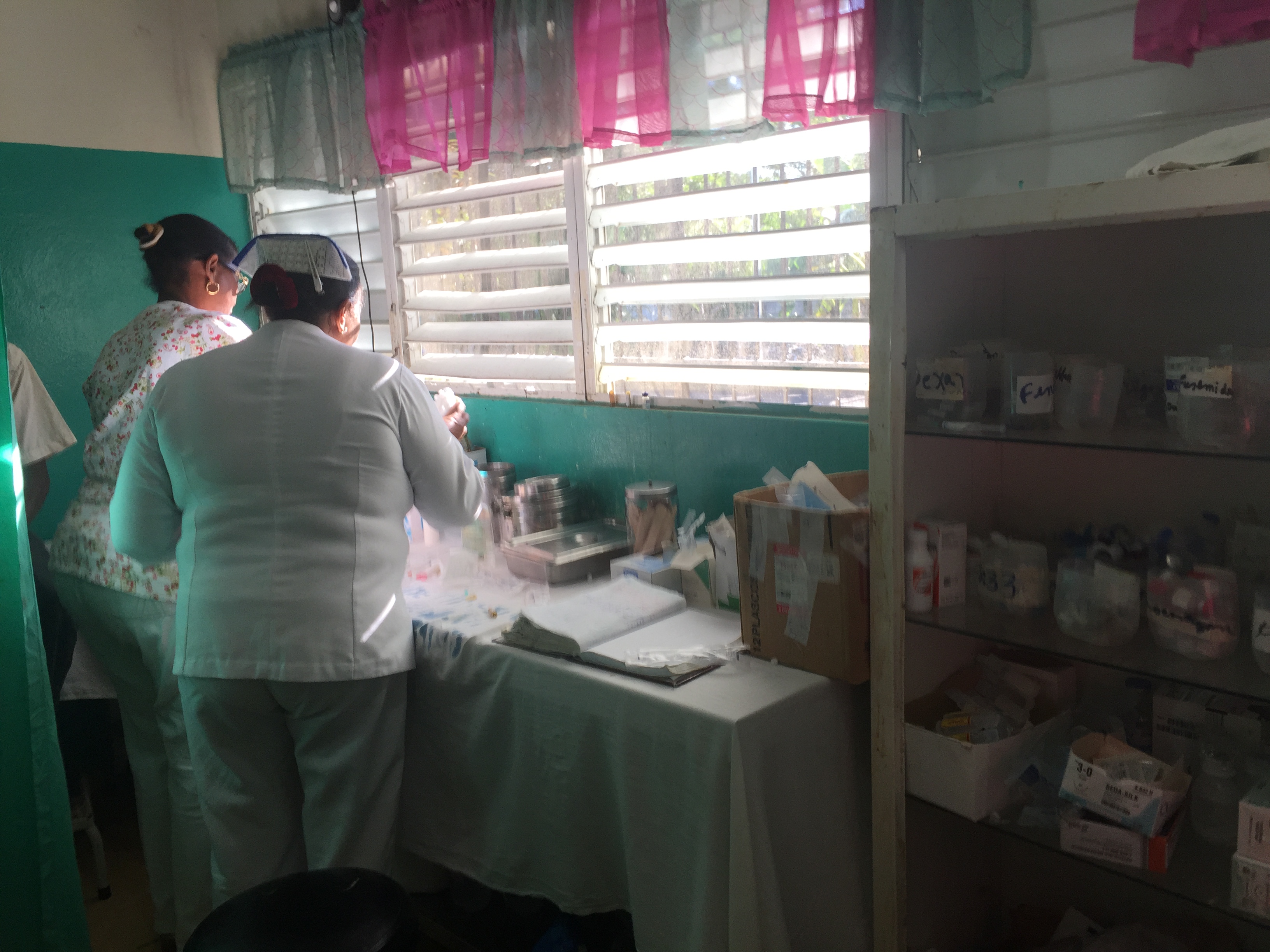
The doctor was sure it was an allergic reaction. But an allergic reaction in one eye only? We have no idea what sparked his reaction, though I have seen him react to pollen in a similar fashion.
Paul is now taking eye drops for allergies, and has been prescribed a powerful antihistamine.
Thanks to the community in Luperón, and friends, and family in countries beyond!
I will be carrying my cell phone from now on. Paul will be back at school tomorrow.
The Orange Wagon That Forged Friendships in Luperón, Dominican Republic
Originally posted October 22, 2016
On weekdays at 4:00 p.m., the school bell sounds, and children erupt in screams of delight. I wait for my children in the leafy schoolyard with a bright-orange collapsible wagon. Yesterday was a special day as I had arranged to give four local school kids a ride in our dinghy.
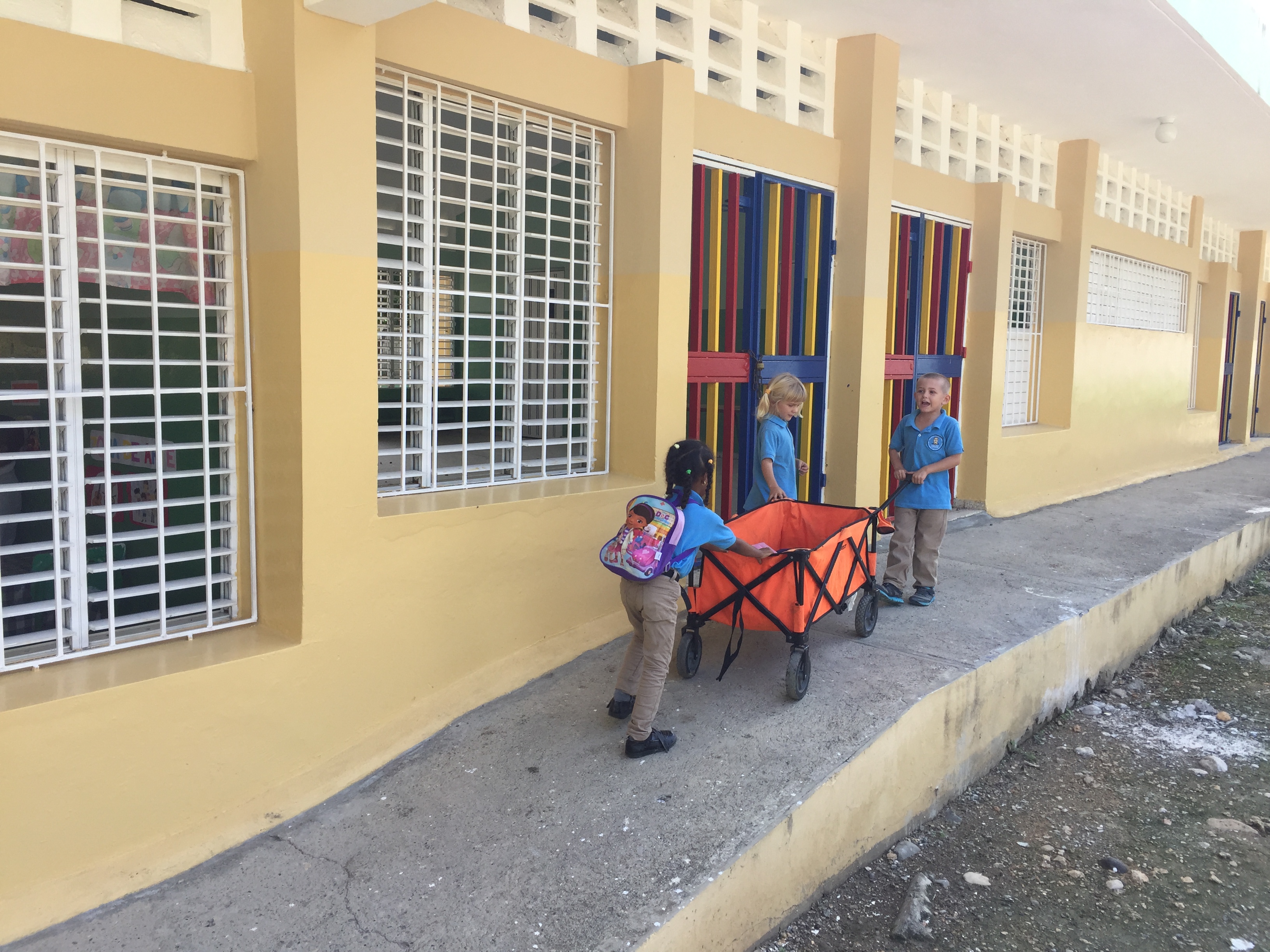
The children were ecstatic. We loaded the wagon with backpacks and walked our regular 25-minute walk to the dinghy dock. I initially used the wagon to carry our kids’ backpacks and at least one of the twins. But that has changed; other school kids also like to put their backpacks in the orange wagon. I am happy to carry their belongings.
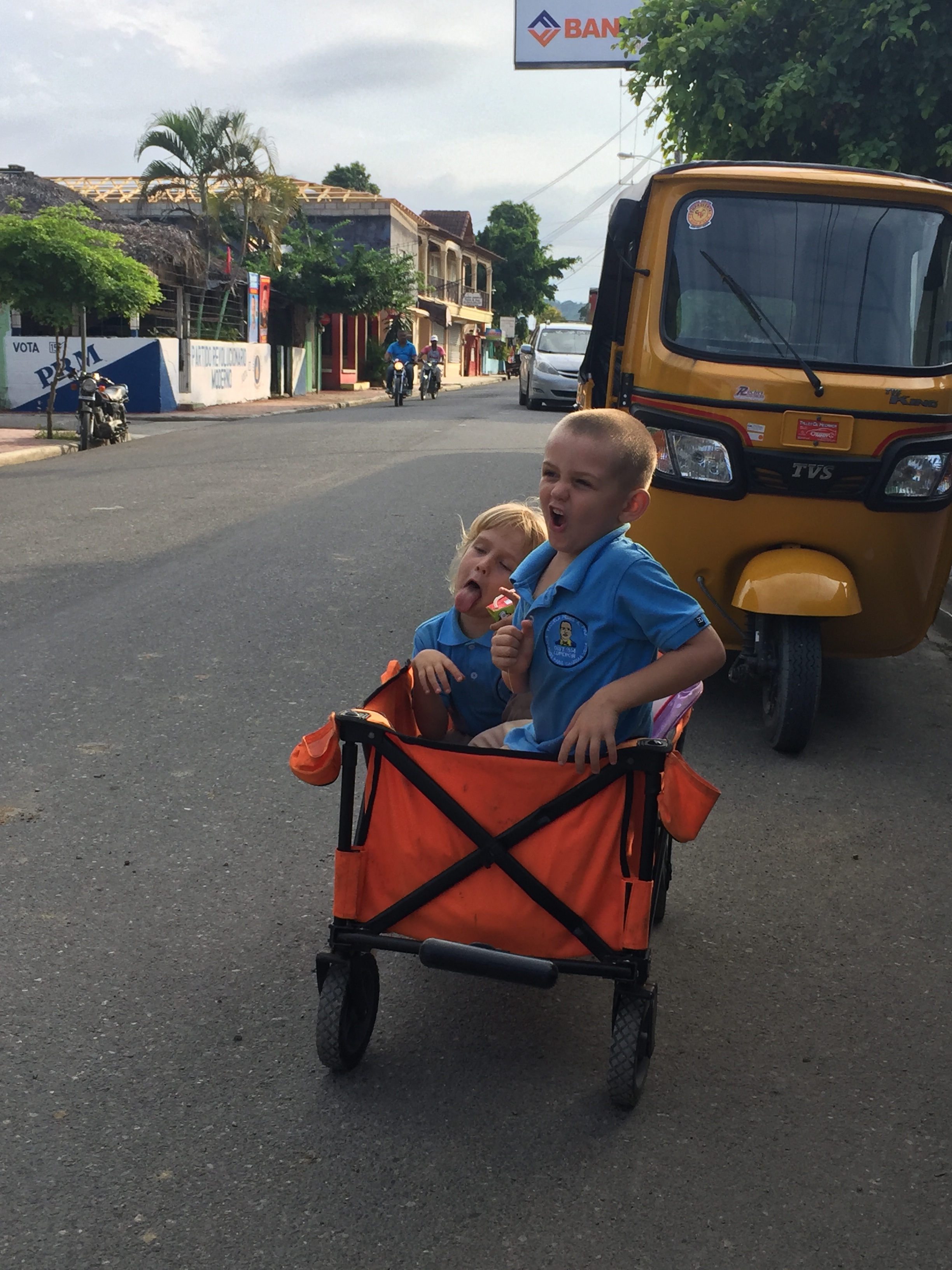
Some of the school kids are escorted home by car or motorbike. Most kids walk, and virtually all of the kids who walk home go without their parents. Sometimes I hold my breath as kids dart in and out of traffic. Today, I watched a girl who looked to be about six years old run across the road, while ushering another student who appeared to be younger than herself.
It seems to be organized mayhem. I have seen people escort my kids across intersections. This has happened when my kids have strayed too far ahead of me.
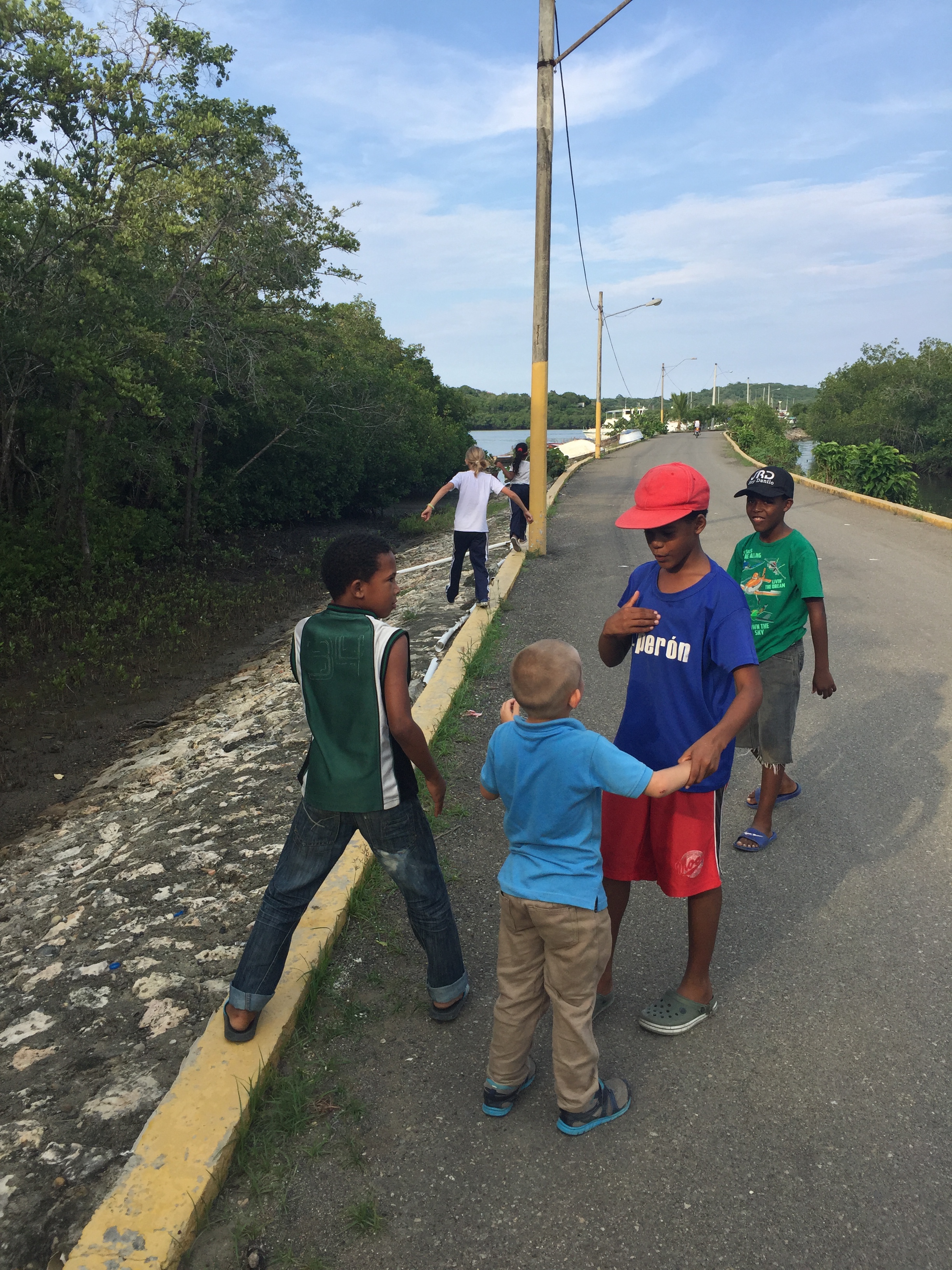
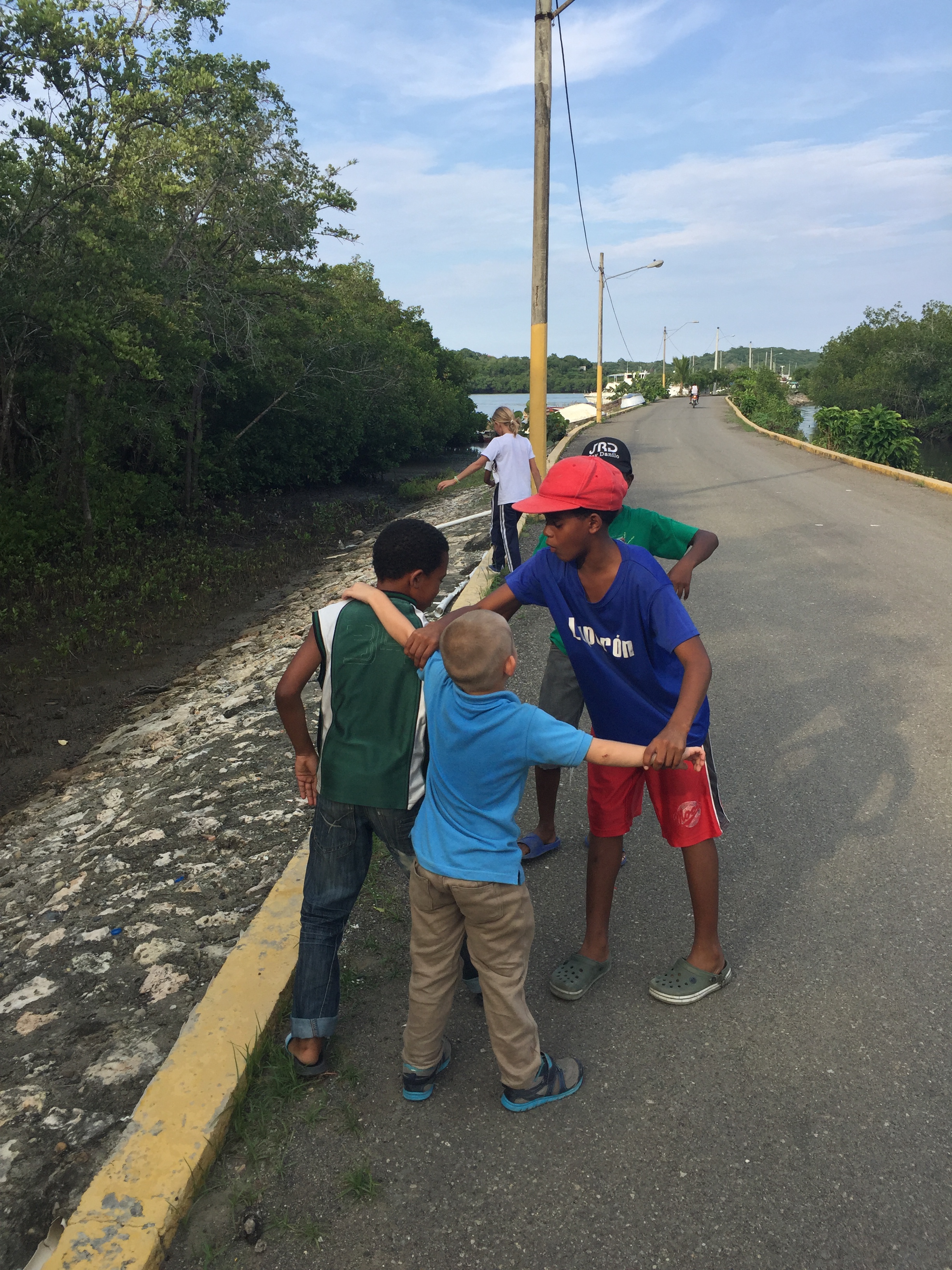
Betty likes to do cartwheels with her friends and has to be reminded to keep her gymnastics on the sidewalk and off the street. Paul and his friends like to shake the trees after it rains and watch as people get showered upon. Karen and Henry enjoy having a piggyback with the older students.
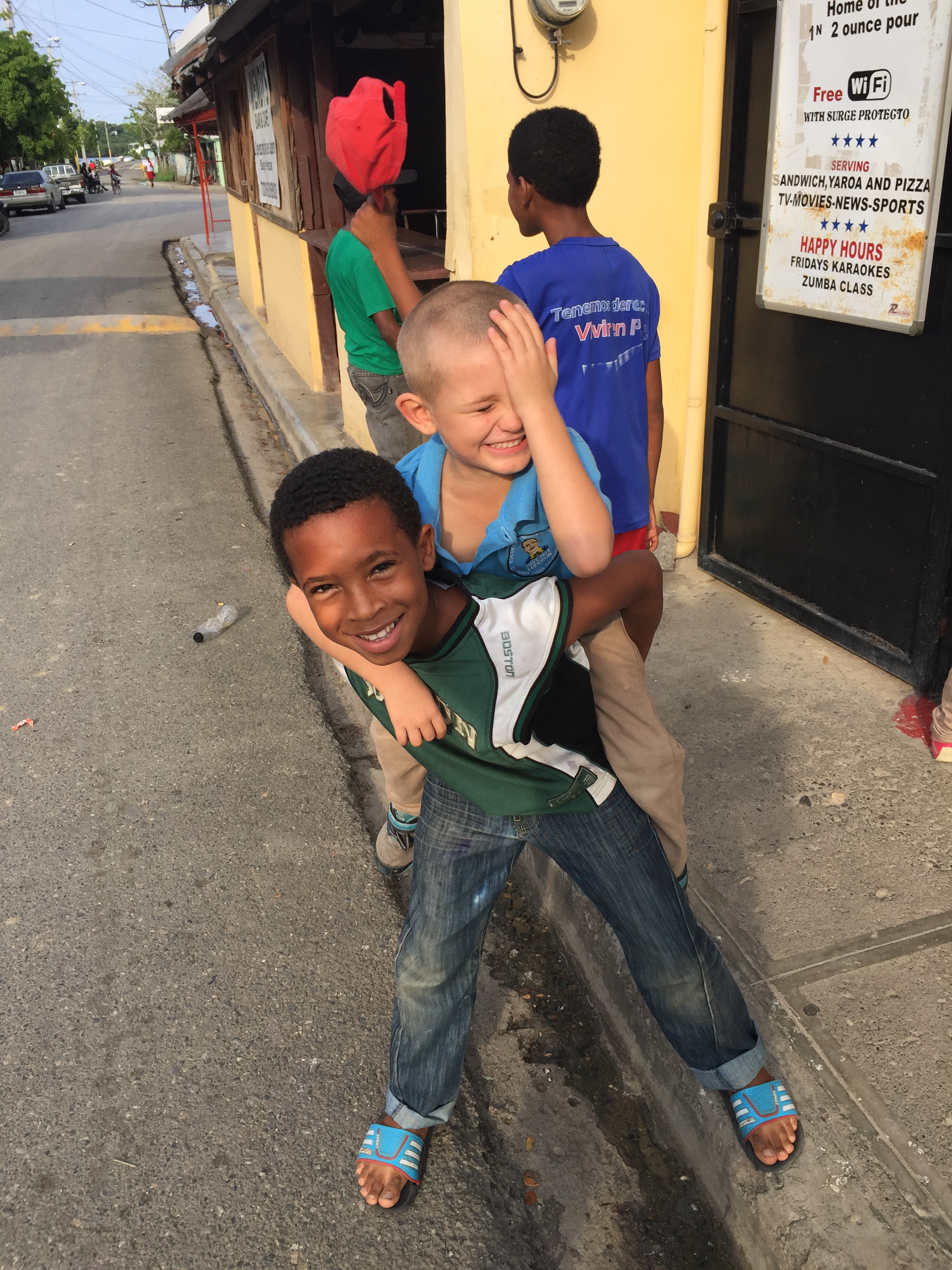
Unfortunately, Paul was at home today with a sore back. He hauled his backpack to school earlier this week when I opted not to bring the orange wagon. He will be back at school on Monday.
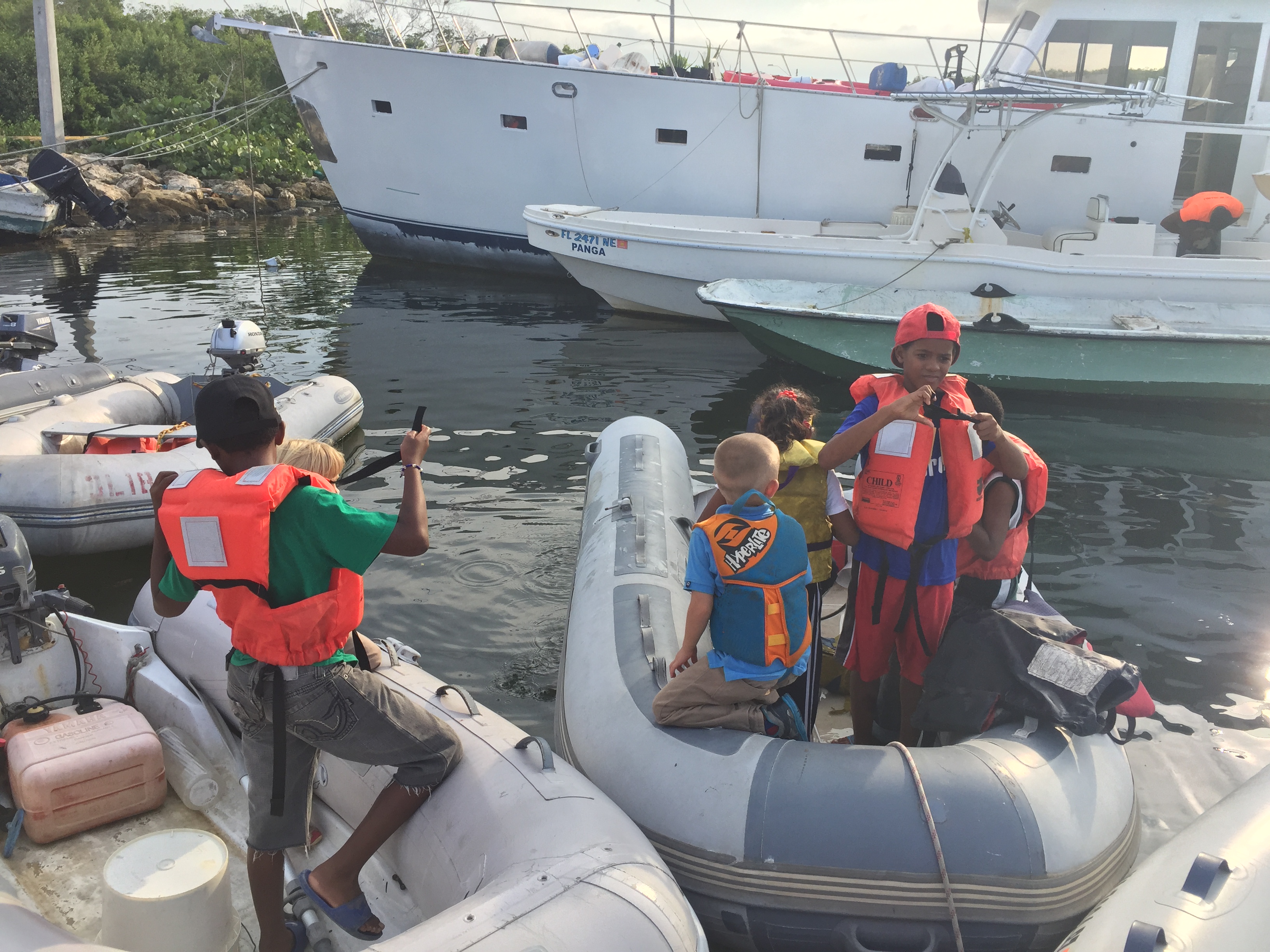
Without Paul, I would be bringing seven young children in our dinghy. I brought life jackets for them and assured their grandmother that they would be safe. When we had approval from their grandmother, the kids raced to the dinghy dock.
The kids put on their life jackets, and I helped them with the straps.
We set off towards our catamaran, SV Aphrodite.
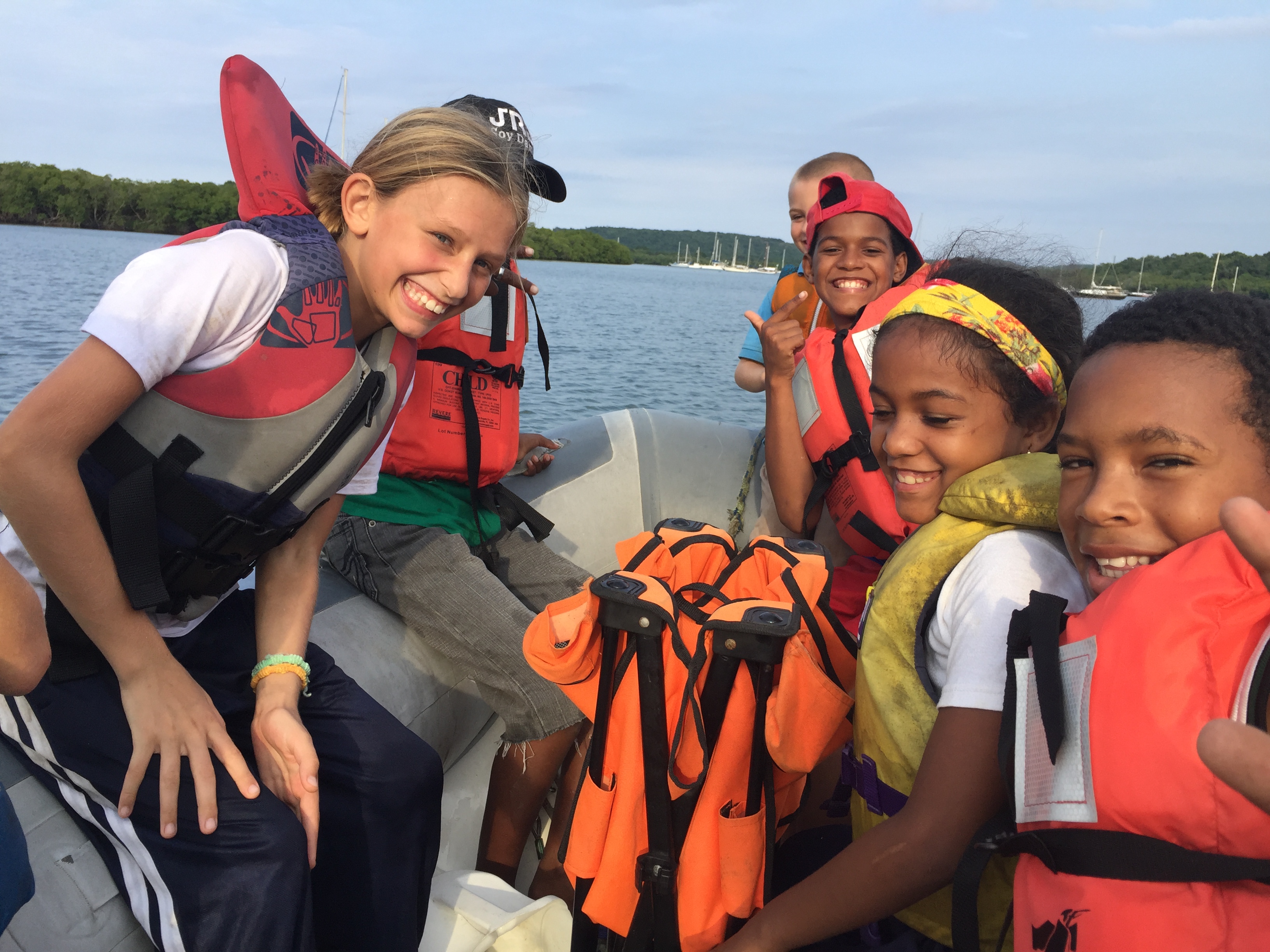
Seeing the water through the eyes of the local children was wonderful. They marvelled at the jellyfish and liked to feel the spray of the water on their hands. They spent only a short time on SV Aphrodite, but they had enough time for a pillow fight and a romp on the trampolines.
Watching our guests approach the trampolines on the front of our catamaran, they were full of trepidation. Their reaction was similar to how I might behave on the glass floor of the CN Tower in Toronto.
At first, they didn’t trust that the trampoline would hold them suspended above the water. Soon, Betty’s seven-year-old friend Lisbeth was climbing the mast and said that it was “beautiful.”
Back inside, Betty braided Lisbeth’s hair.
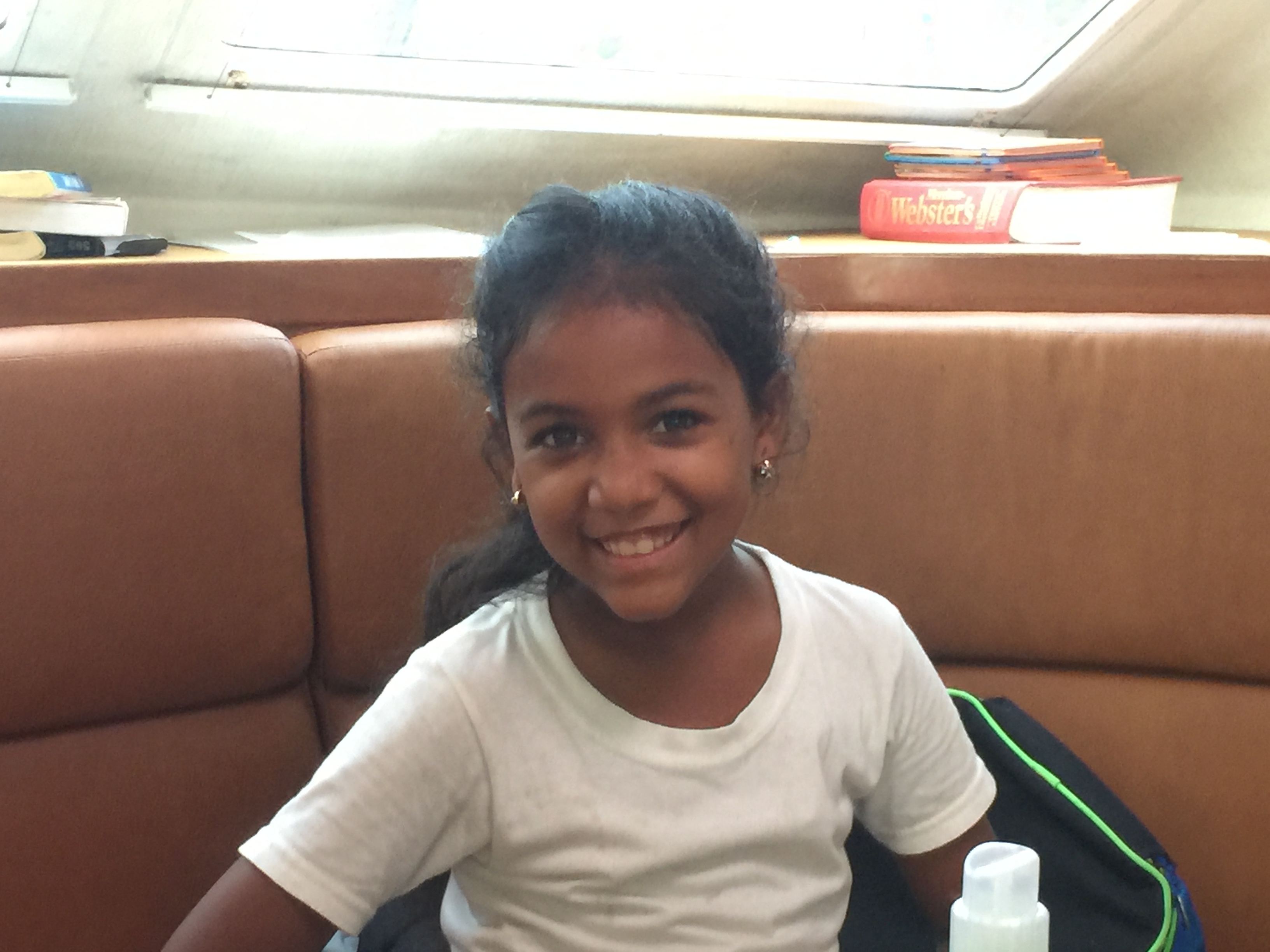
The kids wanted to stay. But their grandmother was expecting them at home. We had to coax them back into the dinghy using our newly learned Spanish.
When we returned to shore, Lisbeth passed me her bag to carry. She ran off with her siblings and Betty down the road.
Betty, Age 10, Gets Her Very First Pair of Glasses
Originally posted November 1, 2016
Before we embarked on this family adventure — called sailing SV Aphrodite — all six of us had our eyes tested.

But a year later, since starting school in Luperón, Dominican Republic, our daughter Betty has been complaining that she couldn’t see the blackboard.
Enter Ana Lopez, proprietor of the Casa Lopez convenience store, and patron saint of English-speaking cruisers.
Ana has been helpful to our family on many occasions. She is valued by me to the point that she is on our family’s school contact list. It was Ana who recently helped locate us when Paul was having an allergic reaction.
I visited Ana’s shop and solicited her help to find an eye doctor for Betty. Ana contacted a pediatrician, and then she contacted a large hospital called Clínica Corominas in Santiago.

After making several phone calls, Ana found Betty an English-speaking pediatric eye doctor. The eye doctor is Dr. Tania Sarita.
Incidentally, if you are an adult and in need of an eye doctor, then Dr. Sebastian Guzmán is another English-speaking eye doctor. He also works at the Clínica Corominas hospital on the same floor as Dr. Sarita. My husband, Rick, saw him this afternoon when he went with Betty to Santiago.
And if you are very interested, Rick’s eye appointment lasted a full hour and cost 1500 pesos, which is about $40 U.S. Betty’s eye appointment lasted about 10 minutes and cost 2200 pesos, which is about $55 U.S.
Betty has been to the eye doctor in Ottawa since she was three years old, but she had no need for glasses. That changed today.
Betty is now the ecstatic owner of a pair of perfectly pink eyeglasses.


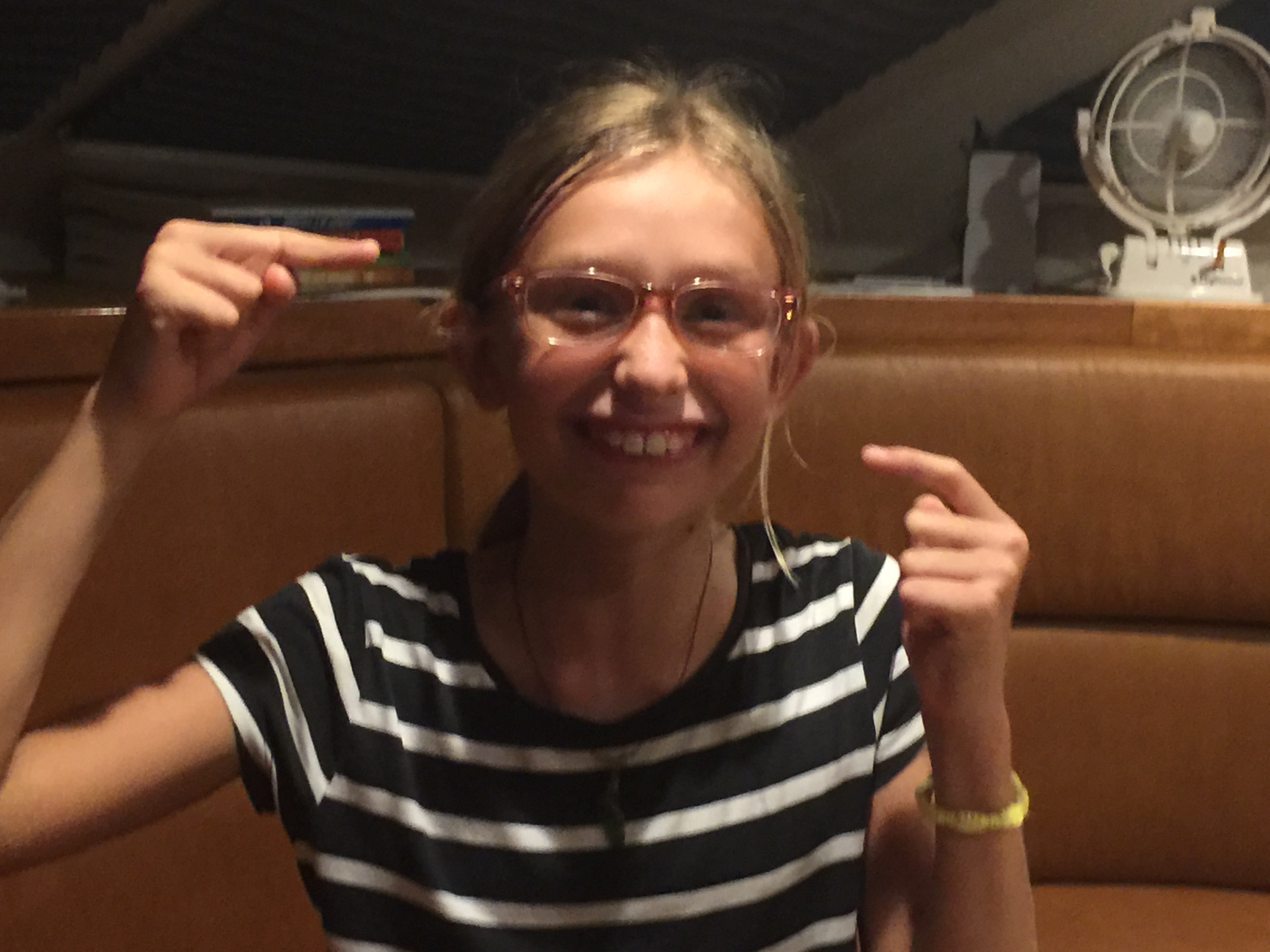
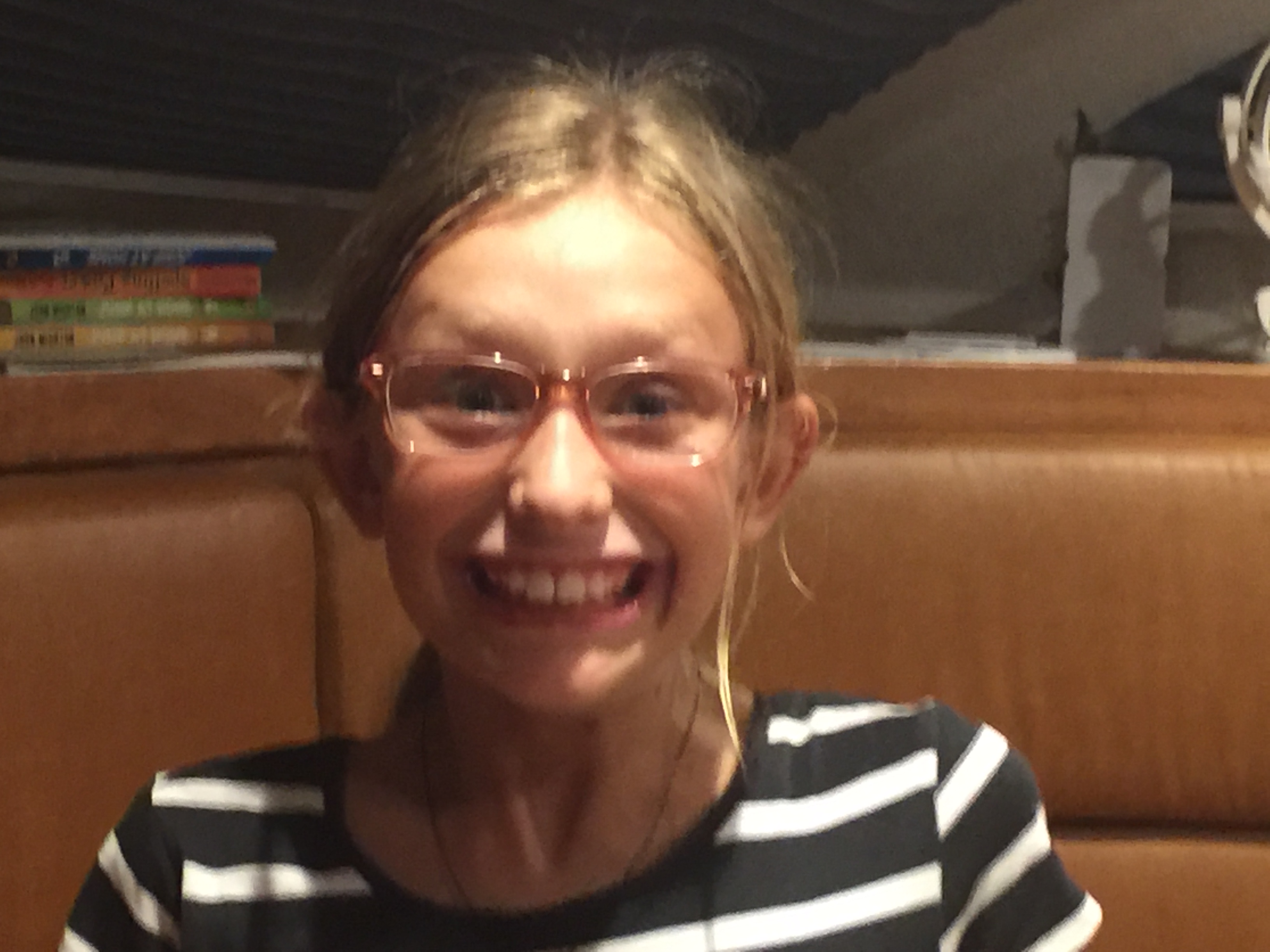
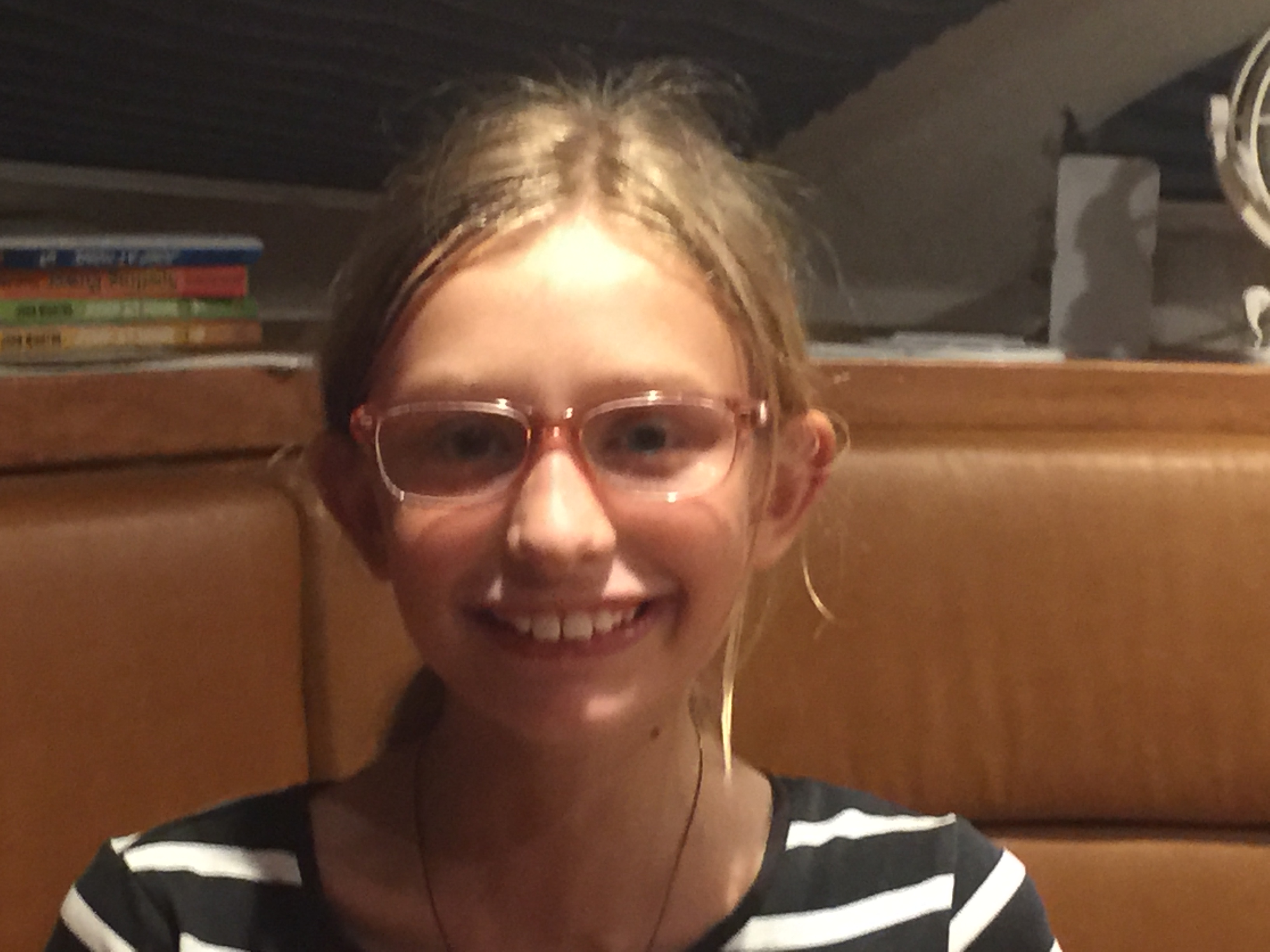
Her reaction was very similar to mine when I got my first pair of glasses, which were also pink. I was about her age and the difference felt miraculous.
She says it’s like she’s been looking at a painting but now that she has glasses she’s actually part of the painting. She commented on the texture of many things. She could read the name of the boat that is moored next to us.
My description is not doing her excitement justice. I shall let Betty tell you in her own words about her new glasses.
Heavy Rain Closes School in Luperón, and Our Kids Vote, “Yay!”
Originally posted November 14, 2016
A year ago, it was raining in Tavernier, Florida. Back then, our daughter, Karen, was soaked by rain as she slept under an open hatch. The smell of mildew was my biggest worry. Here, in the Dominican Republic, rain causes more serious issues. The rain has been persistent and heavy enough to cause road damage. Some schools have had walls collapse (Dominican Today).
In Luperón, which is where we have been anchored during the hurricane season, the sidewalks were flooded. The quiet mangrove canal that lines the entrance into town became a rushing river filled with large logs and debris. Eventually, the canal breached its banks and flooded the road in one place. I am glad that we didn’t have to walk along the road when it was flooding.
For days the Luperón harbour was full of hazards and had turned a strong and offensive colour of brown. Here are some pictures that show the Luperón harbour after the heavy rains.


Our four children are attending elementary school in Luperón. They were sent home due to safety concerns. Rain was coming into the classrooms and flooding the floors. When I picked them up from school, I had to steer our dinghy carefully to avoid hitting the logs, bottles and cactus that were floating in the water.
My husband, Rick, was away in Miami for a few days picking up boat parts.
Our kids were home from school all week. They have the energy of about a thousand caffeinated squirrels. So, one day last week, the kids and I ventured off the boat to have lunch, eat ice cream, and play with some other children.
Here is a picture of the ball diamond we visited. The ball diamond was very wet, but it remained a meeting point for a couple of stray dogs and some children, including some schoolmates.

Below are some pictures of children being children.

Free-Range Children
The kids in the photo are what Lenore Skenazy would call “free-range children” because, aside from my presence, they were playing in the ball diamond without adult supervision.
If you’re wondering, “Lenore, who?” then you might recall the story of the woman who, in 2008, let “her then-9-year-old son take the New York City Subway home alone” (Wikipedia, Lenore Skenazy).
Her parenting views might be seen as controversial today, but back in the day, the unsupervised time that she advocates was simply called “childhood.”
I was amazed to observe how kids play in their rawest form — away from adults, electronics, organized sports, or play structures. I insisted my kids wear shoes but, otherwise, did my best to maintain a low profile.
Our kids quickly got involved with the activities on the field. Here, the boys are with a group of local kids picking cherries.

They jumped over everything they could find.

The kids found some Styrofoam. They made ‘snow’ by rubbing two pieces of Styrofoam together. Eventually, I intervened.

I was amazed to see how differently the kids played in the absence of structure. They ranged in age from about five to ten. The children organized themselves to play dodgeball. They wrestled, threw sticks for some stray dogs, and threw rocks — sometimes at each other.
It was raining here again today. We’ve packed the schoolbags just in case. If there’s rain tomorrow, our kids will not be going to school. Rick and I are readying the boat for departure to Puerto Rico and other parts south. If our kids are off school, they can come to town with me and run wild at the ball diamond.
Life is good on SV Aphrodite.
Thanks for reading!
Related post: