
In short
La Isabela, on the north coast of the Dominican Republic, is said to be the first settlement in the New World. We walked its ruins and stood in Columbus's cliff-top house, then saw the cemetery and the first church to hold mass in the New World. Like Columbus, we had anchored there, in full view of his house. As many as six of his ships may lie buried in the bay.
This week, Christopher Columbus was lifted off the pages of history; a visit to La Isabela, Dominican Republic (DR), saw our family walk among the ruins of what is reputed to be the first settlement in the New World.

Columbus founded La Isabela in early January 1494, on his second voyage, when he came back to Hispaniola with seventeen ships and more than a thousand men. It was meant to be Spain’s first real town in the Americas, but it lasted only a few years. Disease, hunger, a poor water supply, two hurricanes and far less gold than anyone hoped for led to mutiny, and in 1496 Columbus gave up on it in favour of a new settlement on the south coast, the one that became Santo Domingo. By about 1500, La Isabela was abandoned.
Visiting La Isabela from Luperón
The ruins and the small museum are now La Isabela National Historic Park, beside the village of El Castillo, about 42 km west of Puerto Plata. From our anchorage in Luperón, the drive took about 20 minutes.
Recent travel guides list the park as open daily from about 9 am to 5 pm, with a modest entrance fee of roughly RD$100 to RD$120 per person, but check before you go.
We stood in Columbus’s cliff-top house and saw the remains of other houses, as well as a cemetery, and the first church to hold mass in the New World.


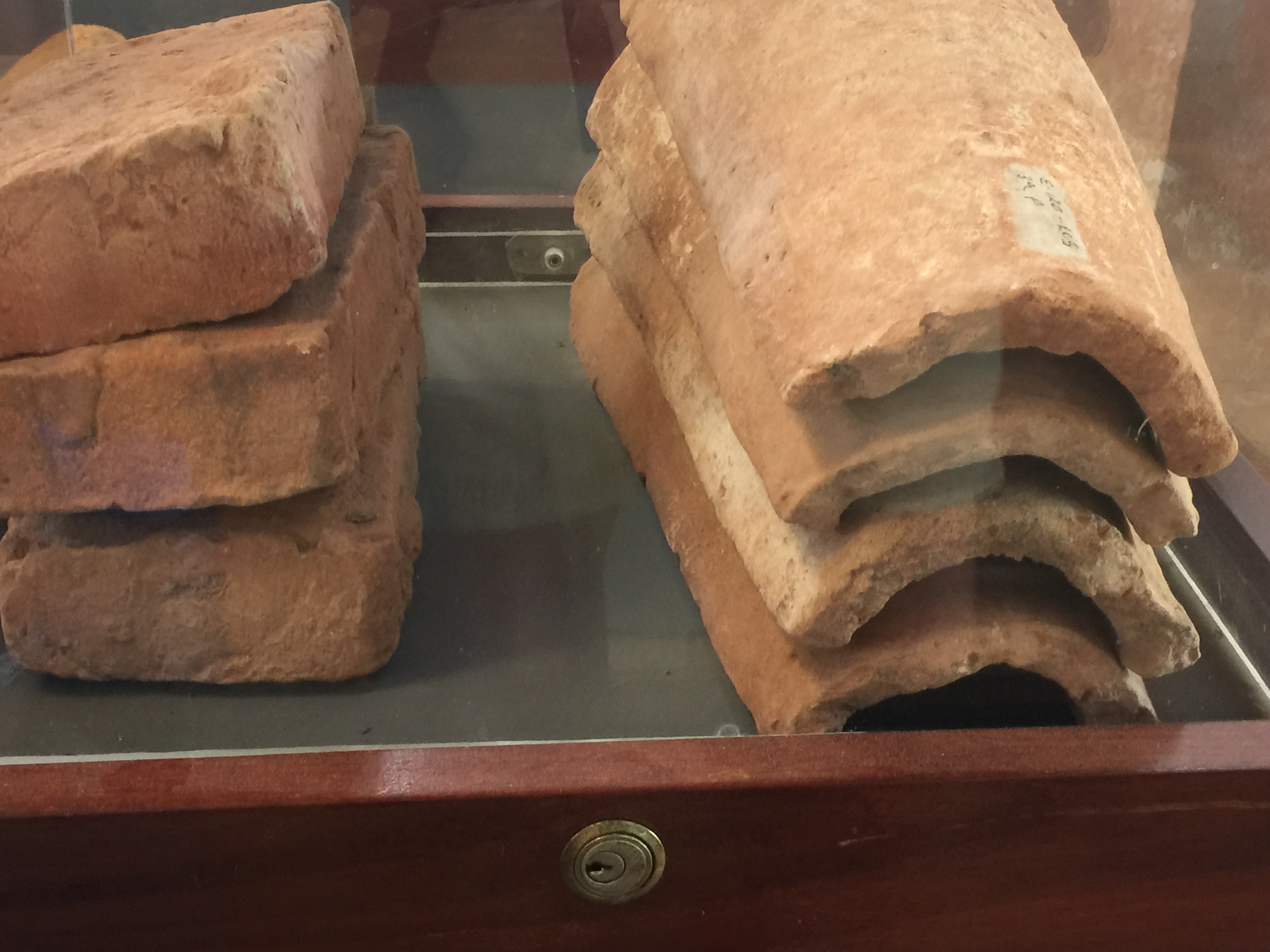
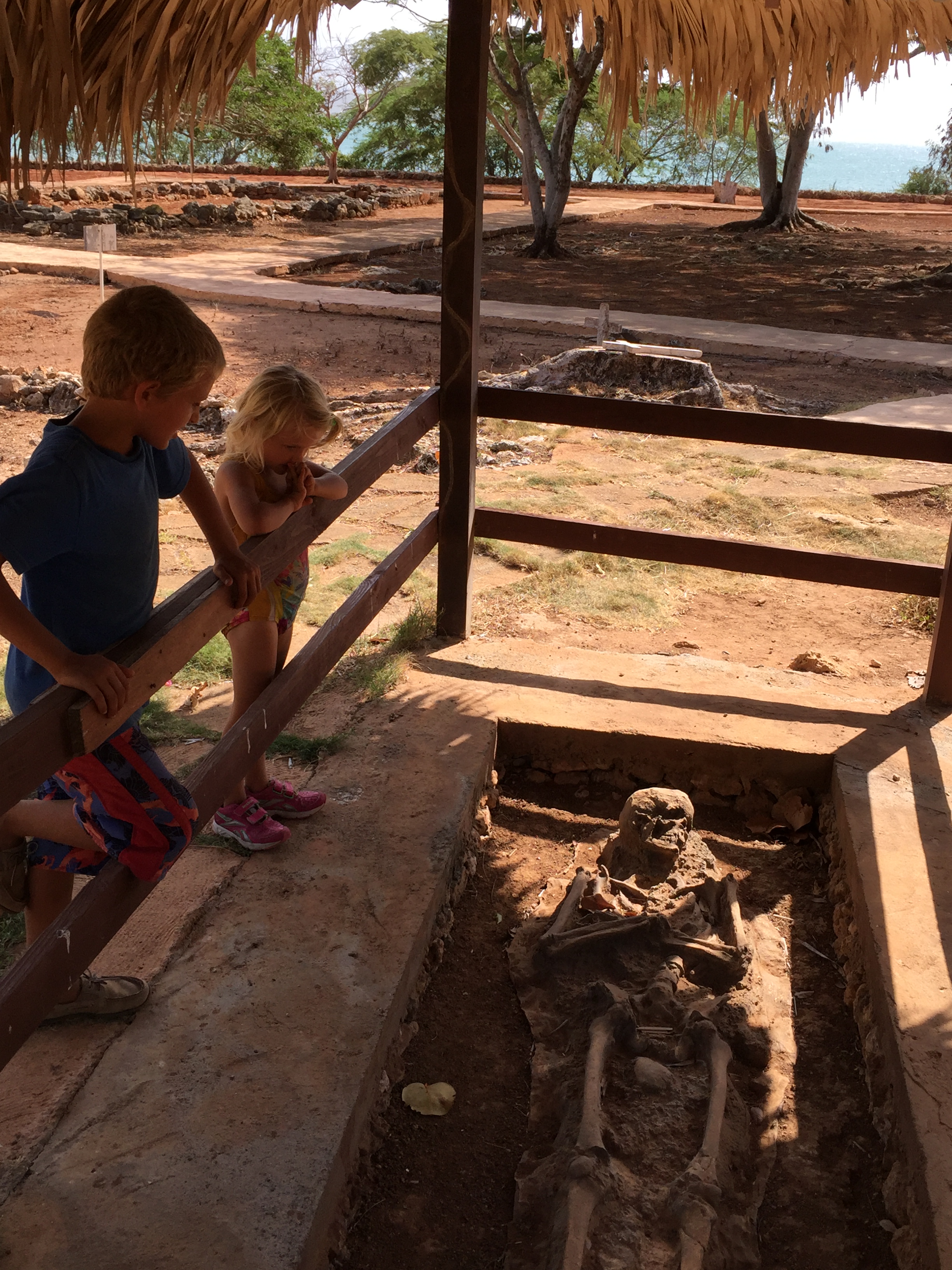
I thought it was interesting to learn that early roof shingles gained their shape by using the builders’ own legs. The kids were fascinated by the skeletal remains of someone who had lived in the settlement. Five-year-old Karen now dreams of being an archaeologist. Paul particularly enjoyed seeing a replica of one of Columbus’s ships.

We feel very fortunate to have seen Columbus’s settlement from both land and sea. Like Columbus, we anchored at La Isabela when we first arrived in the DR. Columbus, however, had loftier intentions when he claimed and named the entire island of Hispaniola, which means “Little Spain”.
It wasn’t until we visited the La Isabela settlement by land that we realized we had been anchored in full view of Columbus’s house.
After visiting the settlement, Rick downloaded two documentaries about Columbus that had us on the edge of our seats. We learned that we had likely sailed over some of his sunken ships. As many as six ships are believed to be buried under many feet of mud at the bottom of the bay.
As a result of our trip, the kids have been eager to learn more about archaeology and the process of finding objects using a grid.
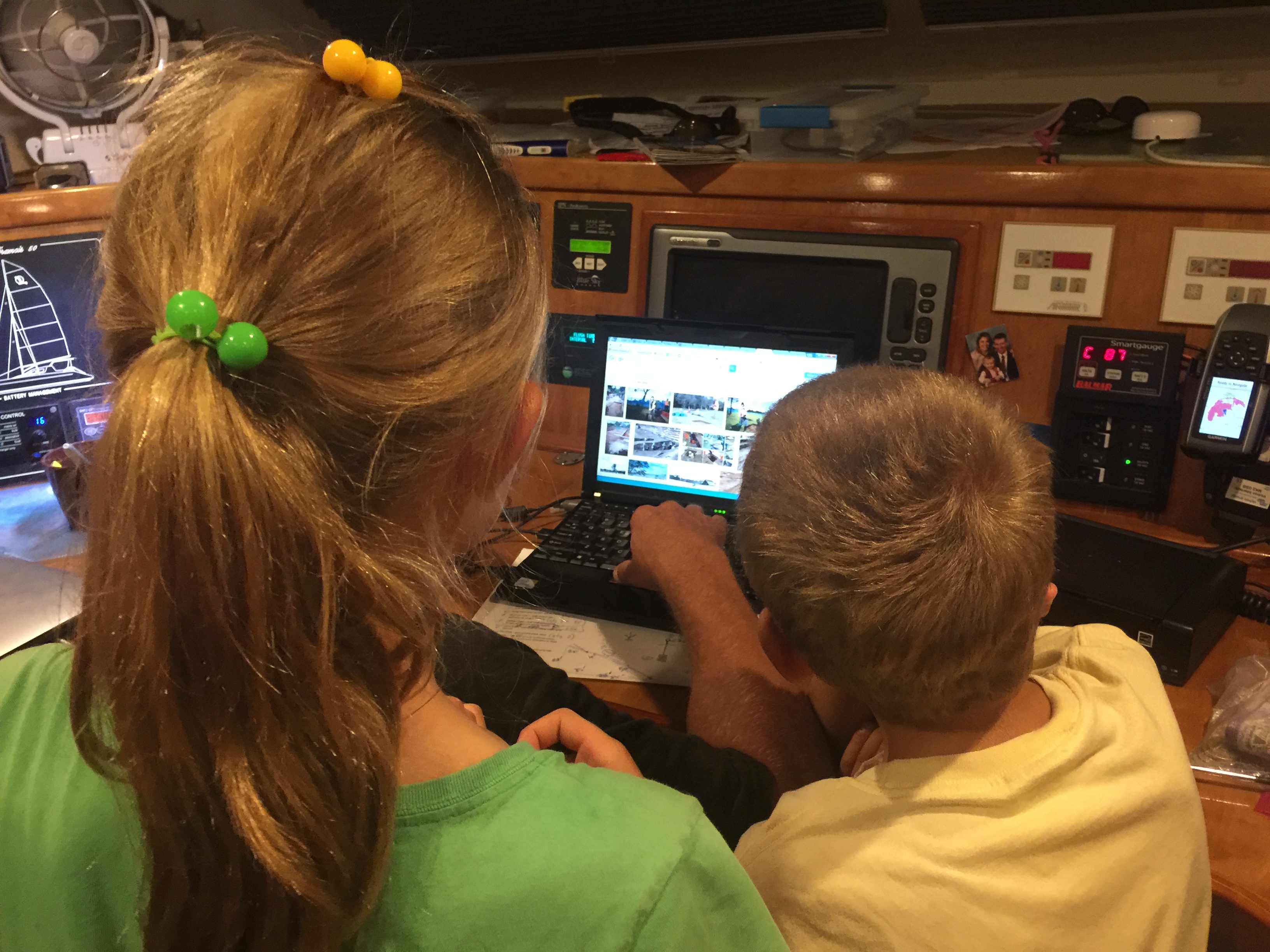
Documentaries that discuss the significance of La Isabela, Dominican Republic
The two documentaries that Rick downloaded are:
- Expedition Unknown — Columbus: Legend or Liar? (TravelChannel.com)
- Columbus’s Cursed Colony (National Geographic)
We went to La Isabela with Will Aitken and his two dogs, Raven and Lupo. Will is a cruiser from Texas, and he suggested La Isabela as a day trip to us. He is our neighbour in the anchorage of Luperón Bay. Thanks, Will, for suggesting this trip and for doing all the driving. We had a great day!

See Luperón Long Reads — Boat Kids Go Local for more stories about how we spent time as a family in Luperón .
Pin it
If you enjoyed this story about La Isabela, Dominican Republic, you can save it to your own Pinterest board using the image below. Thanks for reading and following our journey.

you have such informative, entertaining posts, thank you. I’m catching up over coffee.
Are Jealous
Good afternoon. My name is Volodymyr Burchyn. I am from Ukraine.
I am writing a book about Christopher Columbus in Ukrainian.
Can I please use a photo from your website for my book?
Photo “The La Isabela museum contained a small-scale replica of Columbus’s house as what it would have looked like circa 1493.”
https://aphrodite.cat/wp-content/uploads/2016/07/image12.jpeg
Thank you
Best regards